Worn Teeth Restoration in Scottsdale, AZ
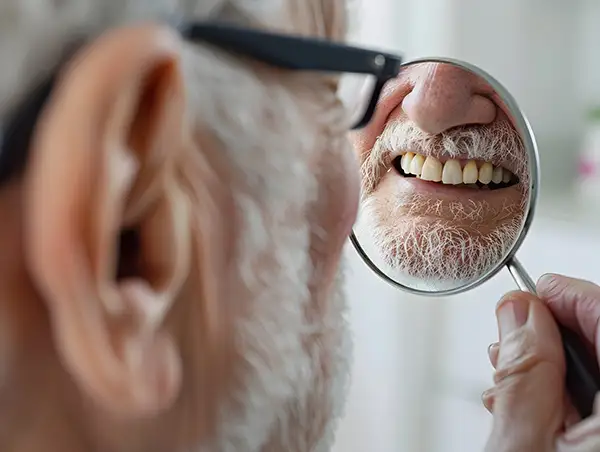 Worn teeth restoration at GOREgeous Smiles in Scottsdale, AZ rebuilds teeth that have become short, flat, chipped or sensitive from years of wear, using bonding, onlays, crowns or veneers matched to how much tooth is left. Restoring the shape is half the job. The other half is finding out what wore the teeth down, so your new work doesn’t wear away the same way.
Grinding and acid are the two most common culprits, and each has its own page: bruxism and teeth grinding treatment and enamel erosion treatment. This page picks up where those leave off, when damage has already happened and you want your teeth back.
Worn teeth rarely come alone. They often show up next to cracked fillings, aging crowns or a bite that feels different than it used to, so we plan them as part of your wider restorative dentistry care.
On This Page
What Is Worn Teeth Restoration?
Worn teeth restoration replaces tooth structure that wear has taken away and returns your teeth to a healthier shape and length. Some wear builds up over a lifetime, and research on adults shows severe tooth wear becomes more common with age. When wear moves faster than it should, or starts to change how your teeth look and feel, it’s time to rebuild.
Signs Your Teeth Are Wearing Down
Wear is slow, so it’s easy to miss until something changes in the mirror or at the dinner table:
| • |
Shorter-looking front teeth – your smile shows less tooth than it used to
|
| • |
Flat or chipped edges – back teeth lose their cusps and front edges look rough or uneven
|
| • |
Sensitivity – hot, cold or sweet foods start to sting as the outer layer thins
|
| • |
Thin, see-through edges – front teeth look slightly transparent at the tips
|
| • |
Older dental work breaking down – fillings and crowns chip, crack or wear through |
Any one of these is worth mentioning at your next visit. Several together usually means it’s time for a closer look.
Four Ways Teeth Wear
Dental researchers sort tooth wear into four types. Attrition is wear from tooth-to-tooth contact, the kind grinding causes. Erosion is loss of tooth structure from chemical action, such as acidic drinks or reflux. Abrasion is wear from something other than your teeth, and abfraction is loss of tooth structure caused by heavy biting forces.
Most worn mouths show more than one type at once. Grinding and acid often overlap, for example, which is why we look at the whole picture before choosing materials.
Why the Cause Comes First
A new crown or veneer is tougher than worn enamel, but it isn’t immune to the same forces. A restoration that sits in a balanced bite tends to last; the same restoration under untreated grinding fails much sooner. So we slow down whatever is causing the wear, then rebuild, and then protect the result.
Your Restorative Dentist in Scottsdale
Dr. Rod W. Gore has practiced in Scottsdale for more than 38 years, which means he has followed many patients’ teeth across decades and seen how wear progresses when it’s caught early and when it isn’t. He earned his DDS from Northwestern University in 1987 and has been an Accredited Member of the American Academy of Cosmetic Dentistry since 1995, where he still serves as an active Examiner.
Rebuilding worn teeth is part function and part appearance. The new teeth have to meet properly when you bite, and they also have to look like teeth, with natural length, edge shape and color. Dr. Gore founded the Phoenix Esthetic Study Club in 1998 and has been a clinical instructor with the Pacific Aesthetic Continuum at the University of the Pacific and with the Las Vegas Institute for Advanced Dental Studies.
He’s the only dentist in our practice, so your exam, your plan and every restoration come from the same person.
Restoration Options, From Small Repairs to Full Rebuilds
The right repair depends on how much healthy tooth is left. We start as conservatively as your teeth allow.
Bonding for Worn Edges
For early wear, dental bonding rebuilds chipped or flattened edges with tooth-colored composite, usually in one or two appointments and often with little or no drilling. It’s also easy to add to or polish later, which suits teeth that may keep changing.
Veneers for Worn Front Teeth
When front teeth have lost length and the edges are thin or uneven, veneers can rebuild length, shape and color at the same time. Composite veneers are sculpted chairside in a single visit, while porcelain veneers are made by a lab and resist staining. Both are covered on our dental veneers page.
Onlays for Worn Back Teeth
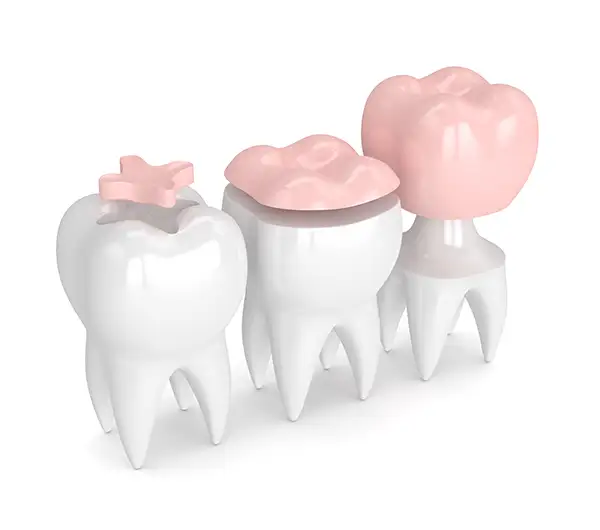 When a molar has lost its cusps but still has solid walls, a porcelain onlay wraps over the chewing surface and rebuilds the missing points. Inlays and onlays keep more of your natural tooth than a full crown, so they’re often the middle ground for back teeth worn flat.
Crowns When Too Much Is Gone
If wear has taken a large share of a tooth, or the tooth has cracked, a crown covers and protects all of it. Many of our crowns are designed and milled in the office with same-day CEREC crowns, so a worn molar can be rebuilt in one appointment without a temporary. Complex front-tooth cases may still go to a lab for color layering.
Full Mouth Rehabilitation for Widespread Wear
When nearly every tooth is worn, rebuilding them one at a time rarely works. Full mouth rehabilitation plans the whole bite together, often with crowns, onlays and veneers, so the teeth meet evenly and the bite is restored to a healthier dimension.
Planning a Worn-Teeth Case
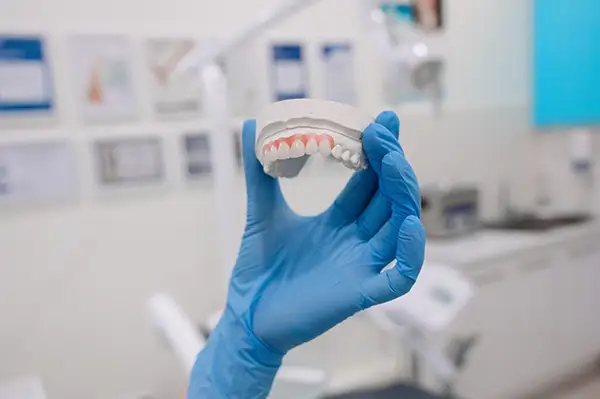 Worn-teeth cases go well when they’re planned on paper, and on models, before anything is changed in your mouth.
Step 1: Exam, Photos and Bite Check
We look at wear patterns on every tooth, check for cracks with transillumination, feel the jaw muscles and see how your teeth come together. Photographs give us a baseline, so we can tell later whether wear has truly stopped.
Step 2: Finding the Cause
We ask about morning jaw soreness, grinding your partner has heard, acidic drinks, heartburn and sleep. If reflux looks likely, part of your plan may be a visit to your primary care doctor. If snoring or poor sleep comes up, we’ll talk about screening for sleep apnea, since it can show up alongside grinding.
Step 3: Previewing the New Shape
For larger cases, we use mounted models and a wax-up to plan the new tooth shapes and bite before any work begins. The wax-up lets you see and feel the proposed result first, which is especially helpful when teeth are being lengthened.
Step 4: Restoring in Stages
Anything painful, cracked or infected gets treated first. Then we rebuild in the order the plan calls for, with local anesthesia as needed and nitrous oxide or oral conscious sedation available if you’re anxious or facing longer visits.
Step 5: Protecting the Result
If grinding played a part, you’ll leave with a custom guard designed from a digital scan and 3D-printed in our office. We compare photos at later visits to make sure the wear has stopped and your new teeth are holding up.
Benefits of Restoring Worn Teeth
Restoring worn teeth helps in ways you’ll notice daily and in ways you won’t see for years:
| • |
Comfort – covering thinned areas often eases sensitivity to hot, cold and sweet foods
|
| • |
Stronger chewing – rebuilt cusps and edges let your teeth work properly again
|
| • |
A younger-looking smile – restored length and shape replace a flat, short look
|
| • |
Fewer surprises – rebuilt teeth in a balanced bite are less likely to chip or crack the way worn ones do
|
| • |
Stopping the slide – treating the cause keeps more of your natural teeth for longer |
Acting early also keeps treatment smaller. A little bonding now is a very different plan from rebuilding a whole mouth later.
Why Choose Our Practice for Worn Teeth Restoration
We treat the cause and the damage in one office. Our dentist can rebuild worn teeth, adjust the bite, make a custom guard and, when jaw muscles are a big part of the problem, provide therapeutic Botox, all without sending you elsewhere.
Our technology keeps the work efficient. CEREC lets us mill many crowns while you wait, and our SprintRay 3D printer makes models and night guards in-house, so the protective step doesn’t mean a long lab wait.
And worn front teeth get cosmetic-level attention. An AACD Accredited Member decides how long your teeth should be and how the edges should look, so the result reads as your smile, not as dental work.
Worn Teeth Restoration Cost and Financing
The cost depends on how many teeth are involved and which restorations they need. A few bonded edges are a very different plan from a full rehabilitation, so you’ll get a written estimate after your exam, before any work begins.
Restorative work generally has more insurance coverage than cosmetic work, and crowns on damaged teeth are often partly covered. We accept Cigna and verify your benefits before you commit. Our financial and insurance page explains how billing works here.
Without dental benefits, the GOREgeous Membership Plan includes discounts on many treatments, including in-office crowns. Third-party financing is also available for larger plans. To talk through costs first, call 480-585-6225.
Schedule Your Worn Teeth Consultation
If your teeth look shorter than they used to, the sooner we look, the smaller the fix tends to be. Call 480-585-6225 or book through our Request an Appointment page.
Our office is at 8535 E. Hartford Drive #208, Scottsdale, AZ 85255-5438, open Monday through Thursday from 7:00 a.m. to 4:00 p.m. Have a question first? Reach us through our Contact page.
Frequently Asked Questions
Can worn teeth be fixed without crowns?
Often, yes. Early and moderate wear can usually be rebuilt with bonding, composite veneers or onlays, which keep more of your natural tooth. Crowns come in when too much tooth is gone for smaller repairs to hold.
Is it normal for teeth to wear down with age?
Some wear is expected over a lifetime, and severe wear becomes more common as people get older. Wear that changes how your teeth look, makes them sensitive or seems to be speeding up isn’t something to ignore, at any age.
Will I need a night guard after my teeth are restored?
If you grind or clench, yes. A custom night guard takes the grinding pressure so your new restorations don’t. We design it from a digital scan and print it in our office, often within a day or two.
Can you make my short teeth longer again?
Usually, yes. Bonding, veneers and crowns can all add length back. How much depends on your bite, so we plan it on models first. If a few high spots are driving the wear, occlusal bite adjustment may be part of the plan.
Why are the edges of my front teeth see-through?
Thin, translucent edges are a common sign that enamel is wearing away, often from acid, grinding or both. We’ll look for the cause first. Rebuilding those edges with bonding or veneers usually restores both strength and appearance.
How long does worn teeth restoration take?
A few bonded edges or a same-day crown can be done in one visit. Veneer cases usually take two appointments, and full mouth rehabilitation is planned over several months. We map your timeline at the consultation.
Does insurance cover worn teeth restoration?
Often in part, when the work repairs damage rather than only changing appearance. Crowns on damaged teeth are commonly covered at some level. We accept Cigna and will tell you what your plan pays before you decide.
Why choose GOREgeous Smiles for worn teeth restoration in Scottsdale?
Because we treat the cause and the damage together. An AACD Accredited Member with more than 38 years in Scottsdale plans your new tooth shapes, and in-office CEREC and 3D printing keep crowns and guards close at hand.
|