Occlusal Bite Adjustment in Scottsdale, AZ
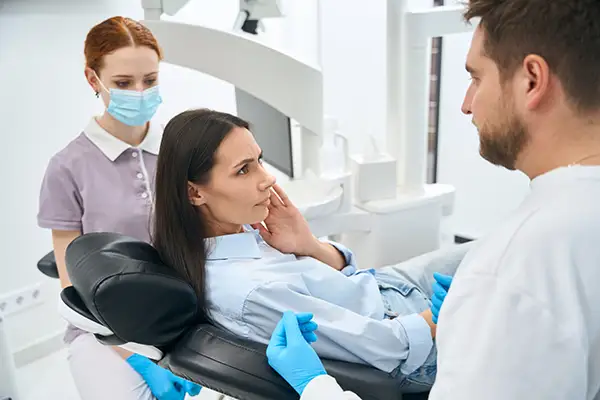 Occlusal bite adjustment is a small, careful procedure that reshapes a tiny amount of tooth surface to balance how your upper and lower teeth meet, and it often resolves symptoms like persistent tooth sensitivity, jaw soreness, and broken cusps that nothing else has touched. At GOREgeous Smiles in Scottsdale, AZ, we use occlusal adjustment as a precision step inside a larger preventive plan, particularly for patients whose grinding has already started causing damage to teeth or muscles. Occlusal bite adjustment is a small, careful procedure that reshapes a tiny amount of tooth surface to balance how your upper and lower teeth meet, and it often resolves symptoms like persistent tooth sensitivity, jaw soreness, and broken cusps that nothing else has touched. At GOREgeous Smiles in Scottsdale, AZ, we use occlusal adjustment as a precision step inside a larger preventive plan, particularly for patients whose grinding has already started causing damage to teeth or muscles.
The procedure goes by a few different names in dental literature: occlusal equilibration, selective occlusal adjustment, or simply equilibration. The clinical goal is the same. Distribute biting forces evenly across all your teeth instead of concentrating them on a few high contact points where the damage shows up first. Adjustment is conservative dentistry. We’re talking less than a millimeter of enamel removed at specific points, not a redesign of your bite.
It’s also distinct from orthodontic bite correction. Orthodontics moves teeth into different positions. Occlusal adjustment changes the surface of teeth that are already in good positions but aren’t meeting evenly. Sometimes a patient needs both. More often, after orthodontic treatment or a major restoration, fine occlusal adjustment is the last step that makes everything settle correctly.
On This Page
What Is Occlusal Bite Adjustment?
The procedure starts with a problem you can usually feel: a single tooth that hurts to bite on, a crown that feels “high,” soreness in one side of your jaw that hasn’t gone away, or wear on a few specific teeth that seems out of proportion to your age. The pattern points us at the bite. We use articulating paper, the colored marking paper you bite down on, to identify exactly where your teeth are making first contact. The marks tell us where pressure is concentrated.
 Once we see the contact pattern, we polish those spots down by tiny increments and re-check. Adjustment is iterative. We don’t keep working away at one spot until it’s “fixed.” We adjust, ask you to bite down, mark again, and adjust the next high spot. Most cases finish in 15 to 30 minutes without anesthesia because the work happens on enamel surfaces that don’t carry sensation. Once we see the contact pattern, we polish those spots down by tiny increments and re-check. Adjustment is iterative. We don’t keep working away at one spot until it’s “fixed.” We adjust, ask you to bite down, mark again, and adjust the next high spot. Most cases finish in 15 to 30 minutes without anesthesia because the work happens on enamel surfaces that don’t carry sensation.
Below are the situations that most commonly bring patients in for this procedure. If any of them describe what you’ve been dealing with, an exam will tell you whether your bite is the cause.
When a New Crown or Filling Feels “High”
Modern restorations are built and placed in stages, and a crown or filling that feels even slightly tall once you bite together will often need a small adjustment. The new restoration shouldn’t bear more force than the surrounding teeth. Patients usually describe it as a tooth that “hits first” or “feels like it’s still there.” A few minutes of adjustment usually settles it.
Tooth Sensitivity That Won’t Resolve
A persistently sensitive tooth that hasn’t responded to desensitizing toothpaste, fluoride treatments, or a recent filling is sometimes the result of being a high tooth, one that bears more force than the others when you chew. The constant pressure can irritate the tooth’s nerve. Identifying and adjusting that contact often resolves the sensitivity without further treatment. If sensitivity persists after we balance the bite, that points us toward other causes worth investigating.
Grinding, Clenching, and Jaw Soreness
Grinding (bruxism) and clenching are powerful, repetitive forces that magnify any imbalance in your bite. A small high contact that wouldn’t bother you during normal chewing becomes a real problem when you’re applying many times that force at night. Many of our bruxism and grinding treatment cases start with a careful occlusal adjustment alongside a custom night mouth guard. Adjusting the bite reduces the trigger that drives grinding, and the night guard absorbs the force that remains.
After Orthodontic Treatment or a Major Restoration
Teeth that just finished moving into new positions don’t always meet perfectly. A short equilibration appointment a few weeks after orthodontic treatment ends can make the difference between a stable result and one that drifts. The same holds after a multi-tooth restorative case. We routinely re-check the bite at the follow-up after a full crown or bridge to confirm the new restoration is sharing load evenly with everything else. Maintaining bite balance over time is part of preventive dentistry at our practice.
When Cusps Are Fracturing on Otherwise Healthy Teeth
Fractured cusps on teeth without obvious decay almost always trace back to force, not weakness. The tooth was carrying too much load in the wrong direction, and the structural failure showed up as a chip or a vertical crack. Once we see the pattern of damage, we can identify and adjust the contact responsible for it. Catching this early is the difference between a quick adjustment and rebuilding a tooth that’s already broken down.
When Bite Adjustment Is Not the Right Answer
Honesty matters here. Occlusal adjustment is excellent for localized, focal problems, meaning one or two high contact points causing measurable symptoms. It is not a fix for a major bite that’s structurally off. Patients with broad malocclusion, severe wear across an entire arch, or a collapsed bite from years of tooth loss usually need more than equilibration. For those cases, the conversation moves to orthodontics, full-mouth restorative treatment, or full mouth rehabilitation depending on what the teeth and joints will support. A consultation tells us which conversation is the right one to have.
Your Bite Adjustment Dentist in Scottsdale
Dr. Rod W. Gore performs the majority of occlusal adjustments at our Scottsdale practice, and the credential that matters most for this work is years of full-mouth dentistry experience. Adjusting a bite well is a recognition skill, knowing what a balanced occlusion looks and feels like, and being able to spot the subtle signs of imbalance from across an exam room. Dr. Gore has been practicing dentistry for more than 38 years and is one of only two dentists in Arizona who hold AACD Accredited Member status, a peer-reviewed credential earned in 1995. Full background on Dr. Gore’s bio page.
Adjustment work fits naturally with comprehensive restorative practice. After decades of full-mouth rehabilitation cases, smile makeovers, and TMJ-related treatment planning, spotting an unbalanced bite becomes automatic. When occlusal adjustment alone isn’t enough, we move into the larger treatment plan right then.
What Happens at an Occlusal Adjustment Appointment
 Most appointments take 15 to 30 minutes. The first portion is exam and conversation: where you notice the symptom, when it started, what makes it better or worse, and what previous dental work might have changed your bite. Then we move to the bite check itself. Most appointments take 15 to 30 minutes. The first portion is exam and conversation: where you notice the symptom, when it started, what makes it better or worse, and what previous dental work might have changed your bite. Then we move to the bite check itself.
Mark the High Contacts
With colored articulating paper between your teeth, we ask you to bite down naturally and then slide your jaw side-to-side. The marks left on the teeth show us exactly where pressure is concentrated. We may take photos so we can compare before-and-after if the case is going to need more than one short visit.
A Gentle Polish
The actual adjustment uses a fine polishing instrument to remove a small amount of enamel from the high spots. There’s no anesthesia in most cases because we’re working on enamel surfaces, not into the tooth. Patients describe the sensation as similar to a dental cleaning, brief vibration with no discomfort.
Re-check and Re-adjust
After the first round, we re-mark with the articulating paper. The contact pattern usually shifts because removing one high spot redistributes force to the next contacts. We adjust those, re-mark, and continue until the bite shows even marks across all the teeth that should be carrying load. Most cases finish in this single visit. Complex cases sometimes split into two appointments a few weeks apart so the muscles have time to settle and report whether the change is working.
Bite-Test the Result
At the end of the appointment, you’ll bite together gently, then with normal force, then chew lightly on a cotton roll to confirm everything feels balanced. If anything still feels “off,” we adjust right then. The goal is for you to leave the chair without that “one tooth is hitting first” feeling.
Benefits of Bite Adjustment
The most measurable benefit of a successful bite adjustment is the symptom going away. A tooth that’s been sensitive for months stops being sensitive within a week or two. A jaw that’s been sore on one side relaxes once the trigger is gone. The patient who arrived because something felt off biting down stops noticing the bite altogether. That’s the goal.
Beyond direct symptom relief, adjustment prevents future damage. Concentrated bite force is what fractures cusps, cracks teeth, and accelerates wear on enamel and existing restorations. Spreading the load evenly across all your teeth slows the rate at which any one tooth gets damaged, which extends the life of teeth and the dentistry already in place.
Bite adjustment also makes other care work better. Custom night guards last longer when the bite they’re protecting is balanced underneath. New crowns, bridges, and veneers settle in faster and feel more natural when the surrounding bite was tuned at delivery. For patients managing grinding or clenching, equilibration reduces the destructive force the night guard has to absorb every night.
The procedure itself is brief and conservative. One short visit, no anesthesia in most cases, no recovery time, and a result you can usually feel before you leave the chair.
Why Choose Our Practice for Bite Care
The honest reason occlusal adjustment goes well at our office is that it’s done by clinicians who understand occlusion at the level of full-mouth case planning, not as an isolated procedure. Bite shows up everywhere in dentistry: restorative dentistry, cosmetic cases, TMJ care, bruxism management, and long-term tooth preservation. Doctors who work across all of those at a high level are usually better at adjusting a bite than doctors who treat each one separately.
Another reason is that we don’t over-adjust. Removing too much enamel is harder to fix than removing too little. Our default is conservative, meaning small adjustments, re-check, more if needed. Patients who arrive with a tooth that was over-adjusted somewhere else usually need a different intervention to restore proper contact, which is why we’d rather under-correct on the first visit and bring you back than chase a problem we created.
We also take the time to explain what the articulating paper is showing you. Most patients have never seen the marks their own bite leaves on their teeth. Looking at the marks together makes the conversation about what to adjust, and what to leave alone, a lot more concrete.
What our patients say about working with us:
"I went into Dr. Gore’s office and it changed my life. Years down the road, I now have veneers and a few root canals and implants, plus his team recognized my bite was off from grinding and gave me TMJ, so they built up my back molars to fix it. The entire team just makes you feel safe and that you are absolutely getting the most professional care out there."
– Ashleigh F., Google review
"Dr. Gore is the best. He is the consummate professional. Nobody walks out of his office unless completely satisfied."
– Bruce H., Google review
"Dr. Rod Gore and every member of his team offer excellence in dental care. Each individual, and the team as a whole, are highly competent and caring. They are sensitive to your needs and really listen, providing a positive, nurturing experience that will promote rapid recovery and healing. I am so appreciative of the quality of care and highly recommend this dental practice."
– Susan R., Google review
More patient feedback on our reviews page.
Cost and Financing for Bite Adjustment
Cost is a fair question and we want to be straight with you about how it works. Occlusal adjustment is generally one of the more affordable procedures in dentistry because it requires no lab work, no materials, and one short appointment in most cases. Insurance coverage varies. When adjustment is performed as part of treating a specific symptom (a high crown, a fractured cusp, or discomfort that traces to a high contact), coverage is more likely than when it’s done preventively without a specific symptom to attach it to.
Our front office team verifies your benefits with your carrier before the appointment so you know what to expect. We currently accept Cigna, among others, and we file out-of-network claims for patients with other plans. Our financial and insurance page lists accepted plans and outlines payment options.
For patients without dental insurance, the in-office GOREgeous Membership Plan gives you preventive coverage and a discount on additional treatment for a flat annual fee. Call 480-585-6225 for a personalized estimate after the consultation.
Schedule Your Bite Evaluation
If a tooth is sensitive, a crown feels off, or your jaw has been telling you something isn’t right, the next step is a short exam to check the bite. Call GOREgeous Smiles at 480-585-6225 or use our Request an Appointment page to schedule. We’re located at 8535 E. Hartford Drive #208 in Scottsdale, AZ 85255-5438. You can also reach us through our Contact page with any questions before booking.
Frequently Asked Questions
Will I need to be numb during an occlusal adjustment?
In most cases, no. Tooth enamel doesn’t have nerve endings, and adjustment removes only enamel from contact points, so anesthesia isn’t typically needed. The exception is when the high contact is on a tooth with significant existing wear or close to the dentin layer. In those cases we’ll offer local anesthesia for comfort.
Is the change permanent?
The reshaped enamel doesn’t grow back, so the surfaces stay as adjusted. Your bite as a whole, however, changes slowly over time as natural enamel wears, restorations age, new dental work is added, and habits like grinding apply ongoing force. Many patients return for small touch-ups every several years, particularly after a major restorative case or a stretch of heavy grinding.
How is occlusal adjustment different from orthodontic treatment?
They solve different problems and are sometimes paired. Orthodontic treatment moves teeth through bone over months using brackets or clear aligners; the goal is changing where teeth sit. Occlusal adjustment doesn’t move teeth at all. It reshapes the chewing surfaces of teeth already in good positions so they meet each other evenly. Many post-orthodontic patients need a short equilibration appointment after their final aligner or after their braces come off, because teeth that just stopped moving rarely settle into a perfectly balanced bite on their own. If your bite issue is structural rather than surface-level, orthodontics is the right tool. If it’s focal and contact-based, equilibration is.
Could the adjustment make my problem worse?
Yes, if too much enamel is removed at once. The signal we watch for is whether a tooth that was carrying load before stops making contact afterward, which is the sign of over-adjustment. Fixing that requires a small bonded composite to restore the contact, and that’s a fixable problem but not a free one. Our protocol is built to make over-adjustment unlikely: each pass removes a small amount, we re-mark with the articulating paper between passes, and we ask you to bite down and report what you feel before we continue. If a high contact is borderline, we’d rather leave it slightly elevated and bring you back in two weeks than over-correct in one visit.
Will adjusting my bite stop me from grinding at night?
Not directly. Grinding has multiple drivers, including stress, sleep posture, and airway issues. What adjustment does is remove one of the triggers, the premature contact that the muscles keep returning to and clenching against, and reduce the destructive force on a custom night guard. Most grinding patients do best with both: a balanced bite underneath and a night guard absorbing what remains.
How quickly will I feel a difference?
For a clearly elevated contact, like a new crown that feels high, the change is usually immediate. You leave the appointment without that “hits first” sensation. For sensitivity or muscle soreness driven by a long-standing imbalance, the relief sometimes takes one to two weeks as the irritation calms and the surrounding muscles relax. If symptoms haven’t improved within about three weeks, we re-evaluate.
Will I need more than one appointment?
Most cases finish in a single appointment. The cases that need a second or third visit usually involve more than one issue at once: TMJ-related muscle tension, multiple symptomatic teeth from chronic clenching, or grinding that has been going on for years. We space those visits a few weeks apart on purpose. The muscles around the jaw need time to relax after a change, and a bite that feels balanced on day one sometimes reveals a second imbalance once the original spasm settles. We tell you at the consultation which category you’re likely to be in so the timeline isn’t a surprise. |