Emergency Dentistry in Scottsdale, AZ
If you’re dealing with a dental emergency in Scottsdale, AZ, GOREgeous Smiles holds same-day appointment time every business day for active emergencies and triages after-hours calls so you know what to do tonight. Most emergencies stabilize fast when you can get into a chair the same day. We can do that during business hours, with phone triage and clear next-step guidance for the rest.
The hardest part of a dental emergency is usually figuring out what to do in the first ten minutes. A tooth knocked out playing weekend sports, a crown that came off the night before a meeting, sudden pain that won’t quit, swelling that’s spreading: all of these get worse the longer they wait. Our team walks you through what to do on the way over, what to bring, and how the visit will run.
Dr. Rod W. Gore is one of only two dentists in Arizona to hold Accredited Member status with the American Academy of Cosmetic Dentistry. That credential matters in emergencies because the same precision behind a peer-reviewed cosmetic case carries over into restoring a fractured front tooth or a broken-off cusp. Most emergencies stabilize first and then move into restorative dentistry follow-up: a permanent crown after a root canal, or an implant after an extraction. We handle both halves of that arc in one practice.
On This Page
What Is Emergency Dentistry?
Emergency dentistry treats sudden dental problems that can’t wait for a regular appointment. The goal of an emergency visit is to stop pain, stop infection, and protect the tooth (or the surrounding tissues) until a definitive plan can be carried out. Patients in the middle of a dental emergency don’t usually search by procedure name – they search by what they’re feeling or what just happened. The categories below match that, organized by symptom rather than by procedure.
Severe Tooth Pain
Pain bad enough to keep you from eating, sleeping, or focusing usually points to one of four causes: pulp inflammation from deep decay, an abscess at the root tip, a cracked or fractured tooth, or referred pain from a sinus infection that feels like a toothache. None of these usually resolve on their own; pulp inflammation and abscesses tend to escalate, and a crack will keep getting deeper with use. Pain that wakes you up at night or throbs when you lie down almost always signals something that needs same-day attention rather than a wait-and-see approach. Our severe tooth pain relief page covers what each cause feels like and how we work back to the source. If the pain is paired with facial swelling, fever, or trouble swallowing, treat that as urgent and call us immediately.
Knocked-Out Tooth
A permanent tooth that’s been completely knocked out has the highest chance of being saved if it’s reimplanted within the first 30 to 60 minutes. Hold the tooth by the crown only (never the root), rinse it gently with milk or saline if it’s dirty (don’t scrub or let it dry out), and either place it back in the socket or store it in cold milk on the way to the office. Past the first hour the chance drops sharply but is still worth attempting up to several hours out, so call regardless of how much time has passed. Our knocked-out tooth treatment page walks through the full reimplantation protocol, what we do at the visit, and the replacement options when a tooth can’t be saved.
Tooth Abscess
An abscess is a pocket of infection at the root of a tooth or in the surrounding gum. Common signs include a pimple-like bump on the gum that may drain pus, a persistent bad taste in your mouth, throbbing pain that worsens when you lie down, and in advanced cases facial swelling or fever. Untreated abscesses can spread into surrounding tissue and become a systemic problem, which is why same-day treatment matters even when the pain feels tolerable. Treatment is typically a root canal to clear the infection, or extraction when the tooth can’t be saved, often paired with antibiotics – details and what to do before the visit are on our tooth abscess treatment page.
Swollen Gums or Jaw Emergency
Swelling in the mouth or jaw is on a spectrum, and the line between dental visit and hospital ER matters. Swelling under the tongue, difficulty swallowing or breathing, fever above 101°F, or swelling spreading toward the eye are signs the infection is moving into airway-risk territory and warrant a hospital ER first; we can pick up the dental side once that’s stable. Localized gum swelling, an inflamed area around a single tooth, or jaw swelling without breathing changes are appropriate for a same-day dental visit. Our swollen gums and jaw emergency page details the warning signs that escalate the situation and what to expect at the visit.
Cracked or Fractured Tooth
Cracks fall into two groups: visible fractures (a piece of the tooth has chipped off, or a line is clearly running across the surface) and invisible cracks deep inside the tooth. The hallmark sign of an invisible crack – sometimes called cracked tooth syndrome – is sharp pain when you release pressure after biting down, rather than during the bite itself. Small chips can usually be repaired with bonding or a porcelain restoration; larger fractures that extend below the gumline often need a crown after root canal therapy, or extraction if the crack reaches too deep. Our cracked tooth treatment page covers what’s restorable, what isn’t, and how we tell the difference at the appointment.
Lost Filling or Crown
A filling or crown that comes off leaves the underlying tooth structure exposed and vulnerable to fracture, decay, and sensitivity within days. Over-the-counter dental cement or dental wax from a drugstore can temporarily protect the tooth overnight, but neither is a fix – the tooth needs to be sealed properly within a day or two. If you still have the crown or filling fragment, bring it in; intact crowns can often be re-cemented in a single short visit. Our lost filling or crown emergency page walks through temporary care at home, what to expect at the appointment, and when a same-day replacement is realistic.
Resolutions and Follow-Up Procedures
Once we’ve identified the symptom, the resolution paths are fairly predictable. Severe pain from infected pulp usually leads to root canal therapy to clear the infection. When the tooth can’t be saved, the path is tooth extraction, or emergency tooth extraction when it has to come out the same day. Cracked teeth that are still restorable get a dental crown, often a same-day CEREC crown milled chairside in our office. A small chip on a front tooth can usually be smoothed with dental bonding in a single appointment, and damaged-but-salvageable tooth structure goes one of two routes: a tooth-colored composite filling when the area is small, or porcelain inlays and onlays when more coverage is needed but a full crown isn’t. Lost crowns, when intact, can often be re-cemented; when the crown is damaged or the tooth has changed underneath, we mill a new porcelain crown the same day. After an extraction, the bite stays balanced when the tooth is replaced – usually a single dental implant for one missing tooth, or a dental bridge when an implant isn’t the best fit. The longer-term restoration that follows any of these stabilizations falls under restorative dentistry, and we handle that in the same office rather than referring out. For emergencies caused by clenching or grinding, a custom mouth guard for nighttime wear (or a sports guard for athletic protection) reduces the chance of a repeat. When an emergency reveals damage across multiple teeth – a major fall, severe trauma, or years of compounding bruxism wear – full mouth rehabilitation coordinates the multi-procedure restoration sequence rather than treating each tooth in isolation. And when severe tooth pain turns out to be chronic sensitivity rather than acute infection, that’s a different workup – covered on our sensitive teeth dentist page.
Hours and Emergency Availability
We hold same-day appointment time every business day specifically for active emergencies. Calls during business hours almost always result in a same-day visit, especially earlier in the day. Calls toward closing time may need to be the first appointment scheduled the next morning, depending on what’s open.
After hours, our voicemail and on-call protocols guide you through what to do tonight, when to head to a hospital ER, and how to be the first patient seen in the morning. The honest answer about after-hours dental care in a single-location practice is that we’re not staffing the office around the clock, and any provider claiming to is usually exaggerating. What we can do is give you accurate guidance and same-day priority the next business day.
A few situations are medical emergencies, not dental ones, and should go straight to a hospital emergency room: severe swelling that’s affecting your breathing or swallowing, uncontrolled bleeding that doesn’t slow with ten minutes of firm pressure, and trauma to the head or jaw beyond just the teeth themselves. We can pick up the dental side once the medical emergency is stable.
For lower-urgency situations after hours (a chipped tooth that isn’t bleeding, a crown that came off but isn’t causing severe pain, mild discomfort that’s tolerable overnight), save any tooth fragments or the dislodged crown if you have them, and call first thing in the morning. Our Hartford Drive office serves patients across Scottsdale and the surrounding area, including North Scottsdale, McCormick Ranch, and Paradise Valley.
Your Emergency Dentist in Scottsdale
Dr. Rod W. Gore is one of only two dentists in the state of Arizona to hold Accredited Member status with the American Academy of Cosmetic Dentistry, a peer-reviewed credential held by approximately 400 dentists worldwide. The credential matters in emergencies because the same precision and case planning behind a cosmetic accreditation carry over into restoring a fractured front tooth, replacing a veneer that’s come off, or rebuilding a broken-off cusp under time pressure. Dr. Gore’s bio details his Doctor of Dental Surgery from Northwestern University in 1987, his founding of the Phoenix Esthetic Study Club in 1998, and his clinical instructor positions with the Pacific Aesthetic Continuum at the University of the Pacific and the Las Vegas Institute for Advanced Dental Studies. He has practiced in Scottsdale for over 38 years.
The Emergency Dentistry Process
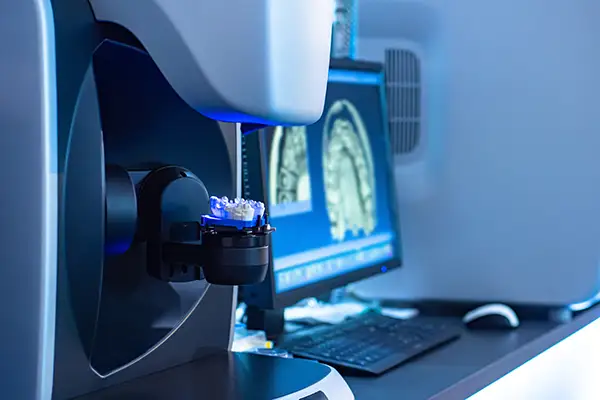 Emergency visits move faster than scheduled appointments because the goal is to stop the pain or damage now, then plan the long-term fix. Emergency visits move faster than scheduled appointments because the goal is to stop the pain or damage now, then plan the long-term fix.
The Triage Call
The first step is the phone call. Our team figures out how urgent the situation is and walks you through what to do on the way in. For knocked-out teeth, that means handling the tooth correctly (crown only, never the root) and storing it in milk if you can’t reimplant it. For severe pain, we ask about swelling, recommend over-the-counter relief in the meantime, and tell you whether to come in immediately or whether the situation can wait a few hours.
Same-Day Visit and Stabilization
At the office we examine the area, take any imaging needed (often a 3D Cone Beam scan for trauma cases), and address the immediate problem first. Depending on what’s causing the emergency, that might mean numbing the area and starting a root canal to relieve infected-pulp pain, milling a same-day porcelain crown chairside to replace one that came off, bonding a chipped front tooth before you go back to work, or extracting a tooth that can’t be saved. Our dental technology compresses what would otherwise take multiple visits: CEREC for same-visit crowns, an MLS laser (Multiwave Locked System) that can shorten post-procedure discomfort, and 3D imaging on trauma cases.
Comfort and Sedation Options
For patients who are panicking, gagging, or already exhausted from pain, oral conscious sedation makes the appointment easier to get through. You take a prescribed medication shortly before the visit, and you stay awake but relaxed throughout. The goal is to keep you comfortable while we do the work, not to force you to white-knuckle through it.
Follow-Up Restoration
Most emergencies are two steps: stabilize today, then restore later. After a root canal, the tooth typically needs a permanent crown to seal and protect what’s left of the natural tooth. After an extraction, a single dental implant or a bridge replaces the missing tooth so the bite stays balanced and adjacent teeth don’t shift. We handle that long-term plan in our restorative dentistry program rather than handing you off to another office.
Benefits of Prompt Emergency Care
The biggest practical benefit of acting fast on a dental emergency is that more options stay on the table the sooner you’re seen. A knocked-out tooth has the best chance of being reimplanted in the first hour. A cracked tooth that gets a crown the same day usually doesn’t progress to needing a root canal. An infection caught while swelling is still local rarely escalates to a spreading abscess that requires hospital care. Time matters more than almost anything else in emergency dentistry, and a practice that sees you today is meaningfully different from one that books you in a week.
Pain relief is the second obvious benefit. Severe dental pain is uniquely disruptive: it makes eating, sleeping, working, and thinking harder. The first goal of any emergency visit is to get the pain under control, even if the full restoration takes a follow-up appointment to complete.
Cost is the quieter benefit of fast emergency care. A small chip caught early can usually be fixed with bonding for a fraction of what a full crown costs once the chip propagates further. A loose crown re-cemented in time saves the tooth underneath from decay that would otherwise make it un-savable. The decisions you have available at hour one are usually better than the decisions you have available at hour fifty. The most cost-effective emergency visit, of course, is the one you avoid through routine preventive dentistry, but when emergencies happen, getting in fast minimizes both the dental and the financial damage.
Why Choose Our Practice for Emergency Dentistry
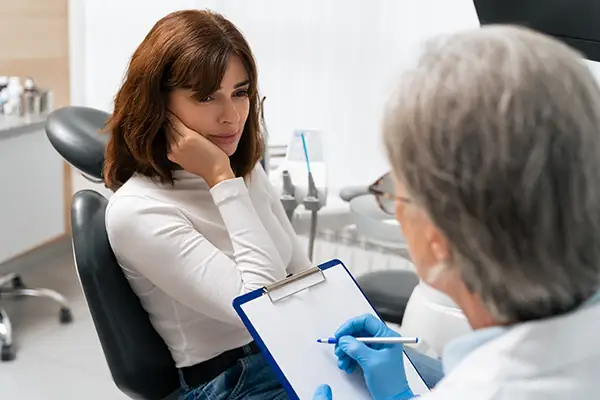 The single most important question to ask any emergency dentist is whether they can actually see you today. We hold same-day slots every business day for active emergencies, which is the answer in nearly every case during business hours. After-hours triage gets you accurate guidance about whether to seek a hospital ER, manage at home until morning, or come in first thing the next day. The single most important question to ask any emergency dentist is whether they can actually see you today. We hold same-day slots every business day for active emergencies, which is the answer in nearly every case during business hours. After-hours triage gets you accurate guidance about whether to seek a hospital ER, manage at home until morning, or come in first thing the next day.
Our technology compresses most emergency cases into a single appointment instead of three. CEREC milling produces a finished porcelain crown in one appointment so a tooth that broke this morning can have a permanent restoration this afternoon. We use the MLS laser during emergency root canals and extractions to reduce post-procedure swelling and shorten recovery. 3D Cone Beam imaging on trauma cases shows us what’s happening below the gumline before we touch anything.
Dr. Gore’s AACD Accredited Member status is a credential most patients don’t think to look for in an emergency dentist, but it earns its place here. Front-tooth fractures, broken-off cusps on smile-line teeth, and veneers that have come off are situations where the line between emergency dentistry and cosmetic dentistry blurs. The same eye for shape, shade, and surface that produces a good cosmetic case produces a clean emergency repair. The accreditation signals that work like this has been examined by other accredited dentists rather than claimed by the practice itself.
For anxious patients (and dental emergencies make almost everyone anxious), oral conscious sedation is available so the visit is something you can get through without dread. Most patients who try sedation once want it again.
What our emergency patients tell us about working with us:
"I had an emergency problem, they got me in fast and were able to help me. They were so courteous and helpful. I’ll definitely be using them as my dental office from now on."
– Melanie W., Google review
"5 stars only because there aren’t 6. At Goregeous Smile’s, state of the art equipment meets dental expertise in quality work and demeanor, with a staff of incredibly welcoming and kind people. I really do not like going to the dentist, but Dr. Rod Gore and his office make a dental emergency *almost* good news. Blown away by the total experience. Choose these guys, you will NOT regret it."
– James M., Google review
"Dr Gore is amazing!! He was very kind and helpful when I had an emergency. He is a Great Dentist that is kind and has a wonderful staff in the office. Thank you Dr Gore!"
– Heather M., Google review
More patient feedback on our reviews page.
Emergency Dentistry Cost and Financing
Cost matters, and we want to be straight about how it works for emergency visits. Emergency cost varies more than almost any other category of dental work because it depends entirely on the procedure. A bonding repair on a chipped front tooth is in a different price range from a root canal and crown after an infected molar. A simple extraction is in a different price range from an extraction plus immediate implant. We give you a clear written estimate before any treatment begins, so you know exactly what you’re agreeing to.
Insurance coverage on emergencies depends on the procedure. Most plans cover the diagnostic exam and X-rays. Partial coverage on root canals, crowns, and extractions is common. Cosmetic-only emergency repairs (a chipped front tooth fixed for purely aesthetic reasons) are the category least likely to be covered. Our front office team verifies your benefits with your carrier (we currently accept Cigna and other major PPO plans) and lays out what your insurance will and won’t pay before you commit. Our financial and insurance page lists accepted plans and outlines payment options.
For uninsured patients, our in-office GOREgeous Membership Plan is built around routine care but includes unlimited emergency exams as one of its benefits, plus a 20% discount on additional treatment. Flexible third-party financing is also available so an unexpected emergency can fit a monthly budget rather than requiring everything upfront. Call 480-585-6225 for a personalized estimate.
Call for Emergency Dental Care
Call GOREgeous Smiles at 480-585-6225 now if you’re dealing with an active dental emergency. Our office is at 8535 E. Hartford Drive #208 in Scottsdale, AZ 85255-5438. For non-urgent follow-ups, use our Request an Appointment page to schedule. Reach us through our Contact page with any questions before booking.
Frequently Asked Questions
What counts as a dental emergency?
The simplest rule: if you can’t eat, sleep, or focus through the pain, it’s an emergency. Beyond pain, four signs warrant a same-day call: bleeding that won’t slow with ten minutes of firm pressure, swelling that’s visibly spreading (especially toward the eye or under the tongue), a tooth that’s been knocked out or is loose enough to feel mobile, and any restoration that’s come off and left raw tooth surface exposed. Call us when you’re unsure – the triage call costs nothing and clarifies fast whether to come in today, head to an ER, or wait until morning.
How fast can I be seen for a dental emergency?
Same-day during business hours, in nearly every case – we keep emergency slots open every weekday for exactly this reason. The narrow exception is calls in the last 30 to 60 minutes of the day, which sometimes have to be the first appointment the next morning if no slot is open. After-hours calls go to our voicemail and on-call protocol, which routes you between three paths: a hospital ER if the situation is medical-grade, home triage with a same-day morning appointment if it can wait, or immediate guidance for time-sensitive situations like a knocked-out tooth where the first hour matters.
What do I do if I knock out a tooth?
The first 30 to 60 minutes is the window where reimplantation has the highest success rate, so the speed of getting to a chair matters more than anything else you do at home. Hold the tooth by the crown (never the root), don’t scrub it, and either place it back in the socket if you can or store it in cold milk on the way over. Two important nuances: this protocol applies to permanent teeth only – baby teeth aren’t reimplanted because they can damage the developing permanent tooth underneath; and a tooth that’s been out for several hours is still worth bringing in, since reimplantation success drops sharply after the first hour but doesn’t hit zero immediately.
How do I tell if my tooth pain needs emergency care?
The clearest signal is whether the pain has crossed into your daily life. Pain you can’t eat, sleep, or focus through is an emergency. Pain that responds to over-the-counter ibuprofen or acetaminophen and lets you function at a reduced level usually isn’t – that one can wait until business hours the next day. Two specific patterns always warrant a call regardless of pain level: pain that wakes you up at night (signals deep pulp involvement) and pain that throbs when you lie down or bend over (signals abscess pressure). Call us in either case and we’ll triage on the phone.
How can I manage dental pain at home until I’m seen?
Over-the-counter ibuprofen and acetaminophen often work better in combination than either alone for severe dental pain (check the dosing guidance on the labels). A cold compress on the outside of the cheek (20 minutes on, 20 off) reduces both pain and swelling. Avoid placing aspirin directly on the gum or tooth, which can burn the tissue. These measures are bridges to professional care, not substitutes for it.
Should I go to the ER or the dentist for a dental emergency?
Most dental emergencies are best treated by a dentist rather than an ER. Hospitals can prescribe pain medication and antibiotics but typically can’t perform a root canal, mill a crown, or replant a tooth, since those require dental equipment and a dentist’s training. Going to an ER for a dental issue often means getting a temporary fix and a referral back to a dentist anyway, plus a much larger bill. The ER is the right call when there’s severe swelling impacting breathing or swallowing, bleeding that won’t stop with sustained pressure, or facial trauma beyond just the teeth. For everything else, call our office first.
Can a tooth abscess wait until tomorrow?
Sometimes yes, often no – it depends on whether you have systemic symptoms. A localized abscess with throbbing pain, no fever, no expanding swelling, and no breathing or swallowing changes can usually be triaged on the phone and seen first thing the next morning. The answer flips to no when any of those signs appear (fever, expanding facial swelling, chills, difficulty breathing or swallowing), because the infection is moving beyond the tooth and either a same-day visit or a hospital ER becomes appropriate. Even a stable abscess shouldn’t wait more than 24 to 48 hours; abscesses get worse without intervention, not better.
Will my dental insurance cover an emergency visit?
Most carriers cover at least part of an emergency visit, though coverage depends on the plan and the procedure. Two practical questions worth asking your carrier: whether the procedure has medical-necessity coding available (which often unlocks coverage for treatments that would otherwise be considered elective), and whether you have unused annual maximum benefits before your plan year resets (since unused benefits typically expire). Our front office team handles those calls and benefits checks for you, so you know what your out-of-pocket will look like before you commit to any treatment.
Why should I choose GOREgeous Smiles for emergency dentistry in Scottsdale?
Three reasons specifically tuned to dental emergencies. First, real same-day capability – emergency slots are reserved every business day, and CEREC milling means a tooth that broke this morning can have a permanent porcelain crown bonded the same afternoon. Second, AACD-accredited precision: Dr. Gore is one of only two dentists in Arizona to hold this peer-reviewed credential, which matters most when the emergency involves a visible front tooth where shape, shade, and surface texture have to match. Third, follow-up under one roof: the restorative work that completes most emergency cases happens with the same team that stabilized the tooth, with no second referral and no time lost rebuilding the case file at a different office. |