Bruxism and Teeth Grinding Treatment in Scottsdale, AZ
 Bruxism and teeth grinding treatment at GOREgeous Smiles in Scottsdale, AZ protects your teeth from the damage that nighttime grinding and daytime clenching cause over time. Most patients don’t realize they’re grinding until a partner mentions it, or until our exam turns up flat-worn back teeth, a hairline crack on a molar, or sensitivity that doesn’t connect to a cavity. Once we identify what’s happening, we can stop the damage from continuing and ease the jaw soreness and headaches that usually come with it. Bruxism and teeth grinding treatment at GOREgeous Smiles in Scottsdale, AZ protects your teeth from the damage that nighttime grinding and daytime clenching cause over time. Most patients don’t realize they’re grinding until a partner mentions it, or until our exam turns up flat-worn back teeth, a hairline crack on a molar, or sensitivity that doesn’t connect to a cavity. Once we identify what’s happening, we can stop the damage from continuing and ease the jaw soreness and headaches that usually come with it.
Grinding shows up two ways. Nighttime bruxism is the more common form – you’re not aware of it, but the wear pattern shows up on your back teeth and your jaw aches when you wake up. Daytime clenching is more often stress-related, and patients sometimes catch themselves doing it during work, traffic, or focused tasks. Treatment looks different depending on which pattern is driving the problem, and most people have a bit of both.
Bruxism management is part of preventive dentistry in our office because catching it early keeps small problems from turning into cracked teeth, TMJ symptoms, or full-mouth restorative work later. Most patients we treat for grinding tell us they wish they’d started sooner.
On This Page
What Is Bruxism and Teeth Grinding?
Bruxism is the clinical term for involuntary grinding or clenching of your teeth, often without you knowing it’s happening. It can occur during sleep, during the day, or both, and over time it wears the chewing surfaces of your back teeth, chips the edges of your front teeth, and tires the muscles that move your jaw.
Nighttime Grinding vs. Daytime Clenching
Nighttime bruxism happens during sleep, often in cycles tied to lighter sleep stages. Patients usually find out about it from a sleep partner who hears the grinding sound, or from morning symptoms: jaw soreness, dull headaches at the temples, and sometimes a popping or stiff jaw that loosens as the day goes on. Daytime clenching is usually a stress response. People hold their teeth together while concentrating or while frustrated and don’t notice until the muscles fatigue. The two patterns can overlap, and the treatment plan depends on which one is doing the most damage.
Signs You May Be Grinding
A few common signs we see during exams: flat, polished surfaces on the chewing edges of the molars (these should have peaks and valleys, not a flat plane), small chips on the edges of the front teeth, sensitivity in teeth without obvious decay, receding gum lines that don’t match a brushing pattern, and visible enlargement of the masseter muscle at the angle of the jaw. Headaches concentrated in the temples that wake you up, or a jaw that’s tired by lunchtime, also point toward grinding.
What Untreated Grinding Does Long-Term
Untreated grinding tends to compound. Wear that starts on a single back tooth eventually shows up on its neighbors. Hairline cracks turn into broken cusps that need crowns. Constant muscle tension gives some patients chronic temple headaches and the jaw popping or limited opening that defines TMJ symptoms. The good news is that most of this is preventable with the right protective appliance and, for some patients, by treating the underlying cause directly.
Your Bruxism Care Team in Scottsdale
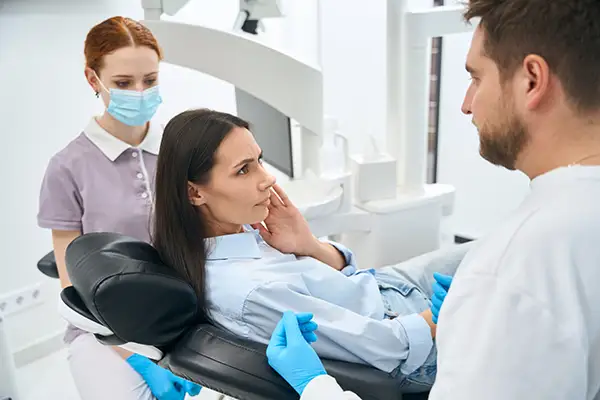 Dr. Rod W. Gore has been practicing dentistry in Scottsdale for over 38 years, which means he has seen what years of grinding actually does to teeth and which interventions hold up over time. He is one of only two dentists in Arizona to hold AACD Accredited Member status, the peer-reviewed credential that requires submitting completed cases for examination by other accredited dentists. Full background on Dr. Gore’s bio page. That experience matters in bruxism care because the choices he makes – how thick to make a guard, when Botox is the better answer, when a worn tooth needs a crown rather than a watchful wait – come from decades of seeing the long-term outcomes. Dr. Rod W. Gore has been practicing dentistry in Scottsdale for over 38 years, which means he has seen what years of grinding actually does to teeth and which interventions hold up over time. He is one of only two dentists in Arizona to hold AACD Accredited Member status, the peer-reviewed credential that requires submitting completed cases for examination by other accredited dentists. Full background on Dr. Gore’s bio page. That experience matters in bruxism care because the choices he makes – how thick to make a guard, when Botox is the better answer, when a worn tooth needs a crown rather than a watchful wait – come from decades of seeing the long-term outcomes.
How We Treat Bruxism at Our Office
Treatment depends on what’s driving the grinding, so the first step is figuring that out. The plan for a patient whose grinding shows up only at night is different from the plan for a patient whose masseter muscle has gone hyperactive from years of clenching, and different again from a patient whose grinding traces back to a bite that doesn’t seat correctly.
Exam, Bite Check, and Identifying the Pattern
Your first appointment for grinding concerns includes a focused exam looking for wear patterns on the back teeth, cracks under transillumination, masseter and temporalis muscle palpation, and a bite check to see how your teeth come together. We ask about morning symptoms, sleep quality, and whether a partner has heard grinding. From there we can usually point at one or two main contributors and build a plan around them.
Custom Mouth Guard
A custom mouth guard is the foundation of bruxism treatment for most patients. We design and 3D-print the guard in our office using SprintRay technology, so the fit comes from a digital scan of your actual teeth rather than a one-size sports guard from a drugstore. The guard sits between your upper and lower teeth at night, and the grinding pressure goes into a replaceable piece of acrylic instead of into your enamel, your jaw joints, and the muscles that move them. Patients usually report waking up less sore within the first one to two weeks of consistent wear.
Therapeutic Botox When Muscles Are the Driver
When the masseter muscle has built up over years of clenching and become a major source of pain, headaches, or facial fatigue, therapeutic Botox for headaches and TMJ can reduce the muscle’s force significantly without affecting normal chewing. We inject small amounts into the masseter and sometimes the temporalis muscles. The effect builds over the next two weeks, and a single round typically lasts roughly three to four months. For patients who have plateaued on a guard alone, this is often the addition that breaks the cycle.
When the Bite Itself Is the Cause
Sometimes the trigger for grinding is a bite that doesn’t seat correctly, so the jaw subconsciously tries to find a stable position by moving the teeth against each other. In those cases, an occlusal bite adjustment makes small refinements to specific tooth surfaces so the bite closes evenly. We do this conservatively and only when the exam clearly points at occlusion as a contributor.
When Grinding Ties Back to Sleep Quality
Airway issues during sleep can drive nocturnal grinding. Patients with disrupted breathing at night sometimes grind as part of an arousal response that pulls the airway open. If your bed partner reports loud snoring or breathing pauses, or you wake up unrefreshed despite enough hours of sleep, we’d want to evaluate sleep apnea before treating grinding in isolation. Treating the airway often quiets the grinding.
Repairing Damage From Years of Wear
For patients whose teeth are already worn flat, chipped, or cracked from grinding, the protective guard prevents further damage but doesn’t restore what’s already gone. Depending on the case, that may mean composite bonding to rebuild worn edges, porcelain crowns on molars that have lost vertical height, or in severe cases a full-mouth rehabilitation that restores the bite to a healthier dimension. We map this out separately at the consultation if it applies.
Benefits of Treating Bruxism
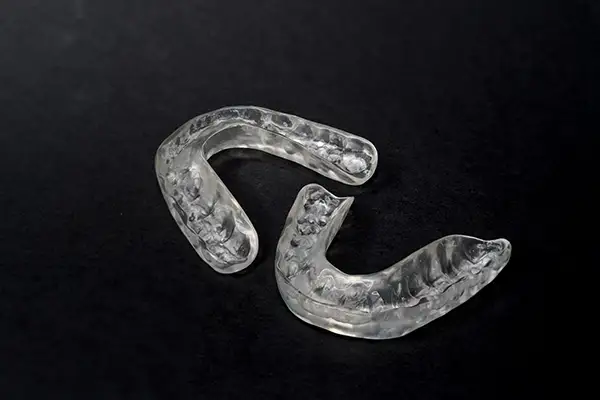 The most concrete benefit of treating bruxism early is what it prevents. A custom guard worn nightly costs a fraction of a single porcelain crown, and many patients who grind without protection eventually need restorative work for a cracked molar or a worn-down chewing surface. The math favors the guard. The most concrete benefit of treating bruxism early is what it prevents. A custom guard worn nightly costs a fraction of a single porcelain crown, and many patients who grind without protection eventually need restorative work for a cracked molar or a worn-down chewing surface. The math favors the guard.
The other benefits show up faster than patients usually expect. Morning jaw soreness eases within the first couple of weeks for most people. Tension headaches that wake you up at the temples typically improve as the muscles get a chance to rest. Sensitive teeth often calm down once they’re not getting hammered every night. For patients who have been told their face looks puffy or more square because of masseter hypertrophy, treating the muscle directly can soften that appearance over a few months.
A less visible benefit is what doesn’t happen. Cracks that would have grown into broken teeth stay quiet under the guard. Worn enamel doesn’t get any thinner. The TMJ symptoms that grinding amplifies have a chance to settle. Patients who started treatment because of jaw pain often tell us months later that the headaches they had assumed were unrelated also went away.
Why Choose Our Practice for Bruxism Treatment
The practical reason to come to us for grinding concerns is that we can do every part of the workup and treatment in one office. We design and print custom guards in-house with SprintRay 3D printing, which means same-day or next-day turnaround instead of two-week lab waits. When the masseter is the bigger driver, Dr. Gore performs therapeutic Botox in the same office on the same chart, so we don’t have to refer out for it. If your grinding turns out to be sleep-related, we can run the conversation about airway and oral appliances right there. And if your teeth need restoration after years of wear, we have the cosmetic and restorative training to handle the work without sending you to a separate practice.
The other reason is depth of experience. Dr. Gore has been seeing grinding cases for over 38 years. He has seen what guards hold up, what bite adjustments work, and which Botox dosing actually quiets a hyperactive masseter without making chewing weak. Pattern recognition like that is hard to teach and impossible to rush.
What our patients say about working with us:
"I have had a phobia of needles my whole life and have crippling anxiety over dentists. 5 years ago I went into Dr. Gore’s office and it changed my life. Years down the road, I now have veneers and a few root canals and implants, plus his team recognized my bite was off from grinding and gave me TMJ, so they built up my back molars to fix it. The entire team just makes you feel safe and that you are absolutely getting the best most professional care out there. I cannot recommend Dr. Gore and his entire team highly enough. A very grateful patient, Ashleigh"
– Ashleigh F., Google review
"Dr. Rod Gore and every member of his team offer excellence in dental care. Each individual, and the team as a whole, are highly competent and caring. They are sensitive to your needs and really listen, providing a positive, nurturing experience that will promote rapid recovery and healing. I am so appreciative of the quality of care and highly recommend this dental practice."
– Susan R., Google review
"Dr Gore and his staff are always gentle, kind and thorough. I am not a ‘good’ dental patient so this is important to me. Dr Gore is extremely knowledgeable and I find his staff to be so also."
– Pamela K., Google review
Bruxism Treatment Cost and Financing
Cost varies because the treatment varies. A custom night guard is the most common starting point and is the lowest-cost intervention. Therapeutic Botox runs on per-session pricing and depends on how many units the masseter and temporalis muscles need. Bite adjustment and restorative work after damage have separate quotes. We give you a clear written estimate after the exam so you know what each piece costs before you commit.
Many dental insurance plans cover at least part of a custom occlusal guard because it qualifies as protective dental care. Therapeutic Botox for documented jaw muscle dysfunction sometimes runs through medical rather than dental insurance, depending on the plan. When grinding has damaged teeth, the restorative work typically falls under standard restorative dentistry coverage. Our financial and insurance page lists accepted plans, including Cigna, among others.
For patients without dental insurance, our GOREgeous Membership Plan covers preventive care for a flat annual fee and includes a 20% discount on additional treatment, which helps spread the cost of guards and follow-up visits across the year. We offer flexible third-party financing for larger restorative work. Call 480-585-6225 for a personalized estimate.
Schedule Your Bruxism Consultation
If your jaw is sore in the morning or you’ve been told you grind at night, start with the consultation. Call GOREgeous Smiles at 480-585-6225 or use our Request an Appointment page to schedule. We’re located at 8535 E. Hartford Drive #208 in Scottsdale, AZ 85255-5438. You can also reach us through our Contact page with any questions before booking.
Frequently Asked Questions
How do I know if I’m grinding my teeth at night?
The two most common ways patients find out: a sleep partner mentions hearing grinding sounds, or our exam finds wear patterns the patient hadn’t noticed. Telltale morning symptoms include a sore jaw, dull headaches at the temples, and teeth that feel sensitive without an obvious cause. If you’re not sure, we can do a wear-pattern exam and a muscle palpation in about ten minutes during a regular cleaning visit, which is often the visit where we catch it.
Will an over-the-counter mouth guard work as well as a custom one?
Drugstore guards can offer some short-term protection but rarely fit well enough for long-term nightly wear. They tend to be bulky, fall out during sleep, or shift the bite in a way that creates new jaw symptoms. A custom guard fits your teeth precisely from a digital scan, spreads grinding pressure evenly across the bite, and is thin enough that most patients adapt to it within a couple of nights.
How long does it take to get a custom night guard at GOREgeous Smiles?
Because we 3D print our guards in-office with SprintRay technology, most patients have their guard within a day or two of the digital scan, sometimes the same day depending on the schedule. Traditional lab-made guards typically take two to three weeks. The digital workflow also means a more precise fit because there’s no impression material distortion to compensate for.
Is therapeutic Botox safe for treating bruxism and clenching?
Yes, with an experienced provider and the right muscle targets. We inject small amounts directly into the masseter and sometimes the temporalis – the muscles doing the clenching – not into facial cosmetic areas. Side effects are uncommon and the treatment doesn’t interfere with normal chewing. The effect lasts roughly three to four months, after which we reassess based on how your symptoms have changed before deciding on a second round.
Can stress alone cause teeth grinding?
Stress is a major contributor, especially for daytime clenching. But many patients who think their grinding is purely stress-related actually have a structural component too – a bite that doesn’t seat correctly, or sleep-disordered breathing that triggers grinding as part of an arousal response. We look at all of these during the exam because treating only the stress side often leaves residual damage continuing to add up.
Will my dental insurance cover bruxism treatment in Scottsdale?
Coverage depends on which piece of treatment you need. Custom occlusal guards usually have the strongest coverage because insurers recognize them as preventive against more expensive future restorative work. Two questions worth asking your carrier specifically: what your annual maximum is, and whether your plan has a frequency limit on occlusal guards (some are one per three years, some are one per five, some have no limit). Our front office team handles those calls before treatment so the answers come back to you in writing.
What happens if I do nothing about grinding?
The damage doesn’t pause. Each year of untreated grinding adds to the wear pattern, and the eventual fix gets bigger and more expensive. The most common pattern we see is patients who delay through their 30s and 40s ending up needing crowns, full-mouth restoration, or TMJ-focused care in their 50s and 60s. Restorative work to fix advanced grinding damage usually costs many times more than a guard would have over that span. |