Preventive Dentistry in Scottsdale, AZ
If you’re looking for preventive dentistry in Scottsdale, AZ, GOREgeous Smiles focuses on catching small problems early so they don’t become big ones. Preventive dentistry covers exams, cleanings, gum-health monitoring, oral cancer screening, sealants, custom guards, and the protective work that keeps your teeth, gums, and bite functioning over a lifetime.
The biggest reason preventive care matters isn’t the cleaning itself. An exam every six months catches a small cavity before it becomes a root canal, a small gum issue before it becomes bone loss, and a patch of tissue worth watching before it becomes anything more. Prevention is the part of dentistry where ten minutes of attention today saves hours of restoration later.
The most common hesitation we hear from new patients in Scottsdale is whether routine visits are worth keeping when nothing hurts. The honest answer is that the patients who keep their natural teeth into their 70s and 80s are almost always the ones who never stopped going. Many of our current patients have been coming here for 20 to 30 years.
On This Page
What Is Preventive Dentistry?
Preventive dentistry is the set of routine services and home-care habits that keep teeth, gums, and the joints that move your jaw working well over a lifetime. The point isn’t to do more dentistry. It’s to do less, by catching small issues before they grow and by reinforcing the natural defenses your mouth already has.
At our Scottsdale practice, we cover the full preventive scope so a single ongoing relationship can protect your oral health from childhood through retirement.
Routine Dental Exams
A comprehensive dental exam is more than a quick look. We check every tooth for decay or cracks, measure gum-pocket depths to track periodontal health, screen for oral cancer, evaluate your bite for clenching and grinding wear, and review any digital X-rays we’ve taken. Part of every exam is a cavity risk assessment, a structured look at the factors driving decay risk for you specifically (saliva flow, diet, fluoride exposure, existing restorations, recent cavity history) so we can match the recall interval and protective measures to your actual risk rather than a one-size-fits-all schedule. Most adults do best on a six-month exam schedule. Patients with a higher risk of decay or gum disease often benefit from a shorter interval.
Professional Dental Cleanings
A routine dental cleaning removes plaque and tartar that brushing and flossing can’t reach, especially along the gumline and between teeth. There are three levels we work with. A regular prophylaxis is for patients with healthy gums. Deep teeth cleaning (scaling and root planing) is the next step when pocket depths and bleeding scores show active periodontal infection; it treats inflammation below the gumline that a routine prophylaxis can’t reach. Periodontal maintenance is the ongoing schedule for patients with a history of gum disease, typically every three to four months, designed to keep things stable after deep cleaning has resolved the active phase. Your hygienist also polishes away surface stains and recommends home-care tools that fit your situation.
Oral Cancer Screening
Oral cancer screening is part of every comprehensive exam at our office. The screening is quick and painless, and it covers the tongue, cheeks, palate, floor of the mouth, and throat. Oral cancer can develop without pain or visible symptoms in its earliest stages, and the survival rate when caught early is dramatically higher than when caught late. We use a Velscope device to highlight tissue changes that aren’t always visible under standard light.
Gum Health and Periodontal Care
Gum disease is the leading cause of adult tooth loss, and it usually develops with little pain. We screen for gingivitis and periodontitis at every cleaning using pocket measurements, bleeding scores, and bone-level checks on X-rays. Smoking, diabetes, dry mouth, and crowded teeth all raise the risk. When early signs appear, we tailor the cleaning interval and the home-care plan to keep things stable rather than waiting for a problem. Receding gums are another early signal, sometimes from gum disease itself and sometimes from aggressive brushing or thinning tissue with age. Gum recession treatment starts with identifying the cause; soft-tissue grafting comes up only when recession is significant enough to expose root surfaces or threaten tooth stability.
Dentistry for Kids
Dentistry for kids is one of the most important parts of prevention. Visits are gentle, kid-paced, and focused on building positive habits at home. We monitor erupting teeth, apply fluoride and sealants when indicated, screen for spacing or bite issues that may matter later, and answer the questions parents always have about thumb-sucking, lost teeth, and best-toothpaste-for-this-age. Starting early is one of the biggest factors in whether a child grows up comfortable in a dental chair.
Dental Sealants and Fluoride
Dental sealants are thin, protective coatings painted into the deep grooves of back teeth to keep bacteria and acids out. They’re quick, painless, and most often placed on children’s molars as those teeth erupt, but cavity-prone adults benefit too. Fluoride strengthens enamel and helps reverse early demineralization before it becomes a cavity. In-office fluoride treatment pairs with daily fluoridated toothpaste at home for the strongest protection.
Common Conditions We Treat Preventively
Some preventive concerns aren’t cavities or gum disease themselves. They’re conditions that warp the mouth’s protective environment and quietly raise the risk of both.
Dry mouth (xerostomia) is one of the most under-treated risk factors in dental care. Saliva is what neutralizes acids, washes away food, and carries the minerals that re-harden enamel after every meal. When saliva drops, both decay risk and gum disease risk climb because the natural cleaning and remineralization cycle weakens at the same time. The most common causes we see in Scottsdale are medication side effects (especially blood pressure, allergy, antidepressant, and bladder medications), Sjögren’s syndrome and other autoimmune conditions, head and neck radiation, mouth-breathing during sleep, and the simple matter of Arizona heat and dehydration.
If your mouth feels dry most of the day, you wake up parched, you have new sensitivity, or you’ve had more cavities lately than you used to, dry mouth treatment is part of the picture. Treatment varies depending on the cause: prescription-strength fluoride toothpaste to protect enamel, in-office varnish at every visit, more frequent cleanings to keep up with the higher decay risk, saliva substitutes and stimulating products, water-and-xylitol-gum routines through the day, humidifier use at night, and a medication review with your physician when a side effect is the trigger. For severe cases, prescription sialagogues like pilocarpine can stimulate saliva production directly. We also evaluate for nighttime mouth-breathing, which often points to a separate sleep-related conversation.
Bad breath treatment starts with finding the source. Periodontal disease and dry mouth are the most common dental drivers, but sinus issues, GI conditions, and certain dietary patterns can also be behind it. Mints and rinses cover the symptom; identifying the source is what fixes it.
Enamel erosion treatment addresses something different from cavities. Instead of decay caused by bacteria, it’s a chemical thinning of enamel from acid exposure (frequent sipping of soda, coffee, citrus, or sparkling water; GERD; recurring vomiting). We coach on timing (waiting 30 minutes after acid before brushing, since brushing softened enamel makes the wear worse), strengthen the remaining enamel with fluoride and sometimes hydroxyapatite products, and address any underlying medical contributor that’s keeping the acid exposure going.
Specialized Preventive Care for Specific Patient Needs
Preventive needs vary by life stage and health context, and the standard cleaning-and-exam template doesn’t always match what specific patients need most.
Prenatal dental care matters more than most expectant parents are told. Hormonal shifts during pregnancy raise the risk of gum inflammation (often called pregnancy gingivitis), and routine cleanings and needed treatment are safe throughout pregnancy. The second trimester is typically the most comfortable window for non-urgent work. We coordinate X-ray timing, positioning, and anesthetic choices with your OB so nothing happens that your physician hasn’t seen ahead of time.
Dental care for diabetic patients runs on a tighter loop than standard preventive scheduling. Diabetes and gum disease have a bidirectional relationship: poorly controlled blood sugar makes gum infections worse, and active gum infections make blood sugar harder to control. For most diabetic patients we recommend a three- to four-month cleaning interval rather than six months, and we coordinate with your physician when periodontal findings affect glycemic control or vice versa.
A strong gag reflex makes routine X-rays and back-tooth exams genuinely difficult, and we approach dental care for sensitive gag reflex differently rather than pushing through. Panoramic X-rays often replace standard bitewings when the bitewing position triggers gagging. Slow-paced exams, controlled breathing techniques, and occasional use of nitrous oxide for severe cases keep the visit doable.
Sensitive Teeth
Sensitive teeth usually trace back to gum recession, enamel wear, an acidic diet, or recent whitening. We pinpoint the cause first, then build a plan that may include desensitizing varnishes, prescription fluoride, a custom guard for grinding, or targeted bonding to cover exposed root surfaces. The right treatment depends entirely on what’s driving the sensitivity, so the diagnostic step is what makes the difference.
Senior Preventive Care
Senior dental care looks different from preventive care at 30. Medications often cause dry mouth. Receding gums expose root surfaces, which decay faster than enamel. Hand dexterity changes can make brushing and flossing harder. Existing crowns, bridges, and partial dentures need their own care routine. Senior preventive visits at our office focus on saliva and moisture management, root-surface fluoride, denture and implant hygiene coaching, and tools that make brushing and flossing easier when hand strength or dexterity has changed.
Custom Night Guards
A custom night guard cushions your bite while you sleep, redistributing the forces from clenching and grinding. The signs you may need one are a stiff jaw in the morning, headaches that start near the temples, fractures or chips in front teeth, and visibly flat wear surfaces on the back teeth. Custom guards fit precisely, protect teeth more reliably than over-the-counter versions, and don’t cause the secondary jaw problems that ill-fitting drugstore guards can. When the underlying grinding is severe (wearing through guards, contributing to TMJ pain, or causing visible tooth damage despite protection), bruxism and teeth grinding treatment addresses the habit more directly than the guard alone.
Custom Sports Mouthguards
A well-fitted sports mouthguard is the most reliable way to prevent dental injury during contact sports. Custom guards lower the risk of broken teeth and lip and cheek lacerations compared with the boil-and-bite versions sold in sporting goods stores. They fit better, allow easier breathing and speech, and they’re worth getting for any kid playing football, basketball, soccer, hockey, lacrosse, or any contact or ball sport.
TMJ Conservative Care
TMJ care starts conservative at our office. Jaw soreness, clicking, limited opening, and tension headaches all have several possible causes, so we work through the conservative options before considering anything more involved. We start with a bite assessment, posture and tongue-position habits, gentle stretching exercises, and an occlusal appliance when one is indicated. When the bite itself is part of the problem, occlusal bite adjustment reshapes the contact points so forces redistribute correctly. Surgical or injectable treatments come up only if conservative care doesn’t resolve the issue.
Sleep Apnea Screening
Snoring, daytime fatigue, morning headaches, and unexplained tooth wear can all signal obstructive sleep apnea. Screening is part of routine preventive visits, and when results suggest something more, we coordinate with your physician on a sleep study. For appropriate cases, custom oral appliances reposition the jaw to help keep the airway open at night. They’re quiet, travel easily, and many patients find them more livable than CPAP for mild to moderate cases.
Orthodontic Alignment as Prevention
Straight teeth are easier to clean, trap less plaque, and balance bite forces so you don’t wear one part of your smile faster than another. SureSmile clear aligners can be part of a long-term preventive plan, especially for patients whose crowding or gaps have led to repeated decay or gum issues in the same spots. Alignment isn’t cosmetic-only when crooked teeth are causing measurable damage.
Your Preventive Dentistry Team in Scottsdale
Dr. Rod W. Gore is one of only two dentists in the state of Arizona to hold Accredited Member status with the American Academy of Cosmetic Dentistry. AACD Accreditation is widely associated with cosmetic work, and it is a peer-reviewed credential that requires submitting completed cases for examination by other accredited dentists. The same posture that earns it (protect natural tooth structure, plan before you treat, get the small details right) is exactly the posture that drives long-term preventive outcomes.
Dr. Gore’s bio details his Doctor of Dental Surgery from Northwestern University in 1987, his founding of the Phoenix Esthetic Study Club in 1998, and his clinical instructor positions with the Pacific Aesthetic Continuum at the University of the Pacific and with the Las Vegas Institute for Advanced Dental Studies. He continues to serve as an active AACD Examiner and has practiced in Scottsdale for over 38 years. Many of our preventive patients have been coming to him for 20 years or more, which gives the team a long memory of what works for each mouth.
The hygiene team handles most of the day-to-day preventive work. Patients regularly mention Shawna by name in reviews for her thoroughness and bedside manner, and that consistency over years is part of why patients stay.
The Preventive Dentistry Process
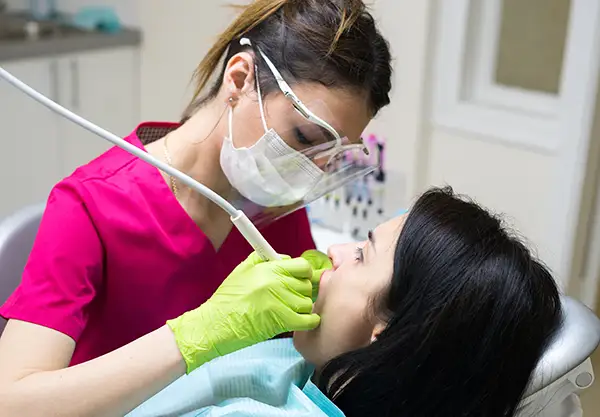 A typical preventive visit at our Scottsdale office runs about an hour for a routine cleaning and exam, longer for a first visit because we’re building a complete record. A typical preventive visit at our Scottsdale office runs about an hour for a routine cleaning and exam, longer for a first visit because we’re building a complete record.
Health Conversation and Records Review
Every visit starts with a quick conversation. What’s changed since last time, any new medications, any sensitivity or discomfort, anything that’s worth checking. Medications are a bigger deal in preventive care than most patients realize because so many of them affect saliva, bleeding tendency, and bone density.
Cleaning and Hygiene
Your hygienist removes plaque and tartar above and below the gumline, polishes surface stains, and applies fluoride if it’s indicated. The cleaning portion takes most of the appointment time, and we adjust the technique to your gum health: a routine prophy is gentler than periodontal maintenance, and we explain the difference if your needs change.
Comprehensive Exam
Dr. Gore checks every tooth for cavities and cracks, measures gum pocket depths, evaluates the bite for clenching wear, screens for oral cancer, and reviews any digital X-rays. Our dental technology supports this stage: digital radiography keeps radiation low and lets us compare year over year, intraoral cameras let you see what we see, and Velscope highlights tissue changes during oral cancer screening.
Findings and Recommendations
You leave with a clear summary. If everything looks stable, we usually recommend keeping the same six-month interval and your current home-care routine. If we find early decay, we explain what we’re seeing and walk through your options. For larger restorative work, our restorative dentistry page covers the most common procedures. If we find a gum-health change, we’ll usually adjust the cleaning interval before any deeper intervention. Nothing happens without your okay.
Benefits of Preventive Dentistry
 The most measurable benefit of preventive care isn’t something we can show in a chart. It’s how rarely our long-term preventive patients need restorative work, and how often the work they do need is simple rather than complex. That’s the practical outcome. The most measurable benefit of preventive care isn’t something we can show in a chart. It’s how rarely our long-term preventive patients need restorative work, and how often the work they do need is simple rather than complex. That’s the practical outcome.
The financial case is straightforward. A cleaning and exam costs less than a filling, a filling costs less than a crown, a crown costs less than a root canal and a crown, and a root canal that fails costs more than any of the above. Patients who stay on a regular preventive schedule spend less on dentistry over a lifetime, not more.
Beyond money, preventive care preserves what you already have. Natural enamel is stronger than any restorative material we can place. The longer your natural teeth keep doing their job, the better your bite, your nutrition, and your smile hold up over time. The protective work we do at preventive visits (sealants, fluoride, mouthguards, night guards, gum maintenance) keeps what you were born with intact.
Preventive care also catches non-dental issues. Oral cancer screening, sleep apnea screening, and grinding evaluation all surface problems that show up first in the mouth. We’ve referred more than one patient for a sleep study or a primary-care follow-up based on something we noticed at a routine visit.
Why Choose Our Practice for Preventive Care
The simplest reason to choose us for routine preventive care in Scottsdale is consistency over time. Many of our preventive patients have been here for 20 years or more, which means we know your dental history, your risk patterns, and what’s normal for your mouth without you having to re-explain everything at every visit. That continuity catches problems faster than a fresh chart can.
Dr. Gore’s AACD Accredited Member status is unusual in a preventive context (the credential is associated with cosmetic work) but it shapes how we think about prevention too. Dentists who hold the credential tend to favor conservative, tooth-preserving approaches over aggressive ones. That bias matters in preventive care because the easiest way to lose a tooth long-term is to over-treat it short-term.
The hygienist team is the other half of the answer. Patients consistently mention Shawna by name as the reason they don’t want their cleanings done anywhere else. Continuity in hygiene matters: a hygienist who has cleaned your teeth for years recognizes a small change before any tool or chart would.
Our dental technology supports preventive accuracy. Digital X-rays are low-dose and easy to compare year over year, intraoral cameras let you see what we’re looking at, the Velscope adds a tissue-fluorescence layer to oral cancer screening, and the MLS cold laser supports gum-tissue healing during periodontal therapy.
What our preventive patients say:
"I have been a patient of Dr Gore’s for a decade and what a difference a great dentist makes! My gums were in very bad condition but he set up a recovery plan to get them healthy. Shawna is by far the best dental hygienist I’ve ever been to and I wouldn’t let anyone else near me for my cleanings – absolutely amazing with the best bedside manner ever (calms my nerves)."
– Tiffany C., Google review
"First visit to office. Wow! So impressed with the service and attention to detail. Looking for a new dentist in Scottsdale? Make an appointment, you will not be disappointed. They care and communication is top notch. Dr. Gore was so kind and Shawna is the best dental hygienist! My teeth have never been cleaned this thoroughly."
– B., Google review
"Whenever I have an appointment at Dr. Gore’s office, I know that I am going to be well taken care of in every single aspect; whether it is for a complex procedure, a cleaning or administrative questions. Top notch office!"
– Rosemary H., Google review
More patient feedback on our reviews page.
If you have a sudden problem outside a routine visit, our emergency dentistry services are available so you don’t have to wait until your next checkup if pain or decay shows up.
Preventive Dentistry Cost and Insurance
Preventive care is the part of dentistry insurance covers most generously. Most dental plans pay 80 to 100 percent of routine cleanings, exams, and X-rays at recommended intervals, and many cover sealants and fluoride for kids at the same level. Our front office team verifies your benefits with your carrier (we now accept Cigna, among other major PPO plans) and lays out exactly what your plan will and won’t cover before any visit. Our financial and insurance page lists accepted plans.
For patients without dental insurance, the in-office GOREgeous Membership Plan focuses on preventive care. The plan covers routine cleanings, exams, X-rays, fluoride, and an annual oral cancer screening with Velscope, plus a 20 percent discount on additional treatment for one flat annual fee. For patients who would otherwise skip preventive visits because of out-of-pocket cost, the math usually works in favor of the plan over individual visit fees.
If we find a problem at a preventive visit, we give you a written estimate before any work begins. Call 480-585-6225 for a personalized estimate or to ask about specific coverage questions.
Schedule Your Preventive Visit
Routine preventive care works best when it’s consistent. Call GOREgeous Smiles at 480-585-6225 or use our Request an Appointment page to schedule a cleaning and exam. We’re located at 8535 E. Hartford Drive #208 in Scottsdale, AZ 85255-5438. You can also reach us through our Contact page with any questions before booking.
Frequently Asked Questions
How often should I have a dental exam and cleaning in Scottsdale?
Every six months is the standard recommendation for adults with healthy gums. Patients with a history of gum disease, high cavity risk, dry mouth, or active medical conditions like diabetes often benefit from a three- or four-month interval instead. We set the schedule based on your individual risk pattern, not a default rule.
Will my preventive visit hurt if I have sensitive teeth or sore gums?
A routine cleaning shouldn’t hurt, even with sensitive teeth or mild gum inflammation. Tell your hygienist before the visit and we adjust the technique, the cleaning instruments, and the rinses we use. For periodontal maintenance cleanings on patients with active gum disease, we offer topical anesthetic or, in some cases, local anesthesia to keep the visit comfortable.
What happens if you find decay or another problem at a preventive visit?
We show you what we found, usually with an intraoral camera image or an X-ray, and explain the options. For a small cavity caught early, that often means a tooth-colored filling at a separate appointment. For larger issues we walk through the relevant choices on our restorative dentistry page. We don’t schedule or start anything until you’ve agreed.
My mouth is always dry. Is that something a dentist can help with?
Yes, and dentists usually catch it before primary care does. The clinical signs we look for at a routine exam are tissue dryness on the cheeks and tongue, saliva that looks thick or stringy, and a cavity pattern that shows up on the surfaces between teeth or near the gumline. If we’re seeing those signs, we’ll start protective treatments at the same visit (in-office fluoride varnish, prescription toothpaste, saliva substitutes worth trying) and bring you back on a shorter recall to keep new decay from getting started.
Are dental sealants only for kids?
Most insurance covers sealants only for children, which is the practical reason they’re associated with kids, but the clinical rationale extends to adults with deep molar grooves, dry mouth, or a history of cavities in the back teeth. A sealant typically lasts 5 to 10 years before it needs touch-up, and we check existing sealants for chips or wear at every routine cleaning. For adults paying out of pocket, sealants on a few high-risk teeth are usually a fraction of the cost of treating one cavity in the same spot.
How do I know if I have early gum disease?
The early signs are bleeding when you brush or floss, persistent bad breath that doesn’t go away with rinses, gum tenderness, and visible recession around any tooth. Late signs (loose teeth, deep gum pockets, bone loss on X-rays) often have no symptoms patients notice on their own, which is why pocket measurements at every cleaning matter even when nothing feels wrong.
I’m pregnant. Should I delay dental cleanings and exams until after the baby?
Pregnancy is one of the times preventive visits matter most, not less. Routine cleanings and exams are safe throughout pregnancy, and skipping them raises the risk of pregnancy gingivitis (gum inflammation that hormonal shifts during pregnancy already push toward). For non-urgent treatment, the second trimester is typically the most workable window because first-trimester nausea and third-trimester positioning challenges both make longer appointments harder. Bring your OB’s contact information to your visit so any decision beyond a standard cleaning can route through them quickly.
When should my child have their first dental visit?
By age one or within six months of the first tooth coming in, whichever happens first. The first visit is short and gentle and focused on building a positive relationship with the chair more than on doing extensive work. We pace the appointment to your child’s comfort level rather than to a schedule, which is why some first visits look more like a tour of the office than a checkup.
Do I still need preventive visits if I have dental implants or full dentures?
Yes. Implants and dentures don’t get cavities, but the gum and bone around them still need monitoring, and your remaining natural teeth still need cleaning. We also screen for oral cancer at every visit regardless of whether you have natural teeth, since we check the soft tissues the same way for everyone. |