Composite Veneers in Scottsdale, AZ
 Composite veneers at GOREgeous Smiles in Scottsdale, AZ change the shape, length, or color of your teeth in one appointment, without impressions, a lab, or temporaries. Dr. Gore sculpts tooth-colored composite resin directly onto the front surfaces of the teeth, layer by layer, right at chairside. The whole case finishes the same day you walk in. Composite veneers at GOREgeous Smiles in Scottsdale, AZ change the shape, length, or color of your teeth in one appointment, without impressions, a lab, or temporaries. Dr. Gore sculpts tooth-colored composite resin directly onto the front surfaces of the teeth, layer by layer, right at chairside. The whole case finishes the same day you walk in.
If you’ve been looking into veneers, you may not know there’s a choice between materials. Composite veneers and porcelain veneers solve different problems, and the right one for you depends on how many teeth you’re changing, how much shape change you need, and what tradeoffs you’re willing to accept on stain resistance and longevity. Composite is one piece of a broader cosmetic dentistry plan, and it isn’t always the right piece – we’ll walk through where it fits and where it doesn’t.
The honest answer about composite versus porcelain is that composite’s outcome depends almost entirely on the dentist’s eye and hand. The material itself is widely available. The artistry isn’t.
On This Page
What Are Composite Veneers?
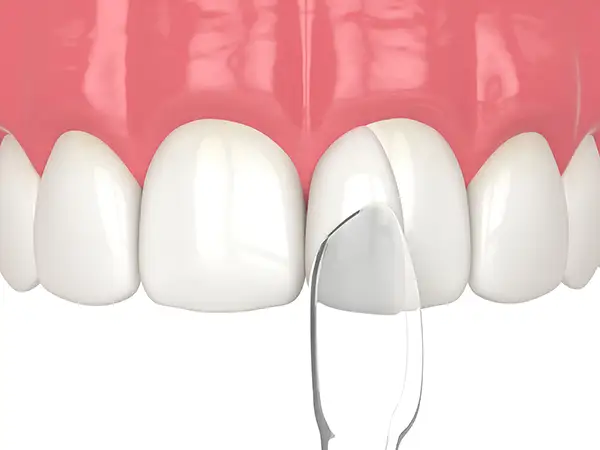 Composite veneers are thin layers of tooth-colored composite resin sculpted directly onto the front surface of a tooth to reshape it, lighten its color, lengthen a worn edge, or close a small gap. Composite is the same family of material we use for dental bonding repairs, just applied across the visible face of one or more teeth as a coordinated cosmetic plan rather than as a single chip fix. Composite veneers are thin layers of tooth-colored composite resin sculpted directly onto the front surface of a tooth to reshape it, lighten its color, lengthen a worn edge, or close a small gap. Composite is the same family of material we use for dental bonding repairs, just applied across the visible face of one or more teeth as a coordinated cosmetic plan rather than as a single chip fix.
How the Procedure Works
The teeth get a light cleaning and, in most cases, almost no enamel reduction. We isolate the area, apply a mild etching gel and a bonding agent, and start building the composite up in layers. We shape each layer with hand instruments, then harden it with a curing light. The final shape and color come from layering different shades and translucencies the same way a painter builds depth, then refining the surface with progressively finer polishing wheels until the texture matches the rest of your enamel. The whole thing happens with you awake, watching as we go.
Composite Veneers vs. Porcelain Veneers
The clearest way to think about it: porcelain is made in a lab from a precise digital design, composite is made on you in real time. Porcelain veneers resist stains better, last longer (typically 10 to 15+ years versus 5 to 7 years for composite with good care), and tend to look more lifelike for full smile transformations involving six or more teeth. Composite is faster (one visit instead of two), less expensive, more reversible because it removes little or no enamel, and easier to repair if a corner chips. Composite also depends much more on the dentist’s skill, because the sculpting happens live without a lab artist as a backstop.
Are You a Good Candidate?
Composite veneers tend to be the right fit for smaller cases – one or two teeth that need shape changes, a chipped front edge, a small gap to close, an uneven length to even out. They also work well for patients who want to test the look of a smile change before committing to porcelain, and for patients who prefer to keep more of their natural tooth structure intact. Larger transformations, heavy grinders, and patients with extensive staining habits (daily red wine, dark coffee, smoking) are usually better served by porcelain. We’ll give you a straight assessment at the consultation.
Your Composite Veneer Dentist in Scottsdale
Dr. Rod W. Gore is one of only two dentists in Arizona to hold AACD Accredited Member status – a peer-reviewed credential about 400 dentists worldwide currently hold – and he founded the Phoenix Esthetic Study Club in 1998 to teach other dentists the principles of natural-looking cosmetic work. Cases at our office benefit from his input on shade, shape, and proportion, which is part of why our composite work tends to read as natural rather than uniform. Dr. Gore’s bio covers his AACD work in detail.
The Composite Veneer Appointment
 A typical composite veneer case at our Scottsdale office runs about 1 to 3 hours depending on how many teeth we’re working on. Most patients have one or two teeth done in a sitting; a fuller front-six case takes longer because the layering and polishing scale with surface area. A typical composite veneer case at our Scottsdale office runs about 1 to 3 hours depending on how many teeth we’re working on. Most patients have one or two teeth done in a sitting; a fuller front-six case takes longer because the layering and polishing scale with surface area.
Consultation and Smile Goals
We start with photos of your current smile, a short conversation about what you want changed, and a candidacy check. If composite is a fit, we discuss shade options, shape preferences, and any concerns you have about color, length, or how the result will fit your face. For some cases we use a digital simulation so you can preview the proposed shape before we begin. Whitening, if you want it, happens before composite placement so we can match the resin to your final tooth color rather than chase a moving target later.
Tooth Preparation
Most composite veneer cases need little or no enamel reduction. We clean the teeth thoroughly, isolate them with a barrier, and apply a mild etching gel followed by a bonding agent. The etching micro-roughens the surface so the composite holds firmly. There’s no drilling on intact enamel for most cases, which is part of what makes composite reversible – if you ever want to change direction, your underlying tooth structure is largely still there.
Sculpting and Curing
We build the composite up in layers. We start with a deeper-shade dentin layer, then add lighter enamel-shade composite over it for translucency, and shape each layer with hand instruments before hardening it with a curing light. The light takes about 20 seconds per layer. The art of this stage is reading the way light moves through real enamel and matching it – teeth aren’t one solid color, they’re slightly translucent at the edges and richer in the body, and the layering technique reproduces that.
Polishing and Final Refinement
Once the shape is in place, we refine the surface texture, contours, and edges with progressively finer polishing wheels and pastes. This is the stage that separates good composite work from great. Polished poorly, composite reads as plastic. Polished well, it reflects light the way enamel does. We keep adjusting until the new surface blends with the surrounding teeth at conversational distance.
Benefits of Composite Veneers
Composite veneers solve a specific cluster of cosmetic problems faster, less expensively, and with less commitment than porcelain. Patients tend to choose composite when one of those tradeoffs matters more than the others.
The most obvious benefit is the timeline. The whole case finishes the same day you walk in. There’s no impression appointment, no lab wait, no temporaries to live with for two or three weeks. For patients who need a fix before a wedding, photo session, or job change, composite is often the only option that fits the calendar.
Composite also preserves your natural tooth. Porcelain veneers usually need a small amount of enamel removed to make room for the porcelain layer; composite veneers typically need little or none. That means if you decide ten years from now to switch to porcelain, your underlying tooth is in much the same shape it was before we placed the composite. Reversibility is not absolute, but it’s closer with composite than with any other veneer-style procedure.
Repair is straightforward. If a corner of a composite veneer chips, we can usually add new composite to the same tooth in a single visit without redoing the whole veneer. Porcelain repairs are harder because the new bonding interface tends to show. With composite, the seam blends.
The cost difference is meaningful. Composite veneers typically cost a fraction of what porcelain veneers cost, which makes cosmetic change accessible to patients who want a noticeable improvement without the porcelain price tag. For patients planning a fuller cosmetic transformation, composite often pairs with teeth whitening sequenced before placement, since whitening evens out background color so composite shade matching is more accurate. Examples of finished cosmetic work from our practice are in our smile gallery.
Why Choose Our Practice for Composite Veneers
Composite veneers are heavily operator-dependent. Two dentists with the same materials produce noticeably different results, because the entire outcome lives in the layering, shaping, and polishing technique. What sets our practice apart is Dr. Gore’s AACD-trained eye for natural cosmetic proportion.
Our equipment and materials matter too, but less than the technique. We use multiple composite shades and the polishing systems that separate composite that looks like enamel from composite that looks like plastic. They’re the difference between a case that holds up at conversational distance and a case that reads as artificial.
We also don’t oversell composite. If your case is better suited to porcelain – large transformations, heavy grinders, patients with strong staining habits – we’ll tell you that at the consultation rather than push composite because it’s a faster appointment for us. The honest answer about cosmetic dentistry is that the right material depends on the case, not on what’s easier to schedule.
What our cosmetic patients say about working with us:
"Bonding on front 2 teeth. Looks great"
– Gayle N., Google review
"Dr Gore is the best dentist I have experienced. He took my very challenging teeth and turned them into a smile that my friends comment on"
– Joan M., Google review
"Excellent dentist very friendly educated and talented at cosmetic dentistry."
– Justin M., Google review
More patient feedback on our reviews page.
Composite Veneer Cost and Financing
Cost is a fair concern, and we want to be straight about how it works at our office. Composite veneers cost less than porcelain – typically a fraction of the porcelain price per tooth – and the final number depends on how many teeth you’re treating, how much shape change you need, and whether you’re combining the case with whitening or other cosmetic work. We give you a written estimate after the consultation, before any work begins.
Most cosmetic dentistry, including composite veneers, is considered elective and isn’t covered by dental insurance. Exceptions exist when composite is repairing functional damage rather than purely cosmetic refinement – a chipped tooth from an accident, for example, sometimes has partial coverage. Our front office team verifies your benefits with your carrier (we currently accept Cigna among other major plans) and lays out exactly what insurance will and won’t pay before you commit. Our financial and insurance page lists accepted plans and outlines payment options.
For patients without dental insurance, the in-office GOREgeous Membership Plan includes preventive care visits and a discount on additional treatments like composite veneers. Flexible third-party financing is also available so cosmetic care can fit a monthly budget rather than requiring everything upfront. Call 480-585-6225 for a personalized estimate based on your specific case.
Schedule Your Composite Veneer Consultation
Composite veneers can finish a smile change the same day you walk in. Call GOREgeous Smiles at 480-585-6225 or use our Request an Appointment page to schedule. We’re located at 8535 E. Hartford Drive #208 in Scottsdale, AZ 85255-5438. You can also reach us through our Contact page with any questions before booking.
Frequently Asked Questions
How long do composite veneers last?
Most composite veneers last 5 to 7 years before they need a refresh or replacement, though we see plenty of cases that hold up longer with good home care. The biggest factors that shorten that timeline are nighttime grinding (a custom night guard helps), heavy stain exposure (coffee, tea, red wine, smoking), and using your front teeth as tools to bite hard objects. Routine cleanings and occasional polish-ups extend the life of any composite work substantially.
Will composite veneers stain over time?
Yes, composite is more porous than porcelain and will pick up some staining over time, especially around the edges. The good news is that surface stains usually polish off at routine cleanings, and we can often address deeper staining by polishing the outermost layer of composite without redoing the whole veneer. Patients with daily heavy coffee, tea, red wine, or smoking habits should expect more frequent maintenance, or consider porcelain as a longer-term alternative.
What happens if a composite veneer chips?
Composite repairs are usually a single short appointment. We add new composite to the existing veneer, shape it to match, and polish – the seam blends because new composite bonds well to old composite. Porcelain repairs are harder because the new bonding interface tends to show against the original lab-made shell. This repairability is one of composite’s underrated practical benefits.
Can I get composite veneers now and porcelain later?
Yes, and many patients use composite this way. Because composite typically removes little or no enamel, transitioning to porcelain later is straightforward when you’re ready – the underlying tooth is largely intact, and the porcelain plan starts from your natural structure rather than from over the composite. Some patients stay with composite indefinitely; others use it as a low-commitment way to live with a new smile shape for a few years before deciding whether to upgrade.
Do composite veneers feel different from natural teeth?
Within a few days, no. There’s usually a brief adjustment period where you notice the new shape with your tongue, and your bite may need a small refinement at a follow-up if anything feels off when you close. After that, properly placed composite reads as your tooth. Eating, drinking, and brushing all happen the same way they did before.
How are composite veneers different from dental bonding?
Dental bonding and composite veneers use the same material and overlap heavily in technique. The main difference is scope and intent. Bonding typically refers to a single-tooth repair (a chipped corner, a small filling, a closed gap on one tooth), while composite veneers refer to a planned cosmetic case spanning the visible face of one or more teeth in a coordinated shape and color. The same dentist with the same material can do both; the design conversation is what differs.
Is the composite veneer procedure painful?
Most composite veneer cases need no anesthesia at all because we do little or no drilling. We clean the teeth, etch the surface, and build up the composite while you sit comfortably with your mouth open. Patients usually describe the appointment as long but not painful – closer to a long cleaning than to a filling. Anesthesia is available for any case where the work approaches sensitive tooth structure or for patients who simply prefer it.
Why does the dentist’s skill matter so much for composite veneers?
Composite veneer outcomes vary more dentist-to-dentist than almost any other cosmetic procedure. Porcelain veneers come from a lab where a master ceramist controls the look, so the dentist’s job is mainly bonding the finished result to the tooth. The dentist designs and builds composite veneers live, on you – layering, shaping, and polishing in real time. That’s why Dr. Gore’s AACD aesthetic background matters so much for this procedure. The same materials in different hands produce different results. |