Tooth Abscess Treatment in Scottsdale, AZ
 If you have a tooth abscess in Scottsdale, AZ, GOREgeous Smiles makes same-day appointments a priority because abscesses don’t get better on their own. A tooth abscess is a pocket of bacterial infection at the root tip or in a gum pocket, and the longer it sits without drainage and definitive treatment, the more likely the infection is to spread into the surrounding bone or soft tissue. If you have a tooth abscess in Scottsdale, AZ, GOREgeous Smiles makes same-day appointments a priority because abscesses don’t get better on their own. A tooth abscess is a pocket of bacterial infection at the root tip or in a gum pocket, and the longer it sits without drainage and definitive treatment, the more likely the infection is to spread into the surrounding bone or soft tissue.
Most patients call us with the same combination of symptoms: a constant throbbing in one tooth, a sore swollen spot on the gum nearby, sometimes a bad taste from where the pocket is draining, and pain that’s worse on biting or with hot food. None of those signs are subtle. If you have them, we want to see you today.
Abscess treatment is part of our emergency dentistry care, which means we keep slots open during the day for urgent cases. The plan typically involves controlling the infection first, then deciding what to do with the source tooth – usually a root canal, an extraction, or treatment for the gum pocket – once the acute pain is under control.
If your face is visibly swelling, you have trouble swallowing or breathing, or you have a fever along with mouth or face swelling, that is past the point a dental office can safely handle. Go to the emergency room. We’ll take over once the acute infection is controlled.
On This Page
What Is Tooth Abscess Treatment?
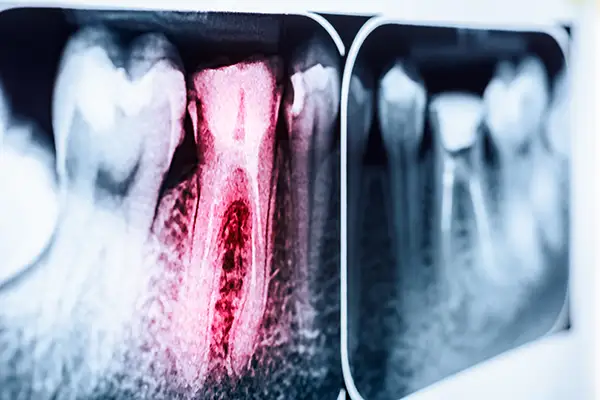 A tooth abscess is a pus-filled pocket caused by a bacterial infection. Treatment has two phases: stopping the active infection, then dealing with the tooth that caused it. Drainage and, when needed, antibiotics handle the immediate problem. The definitive fix depends on which kind of abscess you have and whether the tooth is worth saving. A tooth abscess is a pus-filled pocket caused by a bacterial infection. Treatment has two phases: stopping the active infection, then dealing with the tooth that caused it. Drainage and, when needed, antibiotics handle the immediate problem. The definitive fix depends on which kind of abscess you have and whether the tooth is worth saving.
Two Types: Periapical and Periodontal
A periapical abscess sits at the root tip, usually because deep decay or a crack let bacteria reach the nerve inside the tooth. Once the infection is under control, the tooth typically needs either a root canal to clean out the inside and seal it, or tooth extraction if the damage is too far gone to repair. A periodontal abscess sits in a deep gum pocket and is usually a flare-up of advanced gum disease. It heals when we drain and thoroughly clean the pocket, often with follow-up periodontal therapy to keep it from coming back.
Symptoms That Mean You Need to Be Seen
Most abscesses announce themselves clearly. The classic combination is a constant throbbing pain in or around one tooth, swelling of the gum or face on that side, a small tender bump on the gum that may be draining, sensitivity to hot food or pressure when biting, and sometimes a foul taste in the mouth. Some patients also have a low fever or swollen lymph nodes under the jaw. Mild gum tenderness without these other signs may not be an abscess; the pain pattern is what separates infection from ordinary irritation. When in doubt, call us.
When to Call Us and When to Go to the ER
Most abscesses can and should be handled at the dental office. Call us, get a same-day exam, and we’ll move quickly. Three signs change that calculation and mean a hospital emergency room is the safer first stop: facial swelling that’s visibly spreading down the neck or up toward the eye, real difficulty swallowing or breathing, or a fever combined with mouth or face swelling. Those signs can mean the infection is moving into spaces where it can compromise the airway, and they need IV antibiotics and observation that a dental office isn’t set up for. We’d rather you go to the ER and have it turn out to be nothing than wait for an appointment.
Your Emergency Dental Team in Scottsdale
Dr. Rod W. Gore has practiced in Scottsdale for over 38 years and treats abscess emergencies regularly. He’s one of only two dentists in Arizona to hold AACD Accredited Member status, a credential earned by submitting completed cases for peer review by other accredited dentists. The same careful case-planning that goes into restoration work shows up in abscess decisions too, particularly the call between saving a tooth with a root canal and choosing a planned extraction with a future implant or bridge. Dr. Gore’s bio covers his Doctor of Dental Surgery from Northwestern University and his decades of teaching other dentists.
The team handling your visit also includes clinical and administrative staff members who have been with the office for years and keep emergency days running.
The Tooth Abscess Treatment Process
 Most abscess visits move through a similar sequence. The exact steps depend on which kind of abscess we find and how aggressive the infection is, but the order is almost always the same: get you out of pain first, get the infection under control next, then plan the definitive treatment. Most abscess visits move through a similar sequence. The exact steps depend on which kind of abscess we find and how aggressive the infection is, but the order is almost always the same: get you out of pain first, get the infection under control next, then plan the definitive treatment.
Same-Day Exam and Imaging
When you call about abscess symptoms, we get you in the chair the same day whenever possible. The visit starts with a focused exam of the painful area and a digital X-ray. For deeper or more complex cases, we may also use 3D Cone Beam imaging, part of our dental technology, to map the infection in three dimensions and see whether it has reached the bone or sinus. The imaging tells us which tooth is the source, which kind of abscess it is, and what the bone around it looks like.
Drainage and Pain Control
Once we’ve identified the source, the next priority is getting the infection draining and getting you comfortable. For a periapical abscess, that often means opening the tooth so the pus inside can release. For a periodontal abscess, it usually means thoroughly cleaning out the gum pocket. We numb the area first, and patients tell us the relief begins almost as soon as the pressure releases. If the infection is widespread or there are signs of systemic spread, we prescribe oral antibiotics to support the body while we plan definitive treatment.
Definitive Treatment
Drainage controls the immediate emergency. The tooth itself still needs a long-term plan. For most periapical abscesses, that means a root canal at a follow-up visit, usually one to two days later once the acute swelling has eased – or extraction if the tooth is split, severely decayed, or otherwise unsalvageable. For periodontal abscesses, the path forward is treatment for the underlying gum disease so the same pocket doesn’t flare up again. We talk through both options, with cost included, before you commit to anything.
Follow-Up and Recovery
After the definitive treatment, we check in on healing at a follow-up appointment. Patients are usually more comfortable within 24 to 48 hours of drainage, and the surrounding tissue continues to settle over the next several days. We send you home with a clear set of care instructions, including which signs would warrant a call back to the office.
Why Choose Our Practice for Tooth Abscess Treatment
What matters most in an abscess emergency is being seen quickly. Toothache pain warps a workday and ruins sleep, and the practical answer is fast treatment, not a waiting list. We block out time during normal hours for urgent patients and aim to see most abscess calls the same day.
The second is who you’ll actually see. The clinical staff has been with our office for years, including hygienist Shawna Aguirre, who has been here since 2007, and lead dental assistant Ashley Stewart. When you walk in scared and in pain, you find people who’ve been doing this together for a long time and know how to make a stressful visit calmer.
The third is honesty about your options. Some abscessed teeth can be saved with a root canal. Others have damage that’s past repair, and a planned extraction with a future implant or bridge is the better long-term answer. We talk through both paths candidly, including the cost difference, before we start any work.
What our emergency patients say about working with us:
"Dr. Gore is amazing!! He was very kind and helpful when I had an emergency. He is a Great Dentist that is kind and has a wonderful staff in the office. Thank you Dr. Gore!"
– Heather M., Google review
"My elderly mother has dementia and I was told by the staff at her senior living center that she had been spitting blood and was having trouble eating. I brought her to Dr. Gore and she needed several root canals due to her neglecting her teeth. He made sure she was comfortable and couldn’t have been nicer. Thank you to everyone at Dr. Gore’s office, your emergency help was top notch!"
– Robin M., Google review
"I had an emergency problem, they got me in fast and were able to help me. They were so courteous and helpful. I’ll definitely be using them as my dental office from now on."
– Melanie W., Google review
More patient feedback on our reviews page.
Tooth Abscess Treatment Cost and Financing
Cost is a real concern with any emergency visit, and we want to be straight about how it works at our office. The exam-and-imaging visit is generally a smaller cost; the larger number depends on what the source tooth ends up needing. A root canal followed by a crown sits at one end of the range, an extraction at the other, and a periodontal cleanout somewhere between. We give you a written estimate before any treatment begins.
Dental insurance generally covers a portion of emergency exams, X-rays, and definitive procedures like root canals and extractions, though the percentage and any annual maximum depend on your plan. Our front office team verifies benefits with your carrier (we accept Cigna and other major PPO plans) and lays out exactly what your insurance will and won’t pay before you commit. Our financial and insurance page lists accepted plans and outlines payment options.
For patients without dental insurance, the in-office GOREgeous Membership Plan is worth a look. It includes routine exams and cleanings along with a discount on additional treatment, including emergency procedures, for a flat annual fee. We also offer flexible third-party financing so emergency care doesn’t have to come out of pocket all at once. Call 480-585-6225 for a personalized estimate.
Schedule Same-Day Emergency Care
If you suspect a tooth abscess, don’t wait. Call GOREgeous Smiles at 480-585-6225 or use our Request an Appointment page for a same-day slot. We’re located at 8535 E. Hartford Drive #208 in Scottsdale, AZ 85255-5438. You can also reach us through our Contact page with any questions before booking.
Frequently Asked Questions
How can I tell if I have a tooth abscess?
The clearest sign is a constant throbbing pain in one tooth that doesn’t stop, often with a swollen tender spot on the gum nearby. Other common signs are a bad taste in the mouth, a small bump on the gum that may be draining, sensitivity to hot food or pressure when biting, and sometimes swollen glands under the jaw. The pain is usually worse than ordinary toothache because the pressure inside the abscess has nowhere to go. If you think you have one, call us – we’d rather rule it out than miss it.
Can a tooth abscess go away on its own?
No. The pain may temporarily ease if the abscess drains spontaneously through the gum, but the underlying infection is still there. Without treatment, abscesses spread, and in rare cases the spread becomes serious enough to need IV antibiotics and hospital care. Pain easing is not the same as healing. It usually means the infection has found a path of least resistance and is still working in the background.
Do I need antibiotics first, or will the dentist drain it the same day?
For most localized abscesses, we drain the same day rather than start with antibiotics, because antibiotics alone don’t reach the source effectively when there’s an enclosed pocket of infection. We add antibiotics when the infection is more diffuse, when there’s significant facial swelling, or when there are signs the body is having trouble fighting it off. We make that call after the exam, not before.
Will the abscessed tooth need a root canal, an extraction, or something else?
For a periapical abscess at the root tip, the two main options are a root canal (cleaning out the inside of the tooth and sealing it) or extraction (if the tooth is too damaged to save). The choice depends on how much tooth structure is left, whether there are cracks running into the root, and what the long-term restoration looks like. For a periodontal abscess in a gum pocket, the path is usually drainage plus treatment for the underlying gum disease that caused the pocket in the first place.
How quickly will the pain go away after treatment?
Drainage typically brings substantial relief within minutes because the trapped pressure is what drives the worst pain. Full settling of the surrounding tissue usually takes another day or two. If you have a root canal as the definitive step, the tooth itself is typically calm within 24 to 72 hours, and mild tenderness can linger another few days.
What happens if I leave a tooth abscess untreated?
At minimum, the infection keeps eating away at bone and surrounding tissue, which makes future treatment more expensive and reduces the chances of saving the tooth. In a smaller number of cases, the infection spreads into spaces in the jaw or face that can be dangerous – particularly if it reaches the floor of the mouth, the sinus, or the cheek space. This is why we treat abscesses as same-day priorities. The longer they sit, the more options narrow.
Will dental insurance cover emergency abscess treatment?
Most PPO dental plans cover emergency exams, X-rays, and definitive procedures, but the timing of when in the plan year the abscess hits often matters more than the specific plan. If you’ve already used most of your annual maximum on routine work, an abscess later in the year can max you out. If your renewal date is approaching, our front office may recommend phasing the work to use this year’s benefits and next year’s. Those conversations happen before you commit, not after. |