Cracked Tooth Treatment in Scottsdale
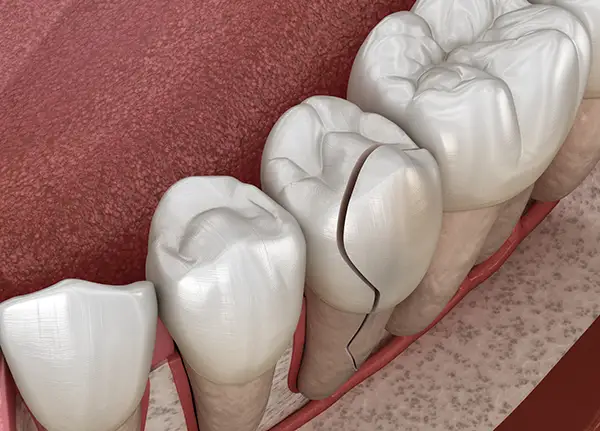 If a tooth has started hurting when you bite down and the pain disappears the second you let up, you may be dealing with a cracked tooth, and GOREgeous Smiles treats this exact problem at our Scottsdale, AZ office. Cracked teeth are one of the most common reasons people call our practice for emergency dentistry, and the symptoms tend to be both maddening and easy to dismiss because the pain comes and goes. If a tooth has started hurting when you bite down and the pain disappears the second you let up, you may be dealing with a cracked tooth, and GOREgeous Smiles treats this exact problem at our Scottsdale, AZ office. Cracked teeth are one of the most common reasons people call our practice for emergency dentistry, and the symptoms tend to be both maddening and easy to dismiss because the pain comes and goes.
A cracked tooth is different from a chipped tooth. Chips break a piece off the surface and you can usually see them. Cracks are thin fractures that often run through the tooth invisibly, sometimes from the chewing surface down toward the root, and the pain shows up only when the crack flexes under pressure. That intermittent quality is why patients tell us they spent weeks chewing on the other side before finally coming in.
We look at every cracked tooth as quickly as we can get you in. The sooner we know what we’re dealing with, the more options you have to save the tooth.
On This Page
What Is a Cracked Tooth?
 A cracked tooth is a fracture line in the tooth structure, ranging from a hairline crack you can’t see with the naked eye to a deep split that separates a tooth into segments. Dentists call the symptomatic version “cracked tooth syndrome,” and it has a recognizable pattern: sharp pain on biting that disappears the moment you let up, sensitivity to cold, and occasional spontaneous twinges. Catching it early matters because cracks tend to grow. A cracked tooth is a fracture line in the tooth structure, ranging from a hairline crack you can’t see with the naked eye to a deep split that separates a tooth into segments. Dentists call the symptomatic version “cracked tooth syndrome,” and it has a recognizable pattern: sharp pain on biting that disappears the moment you let up, sensitivity to cold, and occasional spontaneous twinges. Catching it early matters because cracks tend to grow.
How to Recognize a Cracked Tooth
The classic sign of a cracked tooth is pain on release, not pain on pressure. You bite down on something, the tooth feels mostly fine, and then a sharp jolt hits as you let go. That happens because the two sides of the crack flex apart slightly under chewing pressure, and the pulp inside the tooth gets briefly irritated when they snap back together. Cold sensitivity that lingers a few seconds after the cold is gone is another common symptom, and some patients describe a vague ache they can’t pinpoint to a specific tooth.
The Five Types of Tooth Cracks
Cracks aren’t one thing. Craze lines are tiny vertical cracks in the enamel only, common with age, and usually need no treatment beyond cosmetic bonding if they bother you. A fractured cusp is when a piece of the chewing surface breaks off, often around an old filling, and a dental crown usually restores it. A cracked tooth proper is a vertical crack running from the chewing surface toward the root, treatable with a crown if the crack stays in enamel and dentin, but sometimes requiring a root canal first if it reaches the pulp. A split tooth is when the crack has progressed all the way through and the tooth is in two pieces, which generally means extraction. A vertical root fracture starts at the root and works upward, and these are almost always unsalvageable.
Why Cracks Are Hard to Diagnose
Cracks rarely show up on a standard X-ray because the fracture line runs in the same direction as the X-ray beam, so the gap is too thin to register. We confirm a crack with a combination of tools: a bite test using a small wedge that lets each cusp flex independently, transillumination with a bright light that catches the crack’s shadow, dye staining that makes a fine crack visible, and a magnification scope when we need it. Sometimes the answer is clear within minutes; sometimes the diagnosis is exploratory, and the most honest thing we can tell you is that we know your tooth is cracked but won’t know the depth until we treat it.
Your Cracked Tooth Dentists in Scottsdale
Dr. Rod W. Gore has been practicing dentistry in Scottsdale for over 38 years, and most of that work is restorative dentistry of the sort a cracked tooth requires: crowns, root canals coordinated with endodontists, and full-mouth rehabilitation when cracks are part of a larger pattern of bite damage. He earned his Doctor of Dental Surgery from Northwestern University in 1987 and is one of only two dentists in Arizona to hold AACD Accredited Member status, a peer-reviewed credential built around case-by-case examination of restorative and cosmetic work. Dr. Gore’s bio page covers his founding of the Phoenix Esthetic Study Club in 1998 and his role as an active AACD Examiner.
How We Treat a Cracked Tooth
 Cracked tooth treatment moves fast at our office because we treat it as the time-sensitive problem it is. The visit usually unfolds across four steps, with the treatment chosen based on what we find at step two. Cracked tooth treatment moves fast at our office because we treat it as the time-sensitive problem it is. The visit usually unfolds across four steps, with the treatment chosen based on what we find at step two.
Same-Day Diagnostic Visit
We get you in as quickly as possible after your call, often the same day. The first 15 to 20 minutes are diagnostic. We numb the area only after we’ve mapped the symptoms, because we need you to tell us what hurts and when. Bite tests, transillumination, intraoral cameras, and 3D imaging when warranted let us identify the crack and grade its severity.
Treatment Plan and Honest Conversation
Once we know what we’re looking at, we walk you through the realistic options. A craze line may need nothing or a small bonding repair. A fractured cusp or contained crack typically calls for a crown. A crack that’s reached the pulp usually means root canal therapy before the crown. A split tooth or vertical root fracture means extraction and a conversation about replacement. We give you the call before we start.
Same-Day Crown When Possible
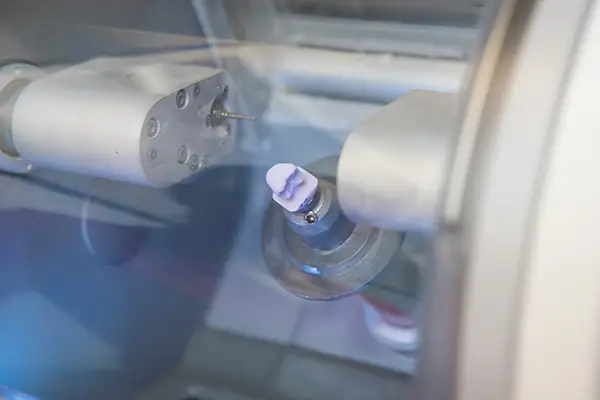
For most cracked teeth that are restorable with a crown, we mill the crown in-office using CEREC technology so you walk out with a permanent porcelain crown the same day. That matters with cracks because every additional day a cracked tooth is in temporary restoration is another day the crack can extend. Our same-day crown process takes a single appointment, scans included.
Follow-Up and Watch Period
For deeper cracks where we can’t be certain whether the crack has reached the pulp, we crown the tooth first and watch it. If the pain resolves within a few weeks, we know the crown caught the crack in time. If pain persists or worsens, root canal therapy is the next step, and the crown we placed stays in service afterward. We tell patients this upfront because it’s the truth about how cracked tooth treatment actually works.
Why Choose Our Practice for Cracked Tooth Care
The most useful thing we offer cracked tooth patients is speed. We hold openings in the schedule for emergency presentations, and our in-office CEREC milling means we can diagnose, prep, and crown the tooth in one visit instead of waiting two to three weeks for a lab-fabricated crown while the crack potentially worsens.
The second thing is diagnostic depth. Cracks are notoriously hard to confirm without the right tools, and most cracked tooth diagnoses depend on intraoral cameras, dye staining, and magnification used together. We have all three on hand, and Dr. Gore’s decades of restorative work mean he’s seen the patterns: the way a fractured cusp around an old amalgam filling looks different from a vertical crack started by clenching, and how each one changes the treatment plan.
We also pay attention to why a tooth cracked. Bruxism (nighttime grinding and clenching) is a leading contributor to cracked teeth in adult patients, and the conversation about prevention often includes a custom-fit night guard. If grinding is part of your story, we’ll discuss it during the visit so the same problem doesn’t come back on a different tooth.
What our emergency patients say about working with us:
"Dr. Gore was able to fit me into an appointment and diagnosed a cracked tooth and scheduled a follow up the next day to create and cement a new crown! This is exactly what I was hoping to have happen. They were gracious and very professional. Being in Phoenix from out of town for 2 weeks made this situation very sensitive and Dr. Gore was able to help! I highly recommend seeing Dr. Gore!"
– Craig D., Google review
"5 stars only because there aren’t 6. At Goregeous Smile’s, state of the art equipment meets dental expertise in quality work and demeanor, with a staff of incredibly welcoming and kind people. I really do not like going to the dentist, but Dr. Rod Gore and his office make a dental emergency almost good news. Blown away by the total experience. Choose these guys, you will NOT regret it."
– James M., Google review
"I had an emergency problem, they got me in fast and were able to help me. They were so courteous and helpful. I’ll definitely be using them as my dental office from now on."
– Melanie W., Google review
More patient feedback on our reviews page.
Cracked Tooth Treatment Cost and Insurance
Cost depends on how deep the crack is and what it takes to fix. A bonding repair on a craze line is at the low end. A crown for a fractured cusp or a contained crack is in the middle range, and that’s the most common scenario. A crack that requires root canal therapy plus a crown sits higher because both procedures are involved. An unrestorable tooth that needs extraction and replacement is a different conversation again. We give you the actual numbers in writing after the diagnostic visit, before we start any work.
Most cracked tooth treatments fall under restorative dentistry from an insurance standpoint, which means crowns and root canals typically have partial coverage with PPO plans. Our front office team verifies your benefits with your carrier (we accept Cigna among others) and handles out-of-network claim filing when needed. Our financial and insurance page lists accepted plans and outlines payment options.
For patients without insurance, the GOREgeous Membership Plan is an in-office annual plan covering preventive care plus a 20% discount on additional treatment, including the crown work most cracked teeth ultimately need. Flexible third-party financing is also available, so cost doesn’t have to delay urgent treatment. Call 480-585-6225 for a personalized estimate.
Schedule Your Cracked Tooth Appointment
A cracked tooth doesn’t get better on its own, and the longer the wait, the fewer the options. Call GOREgeous Smiles at 480-585-6225 or use our Request an Appointment page to schedule. We’re located at 8535 E. Hartford Drive #208 in Scottsdale, AZ 85255-5438. You can get directions to our office or reach us through our Contact page with any questions before booking.
Frequently Asked Questions
Why does my tooth hurt when I bite down but feel fine the rest of the time?
Pain that shows up on biting and disappears at rest is the most reliable single sign of a cracked tooth. The two sides of the crack flex apart under chewing pressure and snap back together when pressure releases, and that snap is what your nerve registers. If the pain hits on release rather than during the bite, the likelihood of a crack goes up further. Either way, an exam can confirm it within one visit at our Scottsdale office.
Why couldn’t my dentist see the crack on my X-ray?
Cracks usually don’t show on standard X-rays, so a missed crack doesn’t mean your previous dentist did anything wrong. The diagnostic gap is well-documented, which is why diagnosing a cracked tooth often takes more than an X-ray. The reliable confirmation tools are a bite test using a small wedge, transillumination with a bright light, and dye staining. If a previous exam came back clear but you’re still in pain, ask whether those tools were used. We use all three on every cracked tooth visit at our Scottsdale office.
Can a cracked tooth heal on its own?
No. Tooth enamel doesn’t regenerate, and a cracked tooth left alone tends to worsen with continued chewing. Treatment ranges from a simple bonding repair on a surface craze line to a crown that holds the cracked tooth together, and which option you need depends on how deep the crack runs.
What happens if I leave a cracked tooth untreated?
A small crack can extend over weeks or months until it reaches the pulp, at which point root canal therapy becomes necessary. Cracks that progress past the gumline often turn an otherwise restorable tooth into one we have to extract. The window for the most conservative treatment narrows the longer you wait.
Will I need a root canal for my cracked tooth?
Often the crown is enough, but we’ll add a root canal if the crack reached the pulp, and we can’t always tell on day one. The signals that point to root canal are specific: new cold sensitivity that lingers, biting pain that returns or worsens after the crown, or a dull ache without an obvious cause. If those show up, we open the back of the existing crown to perform the root canal rather than starting over with a new crown. If a few weeks pass without those signals, the crack didn’t reach the pulp and the crown alone is the finished treatment.
How long does cracked tooth treatment take?
For a crown-only case, treatment usually fits into a single appointment of roughly 90 minutes to two hours thanks to our in-office CEREC milling. Cases that need a root canal first generally span two visits, and we sometimes coordinate with an endodontist on those. A simple bonding repair on a surface craze line is often under 30 minutes. We give you the timeline at the diagnostic visit so you know what to plan around.
Is a cracked tooth a dental emergency?
Yes, when the tooth is symptomatic. Cracks worsen under chewing pressure, and the difference between a tooth we can save with a crown and one that needs extraction can come down to days or weeks. If you’re feeling pain on biting, sensitivity to cold, or a spontaneous twinge in a specific tooth, treat it as urgent and call the office.
How can I prevent cracking another tooth?
If grinding or clenching is part of your story, a custom night guard is the most effective prevention tool, since the same forces that cracked one tooth tend to crack the next. Beyond grinding, the everyday risks are ice, hard candy, popcorn kernels, and unpopped seeds, especially on teeth that already carry large fillings (those are the most common cracking points). If a back tooth cracked without an obvious cause, talk to us about whether nighttime clenching could be part of the picture. |