Missing Tooth Replacement Options in Scottsdale, AZ
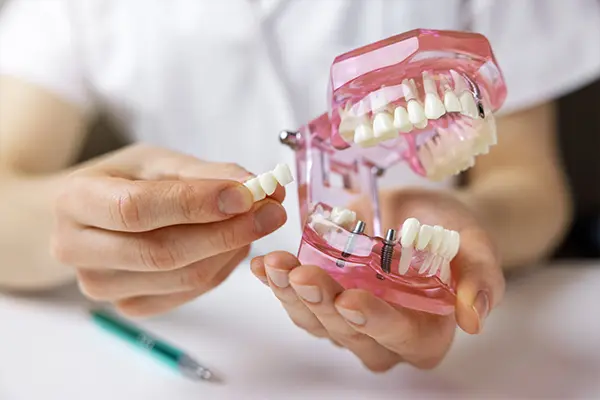 Missing tooth replacement options at GOREgeous Smiles in Scottsdale, AZ include single dental implants, implant-supported bridges, traditional bridges, partial dentures and implant-supported dentures. The right one depends on how many teeth are missing, where the gap is, how healthy the neighboring teeth are and how much bone is there to work with. This page is a side-by-side guide, so you can walk into your consultation already knowing the trade-offs.
Each option has its own page on our site, and our restorative dentistry overview shows how they fit with crowns, fillings and the rest of the work we do. Here, the goal is narrower: helping you compare them against your own situation.
You don’t need to have it all figured out before you call. Most people come in with one question, usually “implant or bridge?”, and leave with a written plan that lays out more than one path.
On This Page
Why Replace a Missing Tooth?
A gap isn’t only about how your smile looks. The American Dental Association notes that a large space between teeth can affect how you speak or eat, and that even a missing back tooth you can’t see can change how you chew. Those changes are easy to get used to without noticing what they cost you.
What Happens if You Leave the Gap?
Over time, the teeth around an empty space may shift, and bone loss can occur around a missing tooth. That’s why we talk about replacement at the same visit when a tooth has to come out, rather than months later. Bone that has been lost can narrow your options down the road, especially for implants.
Leaving a space open is still a choice you’re allowed to make. If you go that way, we’ll keep an eye on the teeth around the gap at your checkups so you’re not surprised later.
The Questions That Decide Your Option
Before we recommend anything, we work through a few practical questions with you:
| • |
How many teeth are missing, and where? – one front tooth is a very different plan from several back teeth in a row
|
| • |
Are the neighboring teeth healthy? – untouched neighbors argue against reshaping them for a bridge; heavily filled ones may need crowns anyway
|
| • |
How much bone is there? – implants need enough bone to hold them, and our 3D scan shows it
|
| • |
What does your health look like? – conditions like diabetes and habits like smoking can affect healing
|
| • |
Fixed or removable? – some people want teeth that never come out; others prefer something they can take out to clean
|
| • |
What is your timeline? – implants take months of healing, while other options finish sooner |
There’s rarely one “correct” answer. There’s usually a best fit for your mouth and your priorities.
Your Tooth Replacement Options Compared
Here’s how the main options stack up. Each one links to a page with the full details.
Single Dental Implant
An implant replaces the root of a missing tooth with a titanium post set in the jawbone. The bone grows around the post and holds it in place, a process called osseointegration, and a custom crown goes on top. The ADA calls implants the option most similar to a natural tooth, and nothing has to be done to the teeth next to the gap. Our dental implants page covers the basics.
The trade-off is time and candidacy. Healing takes months, and your overall health matters more than your age. The FDA notes that smoking may affect healing and long-term success, and that implant failure may be more likely with uncontrolled diabetes.
Implant-Supported Bridge
When several teeth in a row are missing, an implant-supported bridge lets two or more implants carry a span of replacement teeth. You get something fixed without borrowing support from healthy neighbors, and you usually need fewer implants than missing teeth.
Traditional Dental Bridge
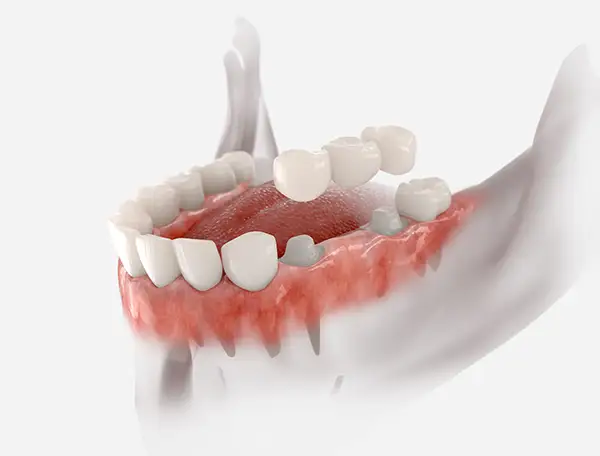 A traditional dental bridge uses crowns on the teeth on either side of the gap to hold a replacement tooth between them. A fixed bridge can only be removed by a dentist, and it’s usually finished sooner than an implant because there’s no bone-healing stage.
The cost is to the neighboring teeth, which get reshaped to hold those crowns. As the ADA puts it, a bridge’s success depends on its foundation, so those supporting teeth have to stay healthy. A bridge makes the most sense when the neighbors already need crowns or when an implant isn’t possible.
Removable Partial Denture
A partial denture replaces several missing teeth with a removable appliance that clasps onto your natural teeth. It’s a practical choice when teeth are missing in different spots, when you want to keep your remaining teeth untouched, or when implants aren’t an option right now. Partials collect plaque just like natural teeth, so they come out for daily cleaning. Our dentures page explains partial and full options.
Full Dentures and Implant-Supported Dentures
When most or all of the teeth in an arch are missing, the conversation shifts. A conventional full denture rests on the gums. New dentures can feel awkward for a few weeks while your cheeks and tongue learn to hold them in place. For more stability, implant-supported dentures snap onto a small number of implants, and full mouth dental implants anchor a complete set of fixed teeth.
Bridging the Time in Between
If a tooth is coming out and the final replacement needs time, you won’t be left without a plan. Ask us which temporary options fit your case; for implant-supported dentures, you wear a temporary denture while you heal. We’ll talk through what you’ll wear and for how long before any tooth is removed.
Your Tooth Replacement Dentist in Scottsdale
Dr. Rod W. Gore has practiced dentistry in Scottsdale for more than 38 years, after earning his BS in Biology from the University of Oregon in 1983 and his DDS from Northwestern University in 1987. He’s been an Accredited Member of the American Academy of Cosmetic Dentistry since 1995 and is an active AACD Examiner.
That matters more for tooth replacement than people expect. A replacement tooth has to bite properly, but it also has to match its neighbors in shade, shape and length, especially up front. Dr. Gore has lectured to study clubs on communicating with dental laboratories to get natural-looking restorations, and he founded the Phoenix Esthetic Study Club in 1998.
He’s the only dentist in our practice, so the same person compares your options, plans your case and fits your final teeth.
How We Help You Choose
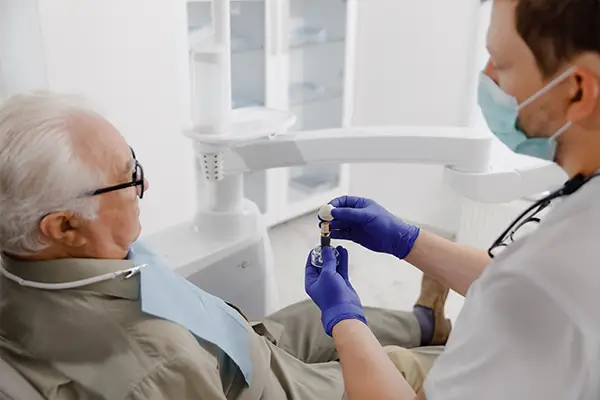 Choosing a replacement is a decision you make with information, not on the spot. Here’s how we get you there.
Step 1: Exam and Imaging
We start with a full exam, digital X-rays and, when implants are on the table, a 3D cone beam scan that shows the height and width of your jawbone. Our intraoral camera puts the gap and the neighboring teeth on a screen so you can see what we see. You can read more about these tools on our dental technology page.
Step 2: Your Options, Side by Side
You get a written plan that compares the options that truly fit your mouth, with a clear estimate for each. If the scan shows thin bone, we explain what that means before anything is scheduled. When bone grafting is needed ahead of implants, we coordinate with oral surgery specialists so the plan is clear before you commit.
Step 3: Healthy Foundations First
Gum disease and decay get treated before new teeth go in, because a replacement tooth is only as stable as what it’s anchored to. If a tooth is failing, we plan its replacement at the same visit so you know what comes next.
Step 4: Treatment and Follow-Up
Bridges and dentures move ahead in a few visits. Implant cases are mapped on the 3D scan first. We place the implants here in our office under local anesthesia, with oral conscious sedation available if you’re nervous, and the final crown or bridge goes on once healing is complete. Follow-up visits confirm your bite feels right.
Benefits of Replacing Missing Teeth
Whichever option you choose, filling the gap tends to pay off in everyday ways:
| • |
Easier chewing – both sides of your mouth can share the work again
|
| • |
Clearer speech – especially when front teeth are involved
|
| • |
Neighboring teeth stay put – a replacement fills the space teeth would otherwise drift into
|
| • |
A complete smile – replacement teeth shaded to match the ones you still have
|
| • |
Bone support with implants – bone grows around the implant post and holds it in place |
The bigger long-term win is keeping your options open. Acting while bone and neighboring teeth are healthy usually means more choices, not fewer.
Caring for Your Replacement
Every option needs daily care. Implants and bridges are brushed and cleaned underneath like natural teeth, partials come out for cleaning, and dentures should be brushed daily and kept in water when they’re out so they don’t warp. Regular checkups let us catch small problems before they turn into replacements of the replacement.
Why Choose Our Practice for Tooth Replacement
We don’t start with a favorite option. You’ll see the realistic choices for your mouth, with the reasons for and against each, and you’ll hear it plainly if an option you were hoping for isn’t a good fit.
Planning is precise here. Implant cases are planned on a 3D cone beam scan before any work begins, and many crowns are designed and milled right here with CEREC.
And the front-tooth details get real attention. An AACD Accredited Member designs how your new tooth looks next to your own, so it doesn’t read as dental work.
Tooth Replacement Cost, Insurance and Financing
Costs differ a lot between options, so we price them side by side in your written plan. The number of teeth, the number of implants, whether grafting is needed and the materials chosen all play a part.
Insurance treats these options differently. Many bridge cases are partly covered by most dental plans, while implant coverage varies widely from carrier to carrier. We accept Cigna and verify your benefits before you decide, and our financial and insurance page explains how billing works.
Without dental benefits, the GOREgeous Membership Plan includes discounts on implants, bridges and crowns. Third-party financing is also available so a larger plan can fit a monthly budget. Questions about numbers? Call 480-585-6225.
Schedule Your Tooth Replacement Consultation
A consultation turns “What are my options?” into a written plan with real choices. Call 480-585-6225 or book through our Request an Appointment page.
Our office is at 8535 E. Hartford Drive #208, Scottsdale, AZ 85255-5438, and we’re open Monday through Thursday from 7:00 a.m. to 4:00 p.m. Have a question first? Reach us through our Contact page.
Frequently Asked Questions
What is the best way to replace one missing tooth?
For many people it’s a single implant, because it leaves the neighboring teeth alone. A bridge can be the better call when those neighbors already need crowns, when bone is limited, or when you want to finish sooner. Your exam and 3D scan settle which applies to you.
How long can I wait to replace a missing tooth?
There’s no fixed deadline, but waiting has a cost. Neighboring teeth can drift and bone can shrink, which may rule out some options later. If you’re facing a tooth extraction, it’s worth planning the replacement before the tooth comes out.
Am I too old for a dental implant?
Age alone usually isn’t the deciding factor. The ADA notes that your health matters more than your age. Chronic illnesses such as diabetes and tobacco use can slow healing, so we review your medical history and bone before recommending an implant.
My old bridge is failing. Should I replace it with an implant?
Sometimes. It depends on the condition of the teeth that held the old bridge and the bone under the gap. Our dental bridge repair and replacement page explains how we decide between a new bridge and moving to implants.
Is a partial denture a good long-term option?
It can be, as long as the teeth it clasps onto stay healthy. Partials need daily cleaning and periodic checks, and their fit can change as your mouth changes. Many people use a partial for years, and some later move to implants.
Will I be without a tooth while my implant heals?
Ask us about temporary options for your case. For implant-supported dentures, you wear a temporary denture while you heal, so you’re never without teeth. We’ll explain exactly what you’ll wear before any treatment starts.
Does insurance cover implants or bridges?
Bridges are more often partly covered than implants, but every plan is different. We accept Cigna and check your benefits ahead of time. Without insurance, our membership plan includes discounts on implants, bridges and crowns.
Why choose GOREgeous Smiles to replace missing teeth in Scottsdale?
Because you’ll see every realistic option compared side by side, planned with 3D imaging and finished by an AACD Accredited Member with more than 38 years in Scottsdale. One dentist handles your case from the first consultation to the final fit.
|