Dental Bridge Repair and Replacement in Scottsdale, AZ
 If you have an aging dental bridge in Scottsdale, AZ that’s loose, decayed underneath, chipped, or just not looking right anymore, GOREgeous Smiles handles bridge repair and replacement as a careful diagnostic process rather than a one-size-fits-all swap. Most bridges last between 10 and 20 years, and when they start to fail, the right next step depends on what’s actually happening underneath. If you have an aging dental bridge in Scottsdale, AZ that’s loose, decayed underneath, chipped, or just not looking right anymore, GOREgeous Smiles handles bridge repair and replacement as a careful diagnostic process rather than a one-size-fits-all swap. Most bridges last between 10 and 20 years, and when they start to fail, the right next step depends on what’s actually happening underneath.
The most common scenarios we see at our Scottsdale office are decay forming under one of the abutment crowns, a piece of porcelain chipping off the visible part of the bridge, the bridge debonding from one or both anchor teeth, or gum recession that’s changed how the bridge looks against your smile. Each of these has a different best fix, and the only way to know what your bridge needs is a hands-on exam.
Bridge maintenance fits inside the broader picture of restorative dentistry at our practice. Sometimes the answer is a focused repair. Sometimes it’s replacing the bridge with a new one of the same design. And sometimes the conversation shifts toward whether an implant-supported solution would serve you better long term, especially when one of the original anchor teeth is no longer healthy enough to carry a bridge.
On This Page
What Is Dental Bridge Repair and Replacement?
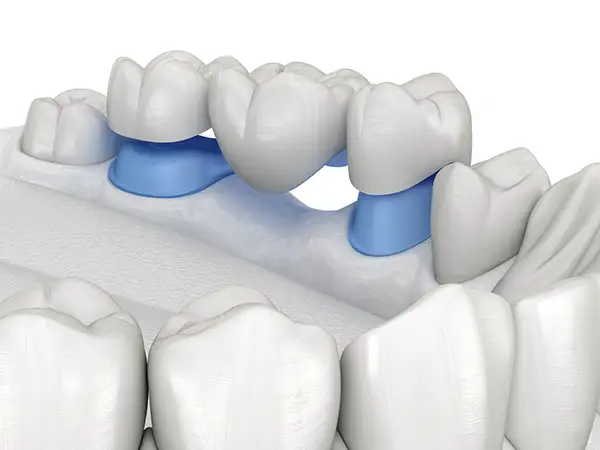
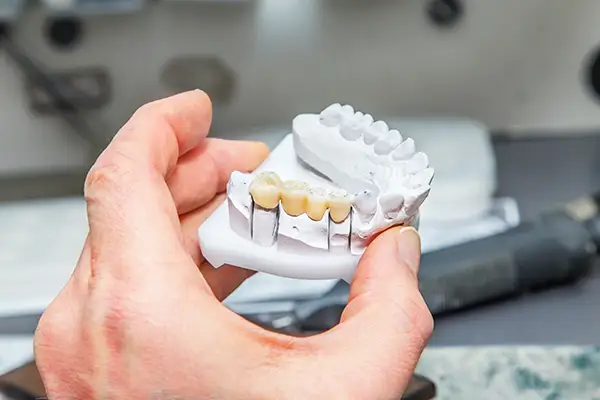 Bridge repair and replacement is the ongoing care of an existing dental bridge that’s starting to fail or has already failed. A bridge is a fixed restoration that uses crowns on the teeth on either side of a gap to anchor a replacement tooth (called a pontic) in the middle. When the anchor crowns, the cement, the porcelain, or the underlying teeth start to give out, that’s when this conversation begins. Bridge repair and replacement is the ongoing care of an existing dental bridge that’s starting to fail or has already failed. A bridge is a fixed restoration that uses crowns on the teeth on either side of a gap to anchor a replacement tooth (called a pontic) in the middle. When the anchor crowns, the cement, the porcelain, or the underlying teeth start to give out, that’s when this conversation begins.
The reason it’s worth treating bridge problems carefully, instead of hoping they’ll hold a little longer, is that small problems on a bridge tend to become bigger problems quickly. Decay under an anchor crown can spread silently because the bridge itself hides what’s happening on the tooth underneath.
Why Bridges Eventually Need Attention
The single most common reason bridges fail is decay forming under one of the anchor crowns where it meets the tooth at the gum line. Other common reasons include a chipped or fractured pontic, the bridge becoming loose because cement has broken down, gum recession that exposes the margin of the crown, an anchor tooth fracturing under chewing pressure, or simple aging of porcelain that no longer matches the rest of your smile. We see all of these regularly, and each one points to a different repair strategy.
Repair Versus Full Replacement
We can address some bridge issues without replacing the whole thing. We can sometimes polish out a small chip on the porcelain in the mouth, or repair it without removing the bridge. If a bridge has come loose but is otherwise sound, we may simply re-cement it after checking the underlying teeth. But once decay has reached an anchor tooth or the bridge framework has lost its fit, repair is no longer the conservative choice. Replacing the bridge protects the anchor teeth from further damage and gives you another 10 to 20 years of reliable function.
When an Implant Solution May Serve You Better Long Term
This is the conversation we never want to skip. If one of the original anchor teeth has become unrestorable, typically because of deep decay, a vertical fracture, or extensive bone loss around the root, continuing with another tooth-supported bridge isn’t the right call. In those cases, a dental implant or, for larger spans, a full-arch implant solution often serves you better long term. Implants don’t rely on neighboring teeth for support, which means the next problem doesn’t become two problems. We’ll show you both options and the tradeoffs honestly.
What We Won’t Know Until the Old Bridge Is Off
One of the most important parts of bridge replacement is being honest about what we can and can’t see while the old bridge is still in place. X-rays and clinical exam tell us a lot, but the bridge sits on top of the anchor teeth, so we don’t fully know the condition of those teeth until the old bridge comes off. We share that uncertainty up front so you understand why the treatment plan may include a contingency for what we find.
Your Bridge Repair and Replacement Dentist in Scottsdale
Dr. Rod W. Gore has been practicing dentistry in Scottsdale for over 38 years and is one of only two dentists in Arizona to hold AACD Accredited Member status. That credential matters here for a less obvious reason: replacing an aging bridge well isn’t just about restoring function. The new bridge has to match the surrounding teeth in shade, shape, and edge translucency well enough that no one notices it’s there. The cosmetic skill that earns AACD Accreditation is the same skill that makes a replacement bridge disappear into your smile. Full background on Dr. Gore’s bio page.
We answer the diagnostic question (repair, replace, or move to an implant alternative) honestly. We won’t recommend a bigger plan than your bridge needs, and we won’t recommend a smaller plan than the underlying problem warrants.
The Bridge Replacement Process
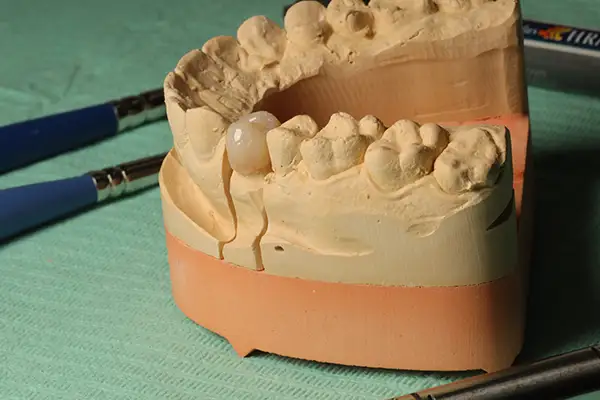 A traditional cement-retained bridge replacement at our Scottsdale office typically runs two to three appointments over two to three weeks. Repairs that don’t require full replacement are sometimes a single visit. The plan we write up at your consultation tells you exactly what to expect for your case. A traditional cement-retained bridge replacement at our Scottsdale office typically runs two to three appointments over two to three weeks. Repairs that don’t require full replacement are sometimes a single visit. The plan we write up at your consultation tells you exactly what to expect for your case.
Diagnostic Exam and Imaging
Your first visit is the diagnostic appointment. We examine the existing bridge clinically, take updated X-rays of the anchor teeth, and may use 3D Cone Beam imaging if we need a fuller picture of the bone around the supports. This is where we figure out whether we can repair the bridge in place, whether it needs to come off so we can replace it, or whether the underlying teeth have changed the equation enough that we should consider an implant-supported solution. You leave this appointment with a clear plan and an estimate.
Removing the Old Bridge and Assessing the Anchor Teeth
At the second appointment, we carefully remove the old bridge under local anesthesia. This is the moment that answers the question we couldn’t fully answer with imaging alone: how healthy are the anchor teeth underneath? If decay is present, we treat it. If an anchor tooth has fractured or lost too much structure, we revisit the implant option with you before moving forward. Most of the time, the anchor teeth are in workable shape, and we proceed with preparing them for the new bridge.
Impressions and Temporary Bridge
Once we’ve prepared the anchor teeth, we take a digital scan that goes to our lab and place a temporary bridge so you leave with teeth in the gap. The temporary covers function and appearance during the two to three weeks while the lab makes your final bridge. You can eat, smile, and go to work without anyone knowing you’re between appointments.
Final Bridge Placement and Bite Check
At the final visit, we remove the temporary, try in the new bridge, check the fit and bite carefully, and bond it permanently to the anchor teeth. We adjust the bite so chewing pressure distributes evenly, polish the contact points so floss can pass cleanly under the pontic, and walk you through home care. Most patients are surprised how quickly the new bridge feels like part of their mouth.
Benefits of Replacing a Failing Bridge
The most concrete benefit is protecting the anchor teeth before more damage happens. A failing bridge with decay underneath is a slow-motion problem. Catching it early and replacing the bridge prevents the deeper decay that can take an anchor tooth from "needs a new crown" to "needs an implant" in a single year.
A new bridge also restores chewing function patients sometimes don’t realize they’d lost. People often adjust to a loose or worn bridge over months, chewing on the other side without thinking about it. Within a few weeks of the replacement, most patients tell us they’re using both sides of their mouth again.
The cosmetic upgrade matters too. Modern porcelain and digital fabrication give us better color matching, edge translucency, and shape control than older fabrication methods could deliver. A 15-year-old bridge that has yellowed while the surrounding teeth have whitened, or a bridge with a dark gum line where recession has exposed metal underneath, looks dramatically better once we replace it with current materials.
For patients whose bridge replacement reveals a more compromised situation, the moment is also an opportunity. Some of our larger restorative cases at the Scottsdale office started as a "just replace this bridge" appointment and turned into a thoughtful conversation about updating the supporting crowns at the same time, or moving to an implant-based plan that won’t fail again the same way.
Why Choose Our Practice for Bridge Replacement
The honest reason to come to us for bridge work in Scottsdale is the diagnostic discipline. We don’t replace bridges that don’t need replacing, and we don’t patch bridges that need to come off. The exam at the first appointment tells us which one your case is, and we tell you what we found and why.
The cosmetic side benefits from Dr. Gore’s AACD Accreditation. Replacing an aging bridge well requires color-matching the new porcelain to teeth that may have whitened, yellowed, or shifted slightly over the years the bridge has been in place. The same case planning that earns AACD-level cosmetic credentials applies directly to making a replacement bridge look like it’s always been part of your smile.
We also invest in the technology that makes bridge work easier on patients. Digital scanning replaces traditional impression material for most cases, in-office porcelain milling lets us turn around individual crowns the same day when the case allows, and 3D Cone Beam imaging gives us the bone-level detail we need when an implant alternative is on the table.
What our restorative patients say about working with us:
"Dr. Gore is the best. He is the consummate professional. Nobody walks out of his office unless completely satisfied"
– Bruce H., Google review
"Dr Gore and his staff are incredibly professional and diligent in finding the solution for your dental needs. I’ve had veneers, crowns and cavities filled and have always had great results. I couldn’t recommend them more."
– Darla H., Google review
"I have had a phobia of needles my whole life and have crippling anxiety over dentists, 5 years ago I went into dr gore’s office and it changed my life. Years down the road, I now have veneers and few root canals and implants, plus his team recognized my bite was off from grinding and gave me TMJ, so they built up my back molars to fix it. The entire team just makes you feel safe and that you are absolutely getting the best best most professional care out there. I cannot recommendation d dr gore and his entire team highly enough. A very grateful patient, Ashleigh"
– Ashleigh F., Google review
More patient feedback on our reviews page.
Bridge Replacement Cost and Financing
Cost is a fair question with bridge replacement, and we want to be straight about how it works. The cost depends on a few specific factors: how many anchor crowns the case involves, the materials we select for the new bridge, whether any underlying tooth needs additional work (a new crown, for example) before we can place the bridge, and whether the case ends up moving to an implant-supported solution. We give you a written estimate after the diagnostic exam, before any work begins, so the path forward is clear.
Insurance often helps with bridge replacement because most plans treat replacement of a failing existing restoration as a covered restorative procedure rather than an elective one. Coverage details vary by plan and by how recently the original bridge was placed. Our front office team verifies your benefits with your carrier (we currently accept Cigna among other major PPO plans) and tells you exactly what your insurance will pay before treatment starts. Our financial and insurance page outlines accepted plans and payment options.
For patients without dental insurance, the in-office GOREgeous Membership Plan includes a 20% discount on additional treatment such as bridge replacement, plus preventive care for a flat annual fee. We also offer flexible third-party financing for cases where spreading payments over time makes the timing work better. Call 480-585-6225 for a personalized estimate.
Schedule Your Bridge Evaluation
The first step with any failing bridge is a diagnostic exam. Call GOREgeous Smiles at 480-585-6225 or use our Request an Appointment page to schedule. We’re at 8535 E. Hartford Drive #208 in Scottsdale, AZ 85255-5438. You can also reach us through our Contact page with any questions before booking.
Frequently Asked Questions
How do I know if my bridge needs repair or replacement?
Common signs are a loose or wiggly feel when you bite, sensitivity around an anchor tooth (often a sign of decay underneath), a chip or visible crack in the porcelain, a darkening line at the gum margin, or food packing under the pontic where it didn’t before. A diagnostic exam with current X-rays gives you a definitive answer. Bridges quietly approaching the end of their useful life don’t always feel obviously wrong, which is why a hygiene visit that flags concerns is often how the conversation starts.
Can my old bridge be repaired, or does it need to come off?
Sometimes yes, sometimes no, and we can’t reliably tell from outside. Cement integrity, gaps along the crown margin, and the condition of the tooth under the bridge all require hands-on inspection. The general rule we share with patients: repair works when the issue is fully visible from outside the bridge (a chipped pontic, for example), and replacement is the right call when something has changed underneath. Partial fixes that don’t address what’s actually wrong tend to fail again quickly, which is why we treat this as a binary call rather than a sliding scale.
Will I be without teeth while my bridge is being replaced?
No, not at any point. The temporary bridge goes in the same appointment we remove the old one, so you leave that visit with a complete smile. Where the temporary differs from the final bridge: we make it from a softer acrylic material rather than porcelain, so it’s intended to last weeks rather than years. Most patients eat normally with it (we usually say to skip the corn on the cob for a couple of weeks) and notice no difference in conversation or photos.
Should I replace my bridge with another bridge or switch to an implant?
The condition of the anchor teeth determines this entirely. If both anchors are still solid, a new bridge of the same design is usually the most efficient choice and the cosmetic result is predictable. If one anchor has lost too much structure, the math changes. A tooth-supported bridge that fails again in five or seven years costs more in the long run than an implant that doesn’t rely on the neighboring teeth. We walk through both options at your consultation, including timeline, cost, and how each option ages over the next 15 years.
How long does the bridge replacement process take?
Traditional cement-retained replacements typically span two to three weeks across two appointments after the initial diagnostic exam. The first treatment appointment is the longer one (removing the old bridge, addressing anything underneath, taking impressions, placing the temporary). The second appointment is shorter, focused on bonding the final bridge and checking the bite. Implant-supported alternatives have a longer timeline because of healing, which we go into in detail when that conversation comes up.
Will my new bridge match my existing teeth?
Yes, and this is the part where AACD-level cosmetic case planning matters most. Aging bridges often look obviously different from the surrounding teeth, especially when years of whitening, yellowing, or gum recession have changed the rest of your smile. We custom shade-match the new bridge to the current state of your teeth, including subtle layering at the edge and texture choices that make modern porcelain blend in. Most patients tell us no one in their life noticed the bridge was new.
Does dental insurance cover replacing an old bridge?
Insurance often covers a portion, since replacing a failing restoration is usually classified as a covered restorative procedure. Common variables that affect coverage include how recently the original bridge was placed (some plans require a five-year minimum between bridge replacements), whether the underlying issue (such as decay) is documented, and your annual maximum. Our front office verifies the specifics with your carrier and gives you the numbers in writing before treatment begins.
How long should a replacement bridge last?
With reasonable home care and routine cleanings, modern bridges typically last 10 to 20 years, similar to the original. Two factors materially extend longevity: nightly grinding protection if you grind (worn bridges are often grinding casualties more than aging casualties), and consistent flossing under the pontic with a floss threader or water flosser to keep the gum line healthy. The home-care side is more in your control than most patients realize. |