Prenatal Dental Care in Scottsdale, AZ
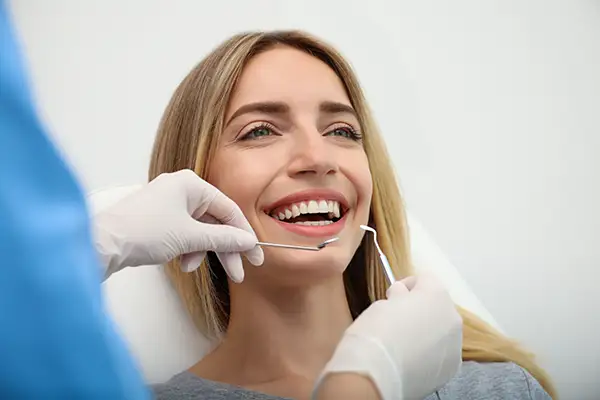 If you’re pregnant or planning a pregnancy, GOREgeous Smiles provides prenatal dental care in Scottsdale, AZ designed around the specific oral changes pregnancy brings. Routine cleanings, exams, and necessary treatment during pregnancy aren’t just safe but recommended by the American College of Obstetricians and Gynecologists, the American Dental Association, and the American Academy of Pediatric Dentistry. Skipping the dentist for nine months often makes things worse, not safer. If you’re pregnant or planning a pregnancy, GOREgeous Smiles provides prenatal dental care in Scottsdale, AZ designed around the specific oral changes pregnancy brings. Routine cleanings, exams, and necessary treatment during pregnancy aren’t just safe but recommended by the American College of Obstetricians and Gynecologists, the American Dental Association, and the American Academy of Pediatric Dentistry. Skipping the dentist for nine months often makes things worse, not safer.
Pregnancy changes the mouth. Hormones make gums more reactive, so even careful brushing can cause bleeding. Morning sickness exposes teeth to stomach acid. Cravings shift what you’re eating and how often. None of these changes mean something is wrong with your mouth. They mean your prenatal care plan should include a few small adjustments and one or two preventive visits while you’re expecting.
The biggest hesitation we hear from pregnant patients is whether being at the dentist is safe for the baby. The short answer is yes for routine and necessary work, with one specific window we usually prefer for any non-urgent treatment. Our team coordinates with your OB when needed, and we keep elective work like whitening on hold until after delivery. Prenatal care is part of our broader preventive dentistry services, with timing and positioning adjusted for what you’re going through.
On This Page
What Is Prenatal Dental Care?
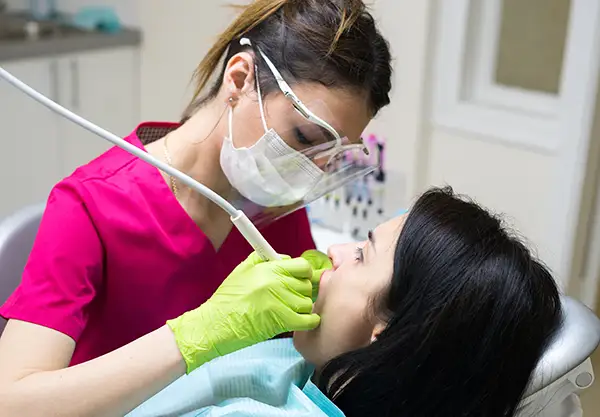 Prenatal dental care is the routine and as-needed dental treatment we provide during pregnancy. The goal is straightforward: keep small problems from turning into bigger ones during a stretch when your body is already doing a lot. Most prenatal care is the same dental work we provide year-round – cleanings, exams, fillings if needed – with timing, positioning, and a few clinical choices adjusted for pregnancy. Prenatal dental care is the routine and as-needed dental treatment we provide during pregnancy. The goal is straightforward: keep small problems from turning into bigger ones during a stretch when your body is already doing a lot. Most prenatal care is the same dental work we provide year-round – cleanings, exams, fillings if needed – with timing, positioning, and a few clinical choices adjusted for pregnancy.
How Pregnancy Changes Your Oral Health
Most pregnant patients notice their gums bleed more, even with no real change in brushing or flossing habits. That’s pregnancy gingivitis, a hormone-driven inflammation that affects the majority of pregnant patients to some degree. Untreated, it can progress, and persistent gum disease during pregnancy has been associated in research with adverse outcomes including preterm birth, which is one reason routine cleanings during pregnancy matter more than they would otherwise. Some patients also develop a pregnancy granuloma, a benign red bump on the gums that we monitor; these almost always resolve on their own after delivery. Increased tooth sensitivity is also common, often from gum changes and from acid exposure if morning sickness is in the picture.
Routine Care That’s Safe During Pregnancy
Regular dental cleanings aren’t only safe during pregnancy, they’re actively recommended. Most pregnant patients should plan at least one cleaning during the nine months, and patients with significant gingivitis often benefit from two. A standard dental exam also fits comfortably into prenatal care; we use lead-apron and thyroid-collar shielding for any X-rays we need, and we limit imaging to what’s clinically necessary. We do necessary fillings, treat infections, and handle cracked or broken teeth during pregnancy because deferring them carries its own risks. Local anesthetics commonly used in dentistry have a long pregnancy-safety record.
When the Second Trimester Becomes the Right Time
We treat any urgent issue when it shows up, regardless of trimester. For non-urgent treatment that can be scheduled, the second trimester (roughly weeks 14 to 27) is generally the most comfortable window. By then morning sickness has typically eased, and you’re not yet at the late-pregnancy point where lying back in the chair gets uncomfortable. If you’re reading this in your first or third trimester and unsure when to come in, call us and we’ll help you decide based on what you’re experiencing.
Procedures We Typically Defer Until After Delivery
A few procedures wait. We hold elective cosmetic work like whitening until after delivery because the safety data on bleaching agents during pregnancy is limited and the work isn’t urgent. Major elective restorative cases that work just as well after delivery often wait too. We’ll go over what falls into "now" and what falls into "after the baby" at your visit, and we put nothing into the "now" column that doesn’t belong there.
Your Prenatal Dental Care Team in Scottsdale
Dr. Rod W. Gore has practiced dentistry in Scottsdale for over 38 years and has cared for many pregnant patients across his career. His bio page details his Doctor of Dental Surgery from Northwestern University in 1987 and his AACD Accredited Member status, which he’s held since 1995. The reason that experience matters in a prenatal context is simple: knowing what truly is and isn’t safe to do during pregnancy – and being honest about it with patients who are understandably cautious – takes years of doing this work. Dr. Gore’s default is conservative.
Our hygienists and assistants handle the daily logistics of prenatal visits – the chair adjustments, the breaks if you need them, the timing if you’re managing nausea. Tell us at the front desk that you’re pregnant when you book, and we’ll plan your visit around what you actually need that day.
Your Prenatal Dental Visit
 A prenatal dental visit at our Scottsdale office is structured a little differently from a routine adult appointment, even when the dental work itself is the same. A prenatal dental visit at our Scottsdale office is structured a little differently from a routine adult appointment, even when the dental work itself is the same.
Health History Update and OB Coordination
We start by updating your health history with your due date, your OB’s name and number, any pregnancy-related conditions (gestational diabetes, preeclampsia history, etc.), and any medications you’re taking. If we have any clinical question your OB should weigh in on, we contact them before treatment rather than guessing. Most prenatal visits don’t require an OB consult; the few that do, we handle directly.
Positioning for Comfort
After the first trimester, lying flat on your back can compress a major vein that returns blood from your lower body to your heart, which leaves some patients lightheaded. We position you reclined on your left side with a small pillow or wedge, and we adjust mid-appointment if anything feels off. Tell us right away if you start to feel woozy – we sit you up before that turns into a problem.
Cleaning, Exam, and Imaging if Needed
The cleaning itself is the same gentle scaling and polishing we provide year-round, with extra attention to the gum line if pregnancy gingivitis is showing up. The exam covers any sensitive teeth, areas of inflammation, and any pregnancy granulomas to monitor. We take X-rays only when we genuinely need them for diagnosis, and only with full lead-apron and thyroid-collar shielding. We discuss imaging with you before we take it.
Treatment, If Needed Today
If a filling, an infection, or a cracked tooth needs care, we treat it the same day when feasible, with the same comfort-focused positioning. We use local anesthesia just as we would at any visit; the formulations standard in dentistry have a long pregnancy-safety record. For anything we’d normally defer until later in pregnancy or after delivery, we tell you why and lay out the timeline.
Benefits of Maintaining Dental Care During Pregnancy
The most concrete benefit of prenatal dental care is preventing problems from becoming urgent at exactly the wrong time. Treating a small cavity in the second trimester is a 30-minute appointment. Treating an infected tooth at 36 weeks, when you’re uncomfortable in any chair and your options are more limited, is harder on you and on your obstetric team.
Pregnancy gingivitis is genuinely treatable, and treating it pays off twice. The bleeding settles and your gums feel better in the short term, and you reduce the risk of the gingivitis progressing into more serious gum disease postpartum. Patients who skip cleanings during pregnancy often come back six to nine months later with worse periodontal numbers than they started with.
Maintaining your hygiene visits also protects your future cavity risk and your baby’s. Cavity-causing bacteria can transmit from caregivers to infants through shared utensils, taste-testing food, and similar everyday contact. Lower bacteria levels in mom’s mouth in the months before and after birth lower the seeding load to the baby. That’s a small thing the research community takes seriously, and it’s another reason routine cleanings during pregnancy aren’t optional in the way patients sometimes assume.
Finally, addressing morning-sickness erosion early prevents a slow-motion problem. Vomiting bathes the back of your front teeth in stomach acid, which softens enamel for about 30 minutes after each episode. Brushing during that window grinds the softened enamel away. We coach you on what to do instead: rinse with plain water, or with water mixed with a quarter-teaspoon of baking soda, and wait at least 30 minutes before brushing.
Why Choose Our Practice for Prenatal Dental Care
The practical reason patients choose us for prenatal care is that we’re honest about it. Some practices oversell what’s safe to do during pregnancy and others get so cautious they defer everything until after delivery, including treatment that shouldn’t wait. Dr. Gore’s 38 years in this office have shaped a clear default: do what’s clinically necessary now, defer what can be deferred without risk, and tell the patient honestly which is which.
Our hygiene team is led by Shawna Aguirre, RDH, who has been with us since 2007. Continuity matters during pregnancy because a hygienist who already knows your gums and your home-care habits can spot a real change versus a typical pregnancy-gingivitis pattern. That same continuity carries forward when you bring the baby in for kids’ first dental visits in a year or so. We see a lot of families through pregnancy and pediatric care in the same office over many years.
We use modern preventive technology including a Velscope oral cancer screening, intraoral cameras, and digital X-rays with low radiation doses. None of those are pregnancy-specific, but they’re what makes the imaging conservative and the cleanings effective.
What our patients say about working with us:
"Love Dr. Gore!! My husband and I both go to him and he and his staff are wonderful! Friendly, professional and awesome at what they do!! Highly recommend!!!"
– Sherry C., Google review
"I can’t say enough about Dr. Gore and his amazing staff. They were so kind, friendly, and understanding. They helped me with billing problems and listened to all my problems with my teeth. His office is nice and comfy. I get anxiety when even thinking about going to the dentist, but as soon as I arrived all my anxiety went away. I have already recommended him to several friends and family members. They put me at ease and that’s all I could ask for."
– Amy H., Google review
"Dr Gore and his staff are always gentle, kind and thorough. I am not a ‘good’ dental patient so this is important to me. Dr Gore is extremely knowledgeable and I find his staff to be so also."
– Pamela K., Google review
More patient feedback on our reviews page.
Cost and Insurance for Prenatal Dental Care
Cost is a fair question to ask, and the honest answer for prenatal care is reassuring. Most prenatal dental work is the same routine and necessary care covered by typical dental insurance plans – cleanings, exams, X-rays when needed, and fillings if a cavity shows up. Pregnancy doesn’t add a special billing category. Many plans actually allow extra cleanings during pregnancy beyond the standard two-per-year limit; our front office checks your specific carrier and reports back before treatment.
We currently work with Cigna directly and accept most other major PPO plans. If we’re out-of-network with your carrier, we file claims on your behalf and apply your out-of-network benefits the same way. Our financial and insurance page lays out accepted plans and how we handle claims.
For patients without dental insurance, our in-office GOREgeous Membership Plan is a flat-fee annual plan covering preventive visits, X-rays, and a 20% discount on additional treatment. It’s a reasonable fit for pregnant patients without coverage who want predictable preventive costs. Call 480-585-6225 for a personalized estimate before treatment begins.
Schedule Your Prenatal Dental Visit
The best time to book is whenever you’re ready – we’ll match the timing to your trimester. Call GOREgeous Smiles at 480-585-6225 or use our Request an Appointment page to schedule. We’re at 8535 E. Hartford Drive #208 in Scottsdale, AZ 85255-5438 (directions). You can reach us through our Contact page with any questions before booking.
Frequently Asked Questions
Is dental treatment safe during pregnancy?
Yes – routine cleanings, exams, fillings if needed, and treatment of any acute problem all proceed during pregnancy. Major medical organizations including ACOG, the ADA, and the American Academy of Pediatric Dentistry support dental care during pregnancy because untreated dental infection carries its own risks for both you and the baby. The one category we hold until after delivery is elective cosmetic work like whitening.
Are dental X-rays safe during pregnancy?
Dental X-rays with proper shielding are considered safe during pregnancy when they’re clinically needed. Modern digital dental X-rays use very low radiation doses, and we use a lead apron and thyroid collar to shield your abdomen and thyroid. We also limit imaging to what’s actually necessary for diagnosis, which means many prenatal visits don’t need any X-rays at all.
Is local anesthesia safe during pregnancy?
The local anesthetics commonly used in dentistry have a long safety record in pregnancy and are recommended by major medical organizations when treatment is needed. Skipping anesthesia for treatment that warrants it can actually be more stressful on you, and stress isn’t a great option either. If your specific medical situation calls for an OB consult before any anesthetic decision, we make that call before treatment.
Why are my gums bleeding more since I got pregnant?
It’s pregnancy gingivitis. Hormonal changes make gum tissue more reactive to the same plaque levels you had before, so brushing and flossing trigger bleeding more easily. The fix is more cleaning, not less – gentle but thorough brushing and flossing, plus a professional cleaning during pregnancy. Bleeding gums during pregnancy aren’t a reason to stop brushing the area; that makes the inflammation worse.
Should I just wait until after my baby is born for dental work?
For routine cleanings, exams, and necessary treatment, no. Skipping the dentist for nine months often allows small problems to grow into bigger ones, and a postpartum schedule with a newborn is harder to organize than people expect. The exception is elective cosmetic work, which is a fair thing to defer. At your visit we’ll walk through what’s in the "now" bucket and what’s in the "wait" bucket so you don’t have to guess.
What can I do about morning sickness affecting my teeth?
The big thing is don’t brush within 30 minutes of vomiting; brushing softened enamel grinds it away faster than the vomiting alone. Also mention frequent morning sickness at your dental visit so we can examine the inner surfaces of your upper front teeth (where acid tends to pool) for early erosion. If morning sickness is severe enough to affect your hydration or nutrition, that’s your OB’s call first – we coordinate the dental side after you’ve stabilized.
When during pregnancy is the best time to schedule dental work?
Routine cleanings work in any trimester. First-trimester cleanings are often when patients first realize their gums are reacting differently, which makes that visit useful even if you’d rather come back in the second trimester for anything bigger. Most OB-GYNs are most relaxed about elective dental procedures in the second trimester. By the third trimester, comfort in the chair becomes the bigger constraint, and we tend to keep visits shorter or split them into smaller appointments.
Will lying flat in the dental chair while pregnant make me uncomfortable?
It can after the first trimester, which is why we don’t use the standard reclined position. The left-side reclined position we use handles most patients comfortably. For third-trimester patients who need a longer appointment, we often split the work into two shorter visits rather than asking you to stay reclined for the full length. Tell us at booking which trimester you’re in so we can plan the right appointment length from the start. |