Dry Mouth Treatment in Scottsdale, AZ
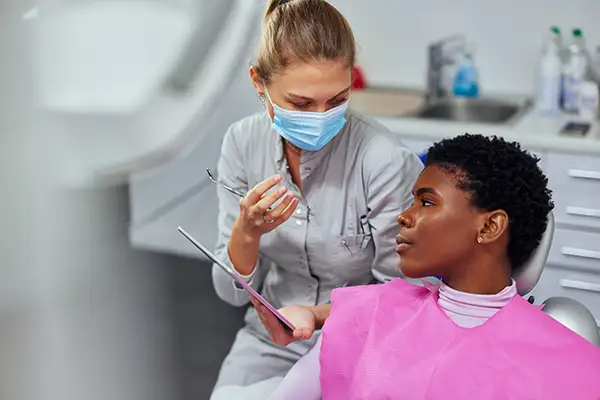 If you’re dealing with chronic dry mouth in Scottsdale, AZ, GOREgeous Smiles treats the underlying problem along with the dental consequences that come with it. Dry mouth, clinically called xerostomia, isn’t just uncomfortable. When saliva drops, decay risk multiplies fast, and many patients with chronic dry mouth find themselves getting cavities at a rate that doesn’t match their hygiene habits. If you’re dealing with chronic dry mouth in Scottsdale, AZ, GOREgeous Smiles treats the underlying problem along with the dental consequences that come with it. Dry mouth, clinically called xerostomia, isn’t just uncomfortable. When saliva drops, decay risk multiplies fast, and many patients with chronic dry mouth find themselves getting cavities at a rate that doesn’t match their hygiene habits.
The largest single cause is medication. Over 400 prescription medications list dry mouth as a side effect, and the categories most commonly involved are blood pressure, allergy, antidepressant, antihistamine, bladder, and Parkinson’s drugs. Other causes include Sjögren’s syndrome, radiation therapy to the head or neck, chemotherapy, ordinary dehydration (the Arizona heat is a real factor here), and mouth-breathing during sleep.
Chronic dry mouth is a preventive-care problem more than a cosmetic or restorative one, which is why it sits inside our preventive dentistry approach. The goal is to identify what’s causing your dryness, protect your teeth from the cavity acceleration that comes with low saliva, and manage symptoms day to day so eating, swallowing, and sleeping all feel normal again.
On This Page
What Is Dry Mouth Treatment?
Treating dry mouth means handling two things at once: what’s reducing your saliva, and the dental damage low saliva is already causing. There’s rarely a single fix. A typical plan layers prescription-strength fluoride to protect tooth surfaces, saliva-stimulating products for daytime comfort, environmental adjustments at night, more frequent professional cleanings, and a coordinated conversation with your prescribing physician when medications are the driver.
Why Saliva Matters
Saliva does more for your teeth than most people realize. It neutralizes acids after meals, washes away food particles, carries minerals that re-harden enamel between meals, and contains antibacterial compounds that keep oral bacteria in check. When saliva flow drops, all four of those jobs go undone. The damage shows up first at the gumline and on root surfaces, where the tooth is most vulnerable.
Common Causes of Dry Mouth
Medications remain the largest category by far. Blood pressure drugs, antihistamines for allergies, antidepressants, bladder-control medications, and several drugs prescribed for Parkinson’s disease all reduce salivary flow. Beyond medications, Sjögren’s syndrome (an autoimmune condition that targets the salivary glands), past radiation therapy to the head or neck, and chemotherapy can all leave patients with persistent dryness. Simple dehydration plays a role for some Scottsdale patients, especially in summer. And mouth-breathing during sleep is a quieter cause – if you wake up parched but feel fine during the day, that pattern often points to nighttime breathing issues, sometimes undiagnosed sleep apnea.
Symptoms and Dental Consequences
The symptoms are easy to recognize once you know what to watch for: waking up parched, increased thirst throughout the day, difficulty swallowing dry foods like crackers or bread, more cavities than your hygiene habits should produce, persistent bad breath, taste changes, or a burning feeling on the tongue or palate. The dental consequences are what bring most patients in. Rapid cavity formation at the gumline. Cavities forming on root surfaces in patients who’ve never had cavities there before. Higher gum disease risk. Denture discomfort. Recurring oral candida (thrush). We catch most cases at a routine dental exam, where the pattern of new decay tells the story before the patient mentions any symptoms.
Your Dry Mouth Care Team in Scottsdale
Dry mouth shows up most often in patients who are managing other medical conditions, which makes the care more about coordination than any single technique. Dr. Rod W. Gore has practiced dentistry in Scottsdale for over 38 years, and much of that work has been with patients on multiple medications, post-radiation patients, and seniors whose salivary glands aren’t what they were a decade ago. Background and credentials on Dr. Gore’s bio page.
Our Approach to Dry Mouth Treatment
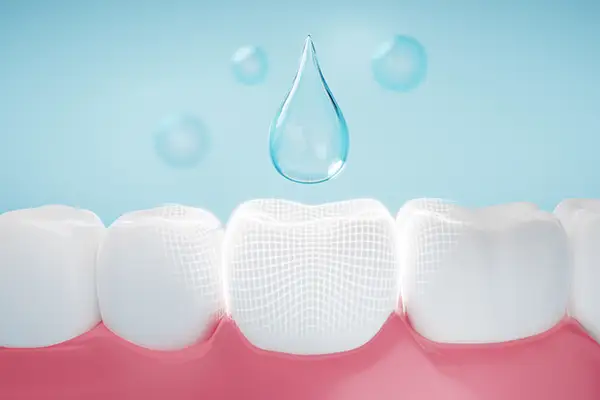 Effective dry mouth care isn’t one product or one prescription. It’s a sequence of decisions based on your situation. Effective dry mouth care isn’t one product or one prescription. It’s a sequence of decisions based on your situation.
Identifying Dry Mouth at the Exam
We catch the majority of dry mouth cases during a routine exam, often before the patient has put a name to what they’re feeling. The clinical signs are specific: cavities at the gumline or on root surfaces, decay returning faster than expected after restorations, dry-looking tissue, fissures on the tongue, and reduced pooling of saliva in the floor of the mouth. From there we ask a focused set of questions about medications, recent diagnoses, sleep, and symptoms.
Identifying the Cause
Once we’ve confirmed dry mouth, the cause guides the rest of the plan. If a medication is the most likely driver, we work with you on next steps – that may mean a conversation with your prescribing physician about alternatives or dosing, but never us telling you to stop a medication you need. If the pattern points to nighttime breathing problems, we explore that line. If autoimmune disease is a factor, we coordinate with your medical team.
Daily Management and Tooth Protection
Most plans use prescription-strength fluoride treatment applied in-office at hygiene visits, and we often add a prescription fluoride toothpaste or rinse for home use. We also recommend specific xylitol-based products, sip-water habits during the day, and a humidifier at night for patients whose dryness peaks during sleep. For severe cases where the salivary glands still have residual function, prescription pilocarpine or cevimeline can stimulate saliva production directly.
More Frequent Cleanings and Ongoing Monitoring
Patients with chronic dry mouth usually benefit from more frequent professional cleanings, typically every three or four months instead of every six. The faster cleaning interval lets us remove plaque before it has time to drive a new cavity, and it gives us regular checkpoints to adjust the plan if symptoms shift.
Benefits of Treating Chronic Dry Mouth
 The most measurable benefit of dry mouth treatment is decay prevention. Patients whose medications cause dry mouth typically see new-cavity rates fall meaningfully when they follow a structured fluoride and hygiene plan. We can’t promise zero new cavities, but we can almost always change the trajectory. The most measurable benefit of dry mouth treatment is decay prevention. Patients whose medications cause dry mouth typically see new-cavity rates fall meaningfully when they follow a structured fluoride and hygiene plan. We can’t promise zero new cavities, but we can almost always change the trajectory.
The second benefit is comfort. Patients often describe waking up with their tongue stuck to the roof of their mouth, or struggling to eat dry foods at lunch, as a low-grade quality-of-life problem they’ve grown used to. Targeted products, hydration timing, and nighttime humidity adjustments can change that within days, not weeks.
The third benefit is upstream. When dry mouth turns out to be tied to nighttime mouth-breathing or undiagnosed sleep apnea, addressing that opens up bigger health improvements than the dental side alone. We’re a starting point for catching that pattern, not the endpoint of treating it.
Why Choose Our Practice for Dry Mouth Care
Dry mouth is a chronic-condition problem, and the dentists who treat it well are the ones who don’t rush. Time matters because the right plan for chronic dry mouth almost never surfaces in five minutes. We make sure every dry mouth case gets the consultation time it needs. Our hygiene team works with these patients often enough to know which products and routines hold up day to day.
We use Velscope oral cancer screening at every recall – extra useful for chronic dry mouth patients because oral candida and tissue changes can hide in dry tissue. We also have CEREC same-day crown technology on hand for the cases where rapid decay has already done its work and a damaged tooth needs a porcelain restoration in one visit instead of two.
What our patients say about working with us:
"Wonderful dental office! Caring and they give the best advice for your dental care!"
– Melanie H., Google review
"Whenever I have an appointment at Dr. Gore’s office, I know that I am going to be well taken care of in every single aspect; whether it is for a complex procedure, a cleaning or administrative questions. Top notch office!"
– Rosemary H., Google review
"Dr Gore and his staff are always gentle, kind and thorough. I am not a ‘good’ dental patient so this is important to me. Dr Gore is extremely knowledgeable and I find his staff to be so also."
– Pamela K., Google review
More patient feedback on our reviews page.
Dry Mouth Treatment Cost and Insurance
Cost matters, and we’ll be straight with you about how dry mouth care is billed. The diagnostic side – the exam, the cleaning, in-office fluoride, X-rays – falls under preventive coverage on most dental plans. Our front office team verifies your benefits with your carrier (we accept Cigna among other major PPO plans). Our financial and insurance page outlines accepted plans and payment options.
The pieces that fall outside standard coverage are usually the at-home prescription products and certain specialty rinses or sprays. Most run modestly, especially compared with the cost of treating the cavities they prevent.
For patients without dental insurance, our GOREgeous Membership Plan is a flat annual fee plan that covers two exams a year, two cleanings, unlimited X-rays, fluoride, and an annual oral cancer screening, plus 20% off additional treatment. For chronic dry mouth patients who need more frequent cleanings, a quick conversation with our front desk lets us tell you whether the plan or your insurance comes out ahead in your situation.
Schedule a Dry Mouth Consultation
The earlier we catch chronic dry mouth, the easier the dental side is to manage. Call GOREgeous Smiles at 480-585-6225 or use our Request an Appointment page to schedule. We’re located at 8535 E. Hartford Drive #208 in Scottsdale, AZ 85255-5438 – find us on Google Maps. You can also reach us through our Contact page with any questions before booking.
Frequently Asked Questions
Can dry mouth actually be cured?
Sometimes yes, sometimes no, depending on the cause. Dryness from short-term dehydration or a temporary medication change can resolve completely. Dryness from a long-term medication you need, or from radiation therapy or Sjögren’s syndrome, usually can’t be fully cured but can be managed well enough that day-to-day symptoms and decay risk both come down significantly.
Will I have to stop my medication?
No. We don’t ask you to stop a medication that’s treating something important. If your medication is a likely cause, the conversation is between you and your prescribing physician about whether an alternative exists or whether the dose can be adjusted. Often the answer is that the medication stays, and we manage the dental consequences around it.
Why does dry mouth cause cavities so quickly?
Saliva is the mouth’s main acid neutralizer and the carrier for the calcium and phosphate that re-harden enamel after meals. Without enough saliva, every meal leaves the teeth in an acidic state for longer, and the natural repair process between meals slows down or stops. The combined effect is decay that can move from a small lesion to a deeper cavity in months rather than years.
Will drinking more water fix it?
Water helps with comfort but rarely fixes the underlying problem because the issue is reduced production, not how much you drink. Sip water through the day for symptom relief and to wash food off your teeth, but plan on adding fluoride protection, xylitol products, and possibly a saliva-stimulating prescription if drinking water alone isn’t enough.
What over-the-counter products actually help?
Xylitol-based gums, mints, and rinses are the most consistently useful OTC category because xylitol stimulates a small amount of additional saliva and inhibits cavity-causing bacteria. Glycerin-based mouth sprays and gels offer short-term relief at night. Avoid alcohol-based mouthwashes; they can worsen dryness. We’ll point you to specific products that match your situation rather than the entire pharmacy aisle.
Should my dentist talk to my doctor about my medications?
Sometimes yes. When a medication is clearly driving your dry mouth and the dental impact is significant, a short note from us to your prescribing physician explains what we’re seeing and asks whether an alternative exists. The decision is the physician’s, not ours. We’re flagging the dental cost, not overruling the medical reason for the drug.
Could my morning dry mouth be sleep apnea?
Possibly. Waking up parched without an obvious cause, especially when paired with snoring, daytime fatigue, or a partner reporting pauses in your breathing, is a common pattern in undiagnosed sleep apnea. Open-mouth breathing during sleep dries the oral tissues regardless of underlying medications, and people often miss the connection. We can flag the pattern and refer for sleep evaluation when it fits.
How often will I need cleanings?
Most chronic dry mouth patients do better at three- or four-month cleaning intervals instead of the standard six. The faster cycle removes plaque before it can drive a cavity in the enamel and root surfaces that dry mouth makes more vulnerable. Whether your insurance covers more than two cleanings a year depends on your plan; the front office can verify before we schedule. |