Dental Crown Replacement in Scottsdale
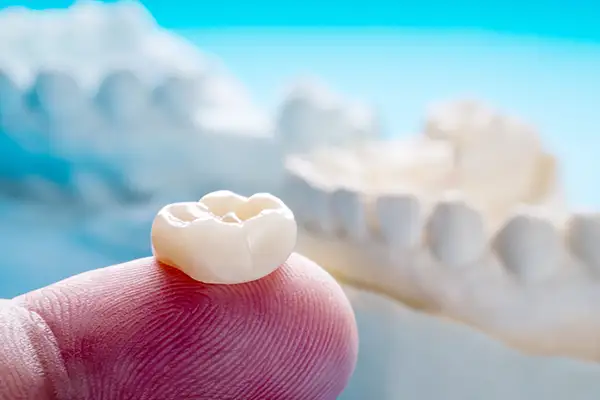 If you have a crown that’s failing, leaking at the margin, looking dark at the gum line, or just doesn’t feel right anymore, GOREgeous Smiles offers dental crown replacement in Scottsdale, AZ. Replacing a worn or failing crown is part of our restorative dentistry practice, and Dr. Gore has been replacing crowns at our Scottsdale office for nearly four decades. If you have a crown that’s failing, leaking at the margin, looking dark at the gum line, or just doesn’t feel right anymore, GOREgeous Smiles offers dental crown replacement in Scottsdale, AZ. Replacing a worn or failing crown is part of our restorative dentistry practice, and Dr. Gore has been replacing crowns at our Scottsdale office for nearly four decades.
Crowns don’t last forever. A well-made crown can serve you for 10 to 15 years, sometimes 20 or 30, but eventually most crowns reach the end of their useful life. The seal at the margin breaks down, decay can develop underneath, the porcelain can chip, or the dark line of an older metal-based crown becomes visible at the gum. None of that is a complication. It’s a normal lifecycle event, and replacing a worn crown protects the tooth far better than leaving the failing one in place.
We’re also straight with you about something patients don’t always hear up front: replacing an old crown sometimes reveals problems underneath. Decay, a small fracture, or an inflamed nerve can hide for years beneath a crown that looks fine on the outside. We tell you exactly what we find, walk through your options before we move forward, and never charge for treatment that hasn’t been discussed and agreed on.
On This Page
What Is Dental Crown Replacement?
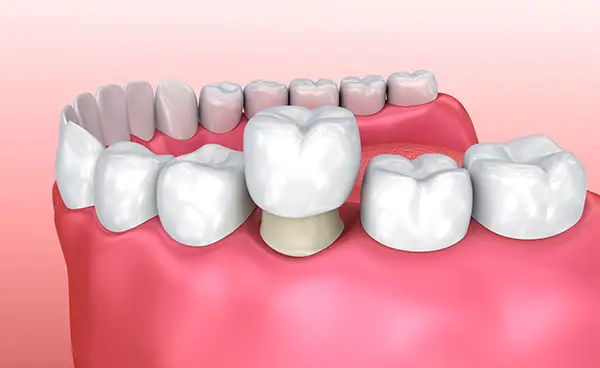
Dental crown replacement is exactly what it sounds like: removing a crown that’s failing or no longer serving you well, and placing a new one. The procedure is different from initial dental crown placement because the tooth has already been prepared once, an existing crown sits on top of it, and the tooth underneath may have changed in the years since the original work was done.
We see this most often when an old porcelain-fused-to-metal crown starts showing a dark line at the gum, when the seal at the margin has broken down and decay has developed underneath, or when a patient wants to swap an aging restoration for a more lifelike all-ceramic version. None of these situations is an emergency in itself. They’re signs that the original crown has reached the end of its useful life.
When a Crown Actually Needs Replacing
Not every imperfect crown needs to come off. A small chip in a back-tooth crown that doesn’t affect function can sometimes be smoothed and left alone. A crown that has loosened recently but is otherwise intact can occasionally be re-cemented if the underlying tooth is healthy and the fit is still good. The crowns that do need replacement are the ones with a broken margin seal, decay underneath, structural damage to the porcelain or metal, or persistent sensitivity that means the underlying tooth is in trouble. We use digital X-rays and direct examination to figure out what’s actually going on with your crown before recommending anything.
Common Reasons Crowns Fail Over Time
Crowns most commonly fail in one of a few specific ways. The cement seal breaks down, allowing bacteria and saliva to seep underneath and cause decay. Gum recession over the years exposes the metal substructure of an older crown and creates that telltale dark line at the gum. The opposing tooth wears the crown unevenly, eventually chipping the porcelain or wearing through the contact area. Or the crown was never quite right aesthetically in the first place, and now there’s the chance and the budget to swap it for something that looks more natural alongside the surrounding teeth.
What Replacement Reveals About the Underlying Tooth
We can’t fully see the tooth under a crown until the crown comes off. Most of the time the tooth underneath is in reasonable shape, and replacement is a clean swap of old crown for new. Sometimes we find decay we couldn’t see on X-ray, a small fracture line, or signs that the nerve has become inflamed. When that happens, we stop, show you what we’re looking at, and walk through the options together before we move forward. Treatment may include a root canal if the nerve is involved, or in rare cases extraction and a different replacement plan if the tooth is unsalvageable.
Materials and Modern Options for the New Crown
Most replacement crowns we place today are all-ceramic, which look more like natural teeth and don’t leave a dark line at the gum the way older porcelain-fused-to-metal crowns can. For some patients we still use a porcelain crown over a high-strength metal substructure when the bite forces or location demand it. Material choice is a conversation, not a default. We talk through what each option looks like, how long it’s likely to last, and what it costs before any decision is locked in.
Your Crown Replacement Dentists in Scottsdale
Crown replacement is one of the most common procedures Dr. Rod W. Gore performs at our Scottsdale office. He earned his Doctor of Dental Surgery at Northwestern University in 1987 and has practiced in Scottsdale for more than 38 years, meaning he has placed and replaced crowns through several generations of dental materials, from the older porcelain-fused-to-metal crowns most patients still have, to the all-ceramic restorations we use today.
What also matters for replacement work specifically is that Dr. Gore is one of only two dentists in Arizona to hold AACD Accredited Member status with the American Academy of Cosmetic Dentistry. The aesthetic side of crown work – matching shade, contour, and translucency to your natural teeth – is where many crown replacements end up looking either invisible or obvious, and the Accreditation process specifically tests that skill. Dr. Gore’s bio page covers his founding of the Phoenix Esthetic Study Club in 1998 and his ongoing work as an AACD Examiner.
The Crown Replacement Process at Our Scottsdale Office
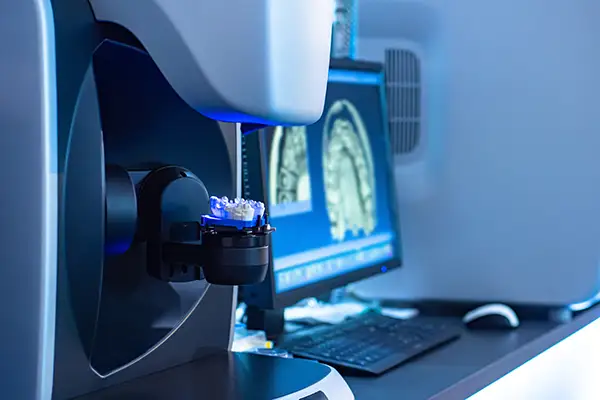 Replacing a crown follows a similar arc to the original placement, with important differences in the early steps. Most appointments at our Scottsdale office move through four phases. Replacing a crown follows a similar arc to the original placement, with important differences in the early steps. Most appointments at our Scottsdale office move through four phases.
Numbing and Removing the Existing Crown
We start by numbing the tooth and surrounding gums with local anesthesia. Most patients describe the sensation that follows as pressure rather than pain. Once the area is fully numb, we carefully cut and lift the existing crown off the tooth. We remove it in a way that preserves as much of the underlying tooth structure as possible, since that structure is what supports the new crown.
Examining the Tooth Underneath
With the old crown off, we take a close look at the underlying tooth. We check the cement seal, the margins where the crown met the tooth, and the surrounding gum tissue. If we find decay, we remove it before moving forward. If we find a small fracture or signs that the nerve is inflamed, we stop and walk through the options with you before continuing. Most of the time the tooth is in good shape and we proceed straight to preparation.
Preparation, Impression, and the Day-Of Decision
Once the tooth is clean and ready, we refine the prep so the new crown will fit precisely. We then take either a digital scan or a traditional impression depending on which approach fits the case better. If your replacement qualifies for our same-day CEREC crown process, we design and mill the new crown chairside while you wait, usually in about an hour. If your case calls for a lab-made crown – for shade-matching against front teeth or for specific bite considerations – we place a temporary crown that day and bring you back two to three weeks later for the final.
Cementing the Final Crown
At the cementing visit (or later that same day for CEREC cases), we try the new crown in to confirm fit, contact with neighboring teeth, color, and bite. We make adjustments before we cement, then bond the crown into place with a strong dental cement. The whole appointment typically wraps up with a check on how the tooth feels when you bite, since a well-fitting crown shouldn’t feel different from your natural teeth.
Benefits of Replacing a Failing Crown
The most immediate benefit of replacing a worn or failing crown is that it stops the underlying problem from getting worse. A leaking margin lets bacteria reach the tooth, which leads to decay, sensitivity, and eventually nerve involvement. Replacing the crown seals the tooth again before that progression has a chance to require more involved treatment.
The second benefit is aesthetic. Modern all-ceramic crowns avoid the dark gum-line appearance that many older porcelain-fused-to-metal crowns develop, and they can be matched to the rest of your teeth in a way that older materials couldn’t. Patients who have had a visible old crown for years often tell us they didn’t realize how much it bothered them until they saw the natural-looking replacement.
There’s also a comfort and function benefit. A well-fitted new crown restores the tooth’s ability to chew normally, without sensitivity, hot or cold reactions, or that vague awareness that something on that side of your mouth doesn’t feel quite right. Most patients are surprised at how quickly the tooth fades into the background again once the new crown is in place.
Why Patients Choose Our Practice for Crown Replacement
 Crown replacement looks straightforward on paper, but the difference between an excellent replacement and a mediocre one comes down to the dentist’s eye for fit, color, and bite. Dr. Gore’s AACD Accreditation specifically tests these skills against published clinical and aesthetic standards, which is part of why other dentists refer crown replacement work to our office. Crown replacement looks straightforward on paper, but the difference between an excellent replacement and a mediocre one comes down to the dentist’s eye for fit, color, and bite. Dr. Gore’s AACD Accreditation specifically tests these skills against published clinical and aesthetic standards, which is part of why other dentists refer crown replacement work to our office.
The other reason patients choose us is that we don’t recommend treatment we wouldn’t recommend for a family member. If your old crown can be re-cemented or repaired safely, we say so. If a crown someone else recommended replacing actually doesn’t need replacement at all, we say that too. The honest evaluation matters to people, and it’s part of why a few of our patients have written reviews like the ones below.
What our crown replacement patients say about working with us:
"I had an upper left side molar crown replaced today. Dr. Gore did excellent work. This was my second crown by Dr. Gore. I have had many over the years and finding Dr. Gore was a blessing. I will never go anywhere else. His assistant Stephanie works very well with Dr. Gore. Both are very kind and thoughtful, asking me how I am doing throughout the procedure. I felt safe and that I was in competent hands."
– Mary N., Google review
"Best Scottsdale dentist or Mesa dentist. I went to Dr. Gore for a second opinion after being told that I needed a tooth extraction, bone graft and implant instead of a crown replacement. The process was going to take 8 months at a cost of $3,900. Dr. Gore was referred to me by my dentist in WA State as she was unsure that an extraction was necessary. Thank gosh she did! Dr. Gore was able to save the tooth, it had plenty of bone and did not need a root canal. Dr. Gore replaced the crown (beautiful work) in one visit at 1/3rd the cost. A huge savings in time, comfort not to speak financially. Dr. Gore’s office and staff are fantastic. The office was so beautiful and friendly that I was slightly worried that their pricing would be high but to the contrary it was the same as other quotes. I was amazed to receive a call from the Dr. checking on how I was doing that same evening. It is a pleasure to find a dentist office as caring and professional as the one I had in Seattle. From start to finish a wonderful experience which is hard to say about having dental work."
– Amy, Google review
"Dr. Gore was able to fit me into an appointment and diagnosed a cracked tooth and scheduled a follow up the next day to create and cement a new crown! This is exactly what I was hoping to have happen. They were gracious and very professional. Being in Phoenix from out of town for 2 weeks made this situation very sensitive and Dr. Gore was able to help! I highly recommend seeing Dr. Gore!"
– Craig D., Google review
Whether your crown is years past its window, recently chipped, or just doesn’t look right next to your other teeth, the next step is the same. We take a look, give you the honest assessment of what’s actually wrong (or not), and you decide from there.
Crown Replacement Cost and Financing
Cost is a fair concern with crown replacement, and we’ll be straight with you about how it works at our office. The cost of a replacement crown depends mostly on the material we choose and on whether any extra treatment is needed underneath – a crown swap on a healthy tooth is in a different range from one that turns out to need a root canal before the new crown goes on. We give you a written estimate after the diagnostic visit, before any work begins.
Crown replacement is more often covered by dental insurance than purely cosmetic work, especially when the original crown has reached the typical replacement window your plan recognizes (often five to ten years, depending on the carrier). We currently accept Cigna directly along with most other major PPO plans, file out-of-network claims for you, and list the full set of accepted plans and payment options on our financial and insurance page.
For patients without dental insurance, we offer the in-office GOREgeous Membership Plan, which provides preventive care and a 20 percent discount on additional treatment for a flat annual fee. We also offer third-party financing so you can spread the cost of a needed crown replacement over time rather than paying all at once. Call 480-585-6225 for a personalized estimate.
Schedule Your Crown Replacement in Scottsdale
A failing crown rarely improves on its own, and the tooth underneath suffers the longer you wait. Call GOREgeous Smiles at 480-585-6225 or use our Request an Appointment page to schedule. We’re located at 8535 E. Hartford Drive #208 in Scottsdale, AZ 85255-5438. You can also reach us through our Contact page with any questions before booking.
Frequently Asked Questions
How do I know if my dental crown actually needs to be replaced?
Most failing crowns show one of a few specific signs: a dark line appearing at the gum, sensitivity to hot or cold that wasn’t there before, food catching unusually around the crowned tooth, looseness, or visible damage to the porcelain. Persistent discomfort when biting on that tooth is another signal. The most reliable way to know is a clinical exam plus a current X-ray, since some failures (decay underneath the crown, a broken margin seal) aren’t visible from the outside. If you’re not sure, it’s worth getting an evaluation rather than waiting for the tooth itself to start hurting.
Can my old crown be re-cemented or repaired instead of replaced?
A crown that recently popped off and is otherwise intact can often be cleaned and re-cemented in a single short appointment. A small chip on a back-tooth crown can sometimes be polished smooth without further work. What can’t be repaired in place is a crown with decay underneath, a broken margin seal, or a structural crack through the porcelain or metal – those have to come off so we can clean the tooth and place a new crown. We make that judgment call together at the consultation.
Will replacing my crown reveal damage to the tooth underneath?
We find out the moment the old crown comes off. The most common discoveries are decay along the old margin (relatively easy to clean up before the new crown goes on), a small crack visible only after the crown is off (sometimes manageable, sometimes not), or signs that the nerve has become inflamed and a root canal is needed first. We don’t continue without showing you what we found and walking through your options. The point isn’t to alarm you; it’s to make sure no surprise treatments end up on your bill.
How long should a new dental crown last?
A well-made crown typically lasts 10 to 15 years, and many last 20 or 30. The biggest factors that determine longevity are the material we choose, how well the crown fits at the margin (where leakage and decay tend to start), how heavily you grind your teeth at night, and how consistent your home hygiene is. Patients who wear a night guard if they grind, and who stay current with cleanings, generally see the longer end of the range.
Can my crown be replaced in a single visit?
Often, yes. Our practice has CEREC same-day crown technology, which lets us digitally scan the prepared tooth, design the new crown in software, and mill it from a ceramic block while you wait. Same-day works well for back teeth and many premolars where shade matching is straightforward. For front-tooth replacements where the new crown has to match perfectly to neighboring natural teeth, we typically recommend a lab-made crown over two visits, since the lab can layer porcelain in a way that mimics natural translucency more precisely. Either path is available to you, and we discuss the tradeoffs at the consultation rather than defaulting to one approach.
Does insurance cover dental crown replacement?
Usually, partially. The two pieces of information that determine your specific coverage are the date your current crown was placed (most plans cover replacement after five to ten years) and how much of your annual maximum benefit is still available for the year. Our front office checks both before you commit. If your old crown was placed somewhere else and we don’t have records, we ask you for the placement date or your insurance carrier’s claim history.
Will the new crown match my other teeth?
Yes – that’s one of the biggest reasons patients replace older crowns in the first place. We use shade matching, photographs, and direct comparison against your other teeth to dial in color, translucency, and surface detail before the crown is finished. Modern all-ceramic crowns can blend in well enough that even other dentists have a hard time spotting them. Match quality is one of the specific skills tested for AACD Accreditation, which is one of the main things to weigh when choosing a dentist for visible front-tooth crowns. |