Dental Care for Patients with Sensitive Gag Reflex in Scottsdale, AZ
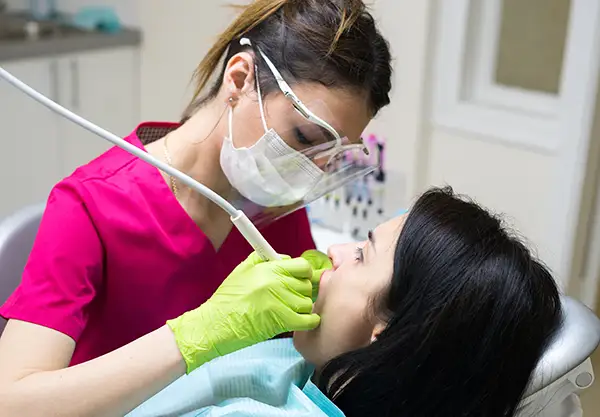 If you’ve been avoiding dental work in Scottsdale because your gag reflex is so sensitive that even routine cleanings are unbearable, GOREgeous Smiles handles this differently than most offices. A hyperactive gag reflex isn’t weakness or laziness, and a routine dental visit isn’t built to accommodate it. Putty impressions, X-ray sensors placed in the back of the mouth, the suction tip in the wrong spot – any of these can trigger a reflex strong enough to end the appointment. We’ve adapted how we work so that doesn’t happen. If you’ve been avoiding dental work in Scottsdale because your gag reflex is so sensitive that even routine cleanings are unbearable, GOREgeous Smiles handles this differently than most offices. A hyperactive gag reflex isn’t weakness or laziness, and a routine dental visit isn’t built to accommodate it. Putty impressions, X-ray sensors placed in the back of the mouth, the suction tip in the wrong spot – any of these can trigger a reflex strong enough to end the appointment. We’ve adapted how we work so that doesn’t happen.
The two most useful changes we make are mechanical, not psychological. We’ve replaced putty impressions with digital intraoral scanning, and we use smaller sensors and intraoral cameras that sit further forward than the standard placements. Combined with chair positioning, controlled breathing, and a real stop signal, procedures patients have written off as impossible become doable.
Patients with sensitive gag reflexes often fall behind on care for years and feel embarrassed about it by the time they call. That’s the part we want to take off the table. Gag-reflex avoidance is a real reason patients delay treatment, and it falls under preventive dentistry because the goal is keeping you in routine care rather than letting small problems become emergencies.
On This Page
What Is Sensitive Gag Reflex Dental Care?
 Dental care for a sensitive gag reflex is exactly what it sounds like: a way of doing exams, cleanings, X-rays, impressions, and treatment that keeps you from gagging through the appointment. The technical name for what you have is a hyperactive gag reflex (sometimes called hypersensitive gag reflex or hyperactive pharyngeal reflex), and it’s genuinely common – common enough that we have a reliable approach to it. We can’t cure the reflex. We can work around it consistently. Dental care for a sensitive gag reflex is exactly what it sounds like: a way of doing exams, cleanings, X-rays, impressions, and treatment that keeps you from gagging through the appointment. The technical name for what you have is a hyperactive gag reflex (sometimes called hypersensitive gag reflex or hyperactive pharyngeal reflex), and it’s genuinely common – common enough that we have a reliable approach to it. We can’t cure the reflex. We can work around it consistently.
Why a Strong Gag Reflex Makes Dental Care Hard
The gag reflex protects the airway from anything that shouldn’t go down the throat. That’s why it fires the instant something presses against the soft palate or back of the tongue. For most people that threshold is set fairly far back. For some patients it sits much further forward, sometimes at the level of the molars or even the tongue itself. Standard dental procedures were designed for the average threshold, not yours: bitewing sensors set behind the back teeth, putty trays that fill the whole arch, suction tips that drift toward the throat.
Digital Impressions Replace the Putty Trays That Set Most Patients Off
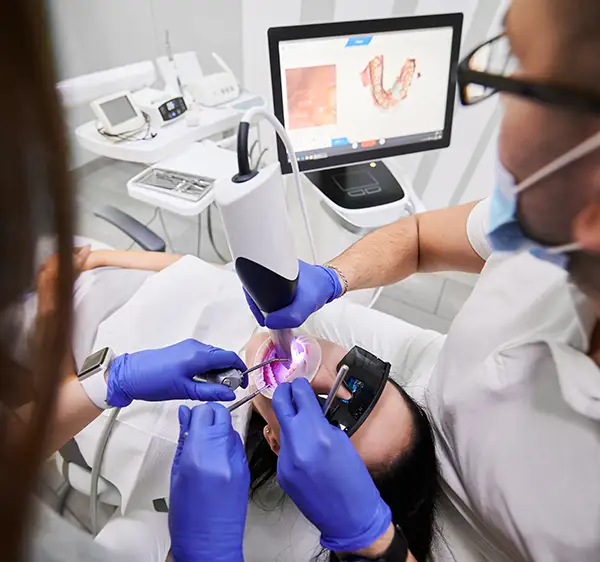
One of the biggest triggers for gag-sensitive patients is traditional impression material. Putty trays held in place for two or three minutes take impressions for crowns, bridges, dentures, and aligners. We don’t use them for most cases. Instead, our dental technology includes intraoral scanners that capture a 3D model of your teeth in real time, with no tray, no putty, and a wand that stays in front of the molars for most of the scan. For same-day crowns made with CEREC we use the same scan to design and mill the crown chairside – no impression appointment, no temporary, no second visit.
Chairside Accommodations We Use Throughout the Visit
Beyond the technology, the appointment itself runs differently. We seat you more upright than the standard reclined position so the soft palate sits forward and gravity helps. We use smaller intraoral cameras for documentation and rely on visual exam more than the back-of-the-mouth mirror sweep. X-ray sensors come in pediatric sizes that fit further forward and trigger far less. We agree on a hand signal you raise the moment you need a break, and we stop the second you raise it. Slow nasal breathing through long appointments helps most patients more than they expect.
When Oral Sedation Is the Right Tool
For patients whose reflex is severe enough that accommodations alone aren’t sufficient – or for longer treatment appointments – we offer oral conscious sedation in pill form taken before the visit. You stay awake and able to respond, but the reflex itself quiets down enough to make procedures possible that otherwise wouldn’t be. Sedation isn’t our first move for routine cleanings or quick exams, where the chairside adjustments above usually cover it. It’s the right tool when the work itself is more involved or when prior dental experiences have made the reflex worse.
Your Sensitive Gag Reflex Dentist in Scottsdale
Dr. Rod W. Gore has been practicing in Scottsdale for over 38 years. Across that span, he’s seen plenty of gag-reflex-sensitive patients, and the chairside adjustments are second nature by now.
His full bio covers his Doctor of Dental Surgery from Northwestern University, his AACD Accredited Member status (one of two in Arizona), and the teaching positions he’s held at the Pacific Aesthetic Continuum and the Las Vegas Institute. The credential matters most for cosmetic work; the years of chairside problem-solving matter for cases like yours.
How We Adapt Care for Sensitive Gag Reflex Patients
 The first appointment is mostly conversation and planning. Once we know what we’re working with, the actual treatment visits go faster than patients expect. The first appointment is mostly conversation and planning. Once we know what we’re working with, the actual treatment visits go faster than patients expect.
Before You Sit Down
We start the first visit with a conversation, not a procedure. You tell us where your trigger is – tongue, back of the throat, anywhere a sensor goes – and what’s set it off historically. We map the procedures you actually need, identify which steps are likely to be hardest for you, and pick which adaptations to start with. The goal of this visit is information, not finishing work.
Adjusting the Setup
Before we begin treatment, we change the chair angle, hand you the signal we’ve agreed on, and walk you through what’s about to happen step by step. Knowing what’s coming and when matters more than most patients realize – surprise is what kicks the reflex hardest. For X-rays, we use the smallest sensor we can and place it forward; for any impression we take, we use the digital scanner first.
Working in Short Intervals
Long uninterrupted stretches in the chair are the enemy of a sensitive reflex. We work in shorter intervals with brief pauses for water, breathing, and resetting position. This makes the appointment a little longer overall and a lot easier to get through. Most dental cleanings and routine exams finish this way without sedation.
Follow-Up and Building Tolerance
Many patients find that consistent positive visits gradually reduce how strongly the reflex fires. We can’t guarantee that, and we don’t pretend the reflex goes away. What changes is your association with the dental chair – from "this is where I lose control" to "this is where I’ve been able to get through the appointment." That shift, over time, is real.
Benefits of Adapted Dental Care
The most concrete benefit is access. Patients who’ve been postponing cleanings, X-rays, and exams for years can finally get back into routine preventive care. That’s the foundation – most of the dental problems that turn into emergencies start small and stay small if they’re caught at a six-month checkup.
The second benefit is one most patients don’t expect: the reflex itself often gets less reactive over time. We don’t promise this, because nervous-system thresholds are individual and don’t respond to a formula. But many patients who haven’t finished a dental appointment in years find that after three or four visits in our office without a gag-trigger event, the threshold quietly resets. Whether that’s desensitization in the technical sense or just a calmer association with the chair, the practical effect is the same.
There’s also a benefit that runs alongside the dental work: less embarrassment. Most patients have been told some version of "just relax" or "you’re overreacting" before. The first few minutes of the first visit usually do the most work simply by treating the reflex as the medical reality it is, not a behavior to coach away.
Why Choose Our Scottsdale Practice
The technology is the most concrete reason. Without digital scanning, putty impressions are the only option for crowns, bridges, and aligners – and that’s a non-starter for many gag-sensitive patients. Our office runs digital intraoral scanning for impressions, CEREC for same-day porcelain crowns that skip the impression step entirely, and pediatric-sized sensors for X-rays. Most of the trigger points patients have lived with for years have a workaround we already use.
Beyond technology, what matters is the team’s willingness to slow down. A 30-minute cleaning that runs 45 minutes because the patient needed three breaks is fine here – that’s baked into how we schedule. We’d rather extend an appointment than push through a trigger moment.
What our patients say about working with us:
"I can’t say enough about Dr. Gore and his amazing staff. They were so kind, friendly, and understanding. They helped me with billing problems and listened to all my problems with my teeth. His office is nice and comfy. I get anxiety when even thinking about going to the dentist, but as soon as I arrived all my anxiety went away. I have already recommended him to several friends and family members. They put me at ease and that’s all I could ask for."
– Amy H., Google review
"I have had a phobia of needles my whole life and have crippling anxiety over dentists, 5 years ago I went into dr gore’s office and it changed my life. Years down the road, I now have veneers and few root canals and implants, plus his team recognized my bite was off from grinding and gave me TMJ, so they built up my back molars to fix it. The entire team just makes you feel safe and that you are absolutely getting the best best most professional care out there. I cannot recommendation d dr gore and his entire team highly enough. A very grateful patient, Ashleigh"
– Ashleigh F., Google review
"Dr Gore and his staff are always gentle, kind and thorough. I am not a 'good' dental patient so this is important to me. Dr Gore is extremely knowledgeable and I find his staff to be so also."
– Pamela K., Google review
More patient feedback on our reviews page.
Cost and Insurance for Adapted Dental Care
The chairside accommodations themselves don’t add a separate cost. Adjusting position, using smaller sensors, working in intervals – that’s how we treat gag-sensitive patients, not a billable add-on. The actual procedures (cleanings, X-rays, exams, crowns, fillings, and so on) are billed the same way they would be at any other dental office, and dental insurance covers them on the same terms.
Where cost varies is sedation. Oral conscious sedation, when needed, is generally an out-of-pocket cost because most dental insurance plans don’t cover it. We talk through whether sedation is necessary case by case so you’re not paying for it on visits where the chairside accommodations are enough. Our financial and insurance page lists accepted plans (Cigna is confirmed in-network, and we accept other major PPOs).
For patients without insurance, our GOREgeous Membership Plan covers exams, cleanings, X-rays, and oral cancer screenings for a flat annual fee, plus a 20% discount on additional treatment. For patients who’ve been out of dental care long enough to need restorative work in addition to the routine catch-up, that discount typically pays for the membership several times over.
Schedule Your Visit
If you’ve been putting off dental care because of your gag reflex, the first appointment is mostly a conversation. Call GOREgeous Smiles at 480-585-6225 or use our Request an Appointment page to schedule. We’re located at 8535 E. Hartford Drive #208 in Scottsdale, AZ 85255-5438. You can also reach us through our Contact page with any questions before booking.
Frequently Asked Questions
Will I gag during a normal cleaning if my reflex is sensitive?
Most cleanings finish without a single trigger event when we use the upright chair angle, the smallest scaler tips, and the suction placement adjustments we’ve developed for gag-sensitive patients. The polishing step is sometimes the harder one because of the prophy paste flavor and texture – we have alternatives for that, including paste-free polishing, and we’ll ask before we start. Cleanings here generally don’t require sedation.
Can you take impressions without the putty tray?
Yes – for almost every case. We use a digital intraoral scanner that builds a 3D model of your teeth in real time using a small wand. The wand stays in front of the molars for most of the scan, and the scan itself usually takes a few minutes. We can scan in short bursts with breaks, which is often the difference between a tolerable appointment and an impossible one.
Do I need oral sedation for a routine visit?
For most exams and cleanings, no. The chairside adaptations cover the great majority of routine visits. Sedation makes more sense for longer restorative appointments, multiple-procedure visits, or for patients whose reflex is severe enough that the workarounds aren’t sufficient. We decide together at the consultation, and you’re never required to sedate to be a patient here.
Will the reflex eventually get better, or will I always have it?
The reflex itself is a permanent neurological feature, so we can’t cure it – but how strongly it fires can change. Many patients who arrive convinced they can’t handle dentistry find that after a few uneventful appointments, the trigger threshold quietly moves. Others stay where they started, and we just keep adapting. Both are normal.
Can I get X-rays at all if my reflex is severe?
Almost always yes. Pediatric-sized digital sensors are smaller and sit further forward than the adult versions most offices default to. Panoramic X-rays, which take an external image of the whole jaw without anything inside the mouth, are another option for patients whose reflex makes intraoral sensors impossible. We choose the imaging that’s clinically appropriate and the most tolerable for your specific reflex.
What should I tell the office before my first visit?
Tell us up front when you call – mention that you have a sensitive or hyperactive gag reflex. We schedule the first visit a little longer than a standard new-patient appointment to leave room for the conversation, and we put a note on your chart so the hygienist and assistant know before they walk in. The advance notice is the easiest way to make the first visit go well.
Can my anxiety make the gag reflex worse?
Often, yes. Anxiety and a sensitive gag reflex commonly travel together, and tension in the jaw, throat, and shoulders lowers the trigger threshold. Slow nasal breathing, an agreed-upon stop signal, and predictability in what’s about to happen all help – not just emotionally but mechanically. For patients whose anxiety is the dominant factor, oral sedation can address both at once.
Why should I choose GOREgeous Smiles for sensitive gag reflex care in Scottsdale?
The honest answer is technology plus willingness to slow down. Digital scanning replaces the impression material that triggers most gag-sensitive patients, smaller sensors and pediatric-sized X-ray placements reduce trigger points throughout routine care, and our schedule is built to allow for the breaks and pauses these visits need. Dr. Gore has practiced in Scottsdale for nearly four decades, which means he’s worked with many patients who came in convinced no dentist could help them. |